As an Amazon Associate I earn from qualifying purchases.
Most clothes that disappoint were not badly made. They were cut for a different set of proportions than yours, and no amount of styling enthusiasm fixes a waist seam sitting two inches from your waist. Dressing for your body shape is not a set of rules about hiding. It is a measuring exercise followed by four proportion levers: neckline, waist placement, hem length and fabric weight. This guide shows you how to find your shape with three measurements, then work those levers for each shape, so everyday clothes fit the body you actually have.
The Fashion Updates
Proportion Is a Measurement
Three measurements name your shape; four levers, neckline, waist, hem and fabric, dress it well every day.
Key Takeaways
- Find your shape with three measurements, shoulders, waist and hips, taken over thin clothing with the tape level and snug, then compare the relationships, not the numbers themselves.
- Most people sit between two shapes: dress the dominant one and borrow a single fix from the secondary one instead of trying to follow two full rule sets.
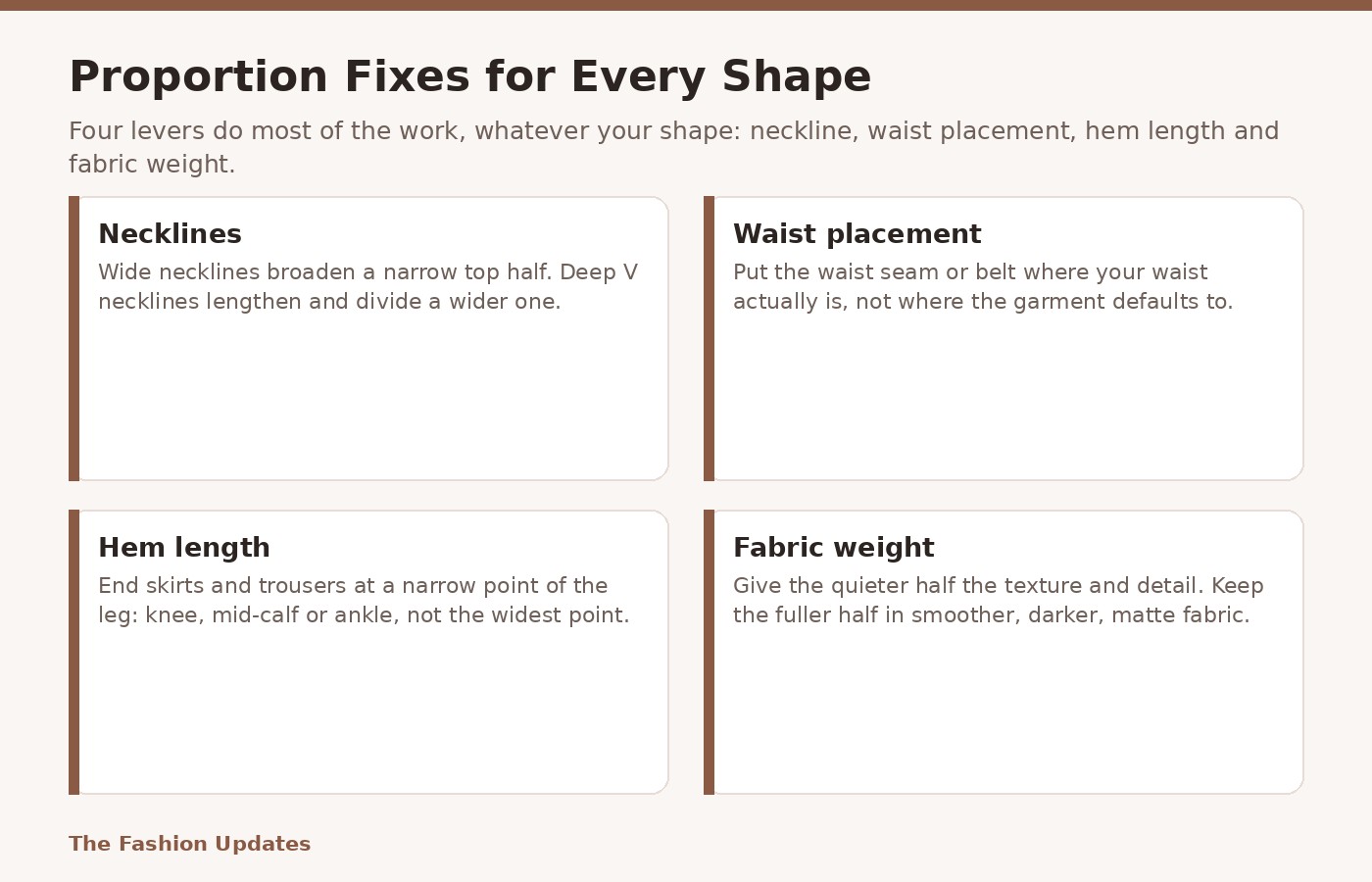
- Four levers do most of the work on every shape: neckline width, waist placement, hem length and fabric weight, adjusted in that order.
- Put texture, shine and detail on the quieter half of your body and keep the fuller half in smoother, darker, matte fabric, and proportions balance without effort.
- Brand size charts disagree with each other, so your measurements, not your usual size, are the only reliable shopping tool you own.
Table of Contents
- Key Takeaways
- Measure First: Three Numbers That Name Your Shape
- Pear: Balance the Top Half
- Hourglass: Follow the Waist
- Rectangle: Create the Waist
- Apple: Lengthen the Middle
- Inverted Triangle: Build the Bottom Half
- Fabric, Hem and Shoe Levers for Every Shape
- Shopping and Alterations: Make the Fit Final
- Our view
- Frequently Asked Questions
- Sources
- Recommended
Measure First: Three Numbers That Name Your Shape
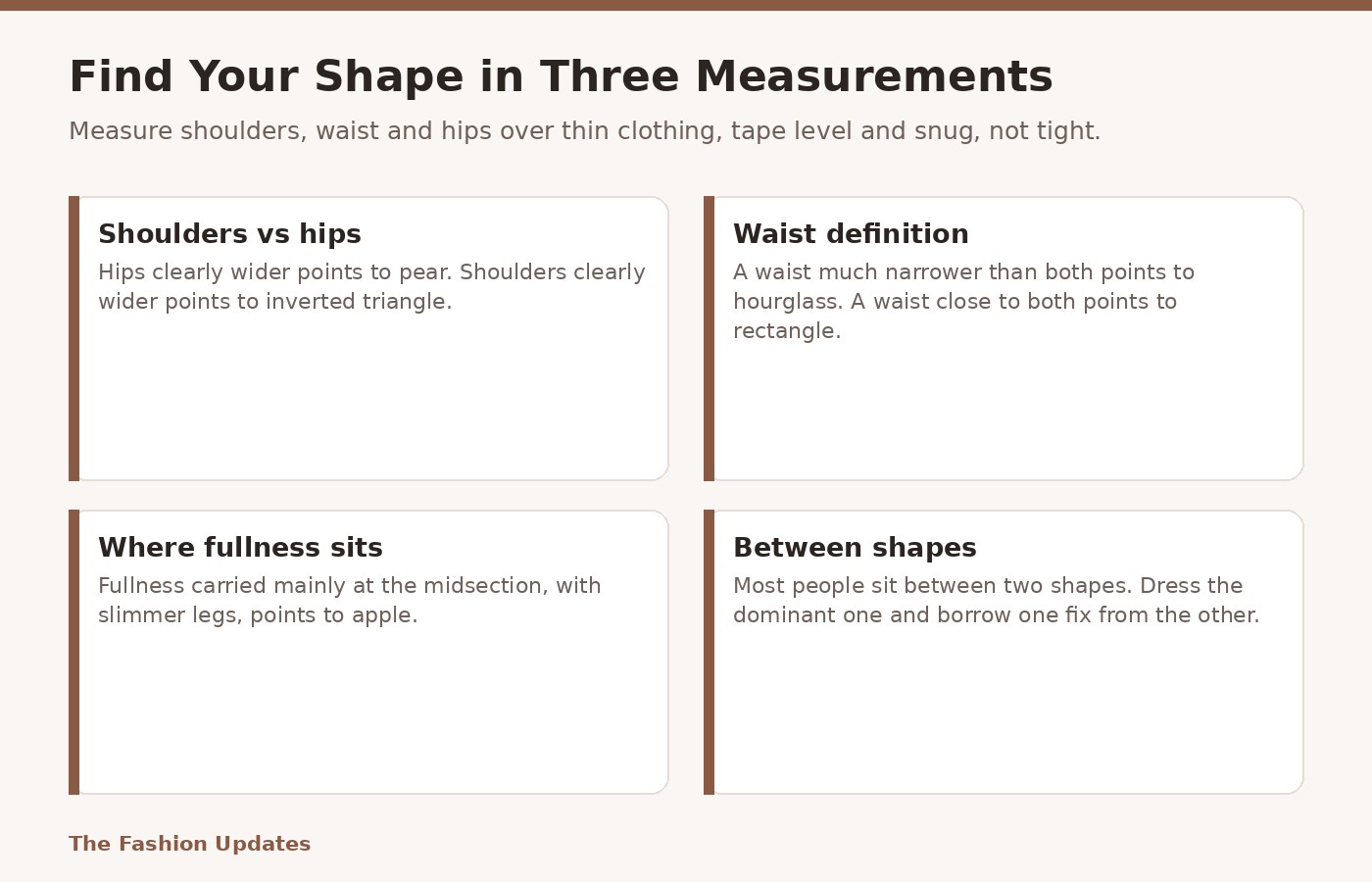
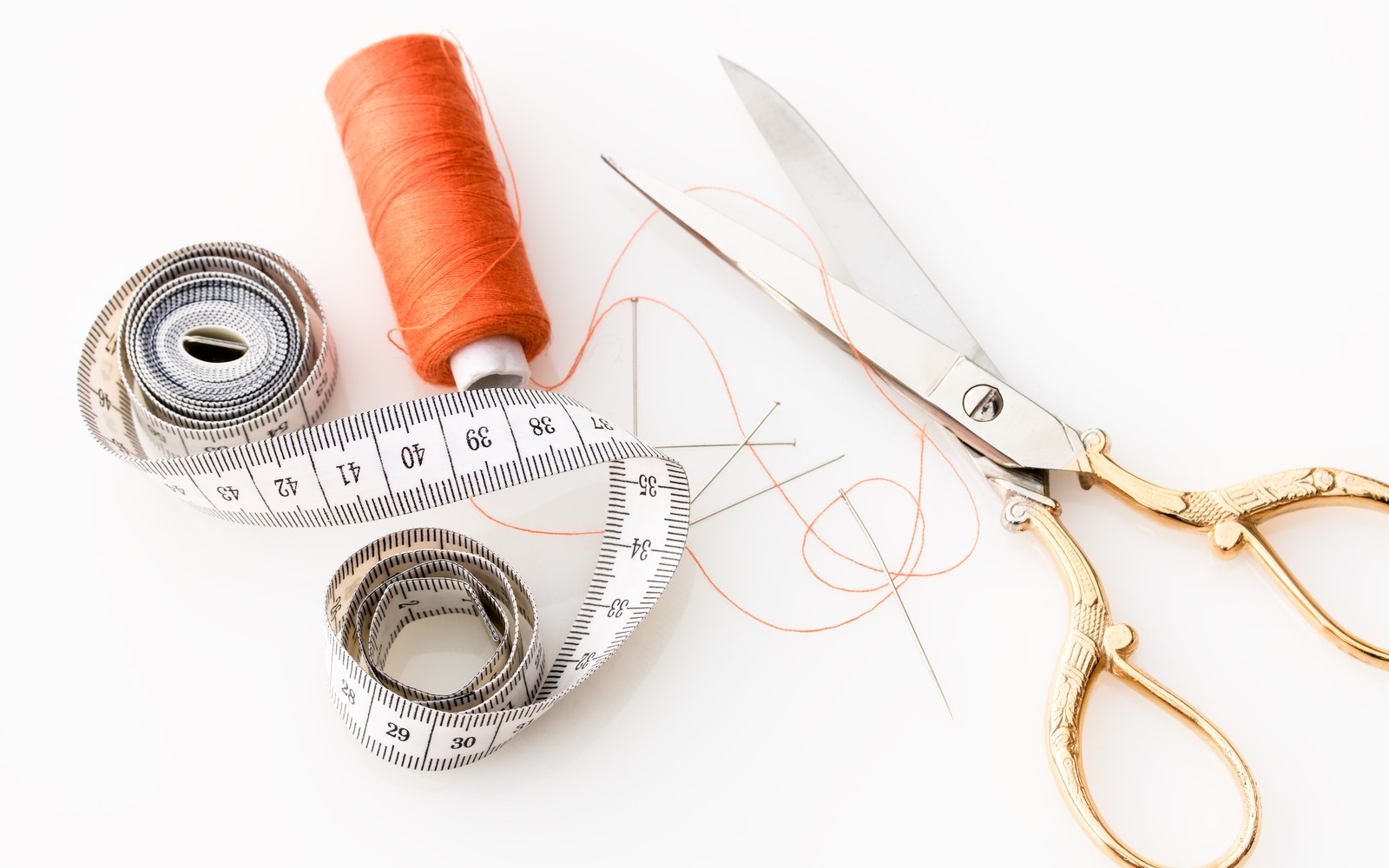
Shape is a relationship, not a size. A tape measure and three numbers tell you more than any quiz, because the numbers cannot flatter you. Levi’s sets out the measuring convention in its product size guide: measure around the natural waistline, around the fullest part of the hips, and keep the tape level and snug without compressing. Add your shoulder width, measured across the back from shoulder point to shoulder point, and you have the full diagnostic.
| Relationship between the numbers | Shape | First lever to pull |
|---|---|---|
| Hips clearly wider than shoulders, waist defined | Pear | Broaden and brighten the top half |
| Shoulders and hips close, waist much narrower | Hourglass | Keep the waist visible in every outfit |
| Shoulders, waist and hips all close | Rectangle | Build a waist with seams, belts and layers |
| Fullness at the midsection, slimmer legs | Apple | Lengthen the torso line and show the legs |
| Shoulders clearly wider than hips | Inverted triangle | Add weight and detail below the waist |
Take the measurements over thin clothing, standing naturally, and write them down with the date. Bodies change, and a shape diagnosis from memory is usually a diagnosis of a body from years ago. The same measure-first habit runs through our jeans fit guide, where rise and inseam do the same work for denim that these three numbers do for your whole wardrobe.
Between two shapes is normal
If your numbers sit near a border, you are not an exception; you are the majority. Pick the shape your measurements lean toward and dress that one. Then borrow exactly one fix from the neighboring shape, the one that addresses your loudest daily frustration, a gaping waistband, a hem that lands wrong. Two borrowed fixes is a wardrobe strategy. Five is confusion.
What shape does not decide
Shape does not decide your size, your colors, or your style. It decides where seams, hems and details should sit. Color temperature is a separate diagnosis, covered by our skin undertone guide, and swim-specific fit is a separate problem again, owned by our swimsuit body type guide. Keep the questions separate and each answer stays usable.

Pear: Balance the Top Half
The pear shape carries its width at the hips, with narrower shoulders and a defined waist. The dressing goal is not to shrink the hips, which clothes cannot do, but to give the top half enough presence that the eye reads the whole silhouette as balanced. The Concept Wardrobe’s pear body shape guide works through the same logic in depth: widen the shoulder line visually, keep the waist marked, and let the lower half stay smooth and uninterrupted.
Necklines and sleeves that widen
Wide necklines, boat, square and Sabrina, stretch the shoulder line sideways. Sleeve interest does the same work: a slight puff, a cap, or a structured shoulder adds the inches the silhouette is missing. Keep the detail budget up top. Prints, lighter colors and texture belong on the top half; the bottom half reads best in darker, matte, unbroken fabric.
Bottoms that stay quiet
A-line and bootcut shapes skim the hip and balance it with width at the hem, the same silhouette logic our cowboy boots outfit guide uses when it pairs bootcut denim with a wider boot shaft. Straight trousers in a firm fabric hold a clean line. Avoid cargo pockets, hip embellishment and tapered cuts that narrow to the ankle, because each one underlines the widest point. Hem trousers and skirts to a narrow point of the leg, the knee or just below it, or the ankle, never mid-thigh or mid-calf at the widest part.
Accessories pull the eye up
The Concept Wardrobe’s accessories guidance makes the same point for finishing pieces: necklaces and earrings keep attention on the upper body, and a bag carried at waist height or under the arm balances better than one swinging at the hip. Eyewear works the same way, which is why our sunglasses face shape guide treats frames as a proportion decision, not an afterthought. Our cross necklaces guide covers pendant lengths in detail if you want the jewelry version of this lever.
Hourglass: Follow the Waist
The hourglass shape is already balanced: shoulders and hips in proportion, with a waist that is visibly narrower. The dressing job is protection, not correction. Anything that hides the waist, boxy cuts, straight shifts, oversized layers worn closed, deletes the shape’s one structural advantage. The Concept Wardrobe’s hourglass body shape guide states the principle plainly: dress the top and bottom in proportion and keep the waist marked in every single outfit.
Fabrics that follow, not fight
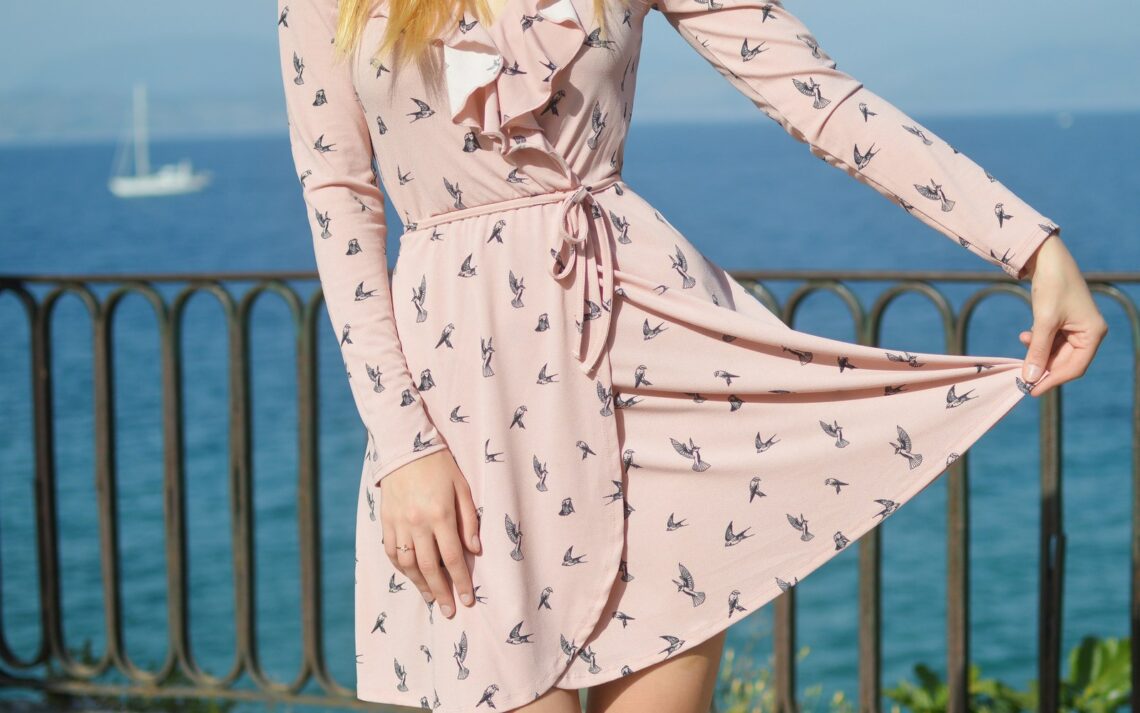
Soft fabrics with drape follow an hourglass silhouette; stiff, textured and bulky fabrics stand away from it and add false volume. The fabric selection guidance from the same wardrobe system recommends fine knits, jersey and fluid weaves for this shape, and warns against heavy texture on either half. A wrap dress is the classic hourglass garment precisely because its fabric and its waist tie obey both rules at once.
The waist marker toolkit
Belts at the natural waist, wrap ties, peplum hems that start at the waist, and jackets that close at one button on the waist all do the same job. Our best belts for men guide covers belt sizing and proportion for unisex styles, and the same width logic applies: a belt should match your scale, not fight it. If a garment has no waist marker, add one or alter one in; an unmarked hourglass outfit reads as a rectangle outfit, whatever the body inside it.
Rectangle: Create the Waist
The rectangle shape runs fairly straight from shoulders to hips, with a waist that is only slightly narrower. Nothing here needs balancing; the halves already match. What the shape asks for is architecture: a waist built by the clothes, since the body does not supply a strong one. This is the shape that benefits most from the system thinking in our capsule wardrobe guide, because created waists depend on pieces that layer predictably.
Seams, belts and the half-tuck
A belt worn at the natural waist over a dress or a long top creates the indentation directly. Princess seams and peplums build it into the garment. The half-tuck does a casual version of the same work, marking the waist at the front while the fabric behind keeps the line relaxed. What does not work is volume everywhere at once: a billowy top over wide trousers gives the rectangle nothing to read as a waist.
Curves by contrast
Because the halves are equal, small contrasts register strongly. A defined shoulder with a flared skirt reads as an hourglass suggestion. A fitted top over a straight trouser reads as polish. Keep one element structured and one element soft in every outfit, and alternate which is which. Monochrome head-to-toe in a fluid fabric is the rectangle’s hardest outfit, because it offers the eye no event to organize around.
Apple: Lengthen the Middle
The apple shape carries fullness at the midsection, often with a generous bust and comparatively slim legs. The dressing goal is a longer, uninterrupted torso line and attention moved to the legs and the face. Empire and A-line cuts that skim rather than cling do the first job; V and scoop necklines open the chest and divide the torso vertically, which reads as length.
Structure at the shoulders, ease at the waist
A structured shoulder, a blazer worn open, a shirt with a defined collar, frames the top of the silhouette while fabric below falls straight from the bust instead of hugging the waist. The fabric guidance for this shape recommends well-structured fabrics for tops precisely because they hold that falling line. Avoid belts at the fullest point and waist seams that land there; move any horizontal line up under the bust or down to the hip.
Show the legs, choose the hem
Slim legs are this shape’s ready-made asset. Trousers that taper or run straight and slim, and skirts ending at or just above the knee, put the narrowest part of the body on display. Sizing honesty matters here more than anywhere: Nordstrom’s size charts show how much brand measurements vary, and an apple shape in a too-small size gets cling in exactly the wrong places. Buy the size that skims, then alter the rest.
Inverted Triangle: Build the Bottom Half
The inverted triangle carries width at the shoulders and chest, with narrower hips and legs. The dressing goal mirrors the pear, reversed: quiet the top half down, and give the bottom half the volume, texture and detail. Dark, matte, unstructured tops with soft shoulders do the quieting. Set-in sleeves and V necklines divide the chest and narrow it visually.
Volume below the waist
A-line skirts, wide-leg and bootcut trousers, cargo and patch pockets, and lighter or brighter colors below the waist all add the missing presence. This is the one shape where a statement shoe genuinely changes the outfit’s math, because it anchors the narrower half. The Concept Wardrobe’s shoe selection guidance treats footwear as a balance tool for exactly this reason, and our white sneakers styling guide shows how a grounded shoe finishes a top-heavy silhouette in everyday clothes.
Bags and hems as ballast
A bag carried low, at hip height on a longer strap, adds visual weight where the shape is lightest. Our everyday handbag guide covers strap length and carry position in detail. Keep hems on top layers at hip length or longer, so the top half never ends in a hard horizontal line at its widest point, and let jackets fall open rather than buttoning across the chest.
Fabric, Hem and Shoe Levers for Every Shape
Shape-specific advice converges on the same four levers, which is good news: learn the levers once and every future purchase gets easier. Fabric first. Textile School’s denim guide explains how fabric weight and weave change how a garment hangs, and the principle generalizes: heavy, stiff fabrics hold their own shape and add structure; fluid fabrics follow the body and add movement. Give structure to the half that needs definition and fluidity to the half that needs softening.
Hems land on narrow points
Whatever the garment, end it at a narrow point: knee, mid-calf at its slimmest, ankle bone, wrist. A hem landing at the widest point of a calf or thigh draws a frame around exactly that width. This single rule fixes more outfits than any other in this guide, and it costs nothing but a mirror check. Our loafers guide applies the same logic to where a trouser hem should meet a shoe.
Shoes finish the proportion
A shoe is the last line of the silhouette. Pointed toes extend the leg line; chunky shoes ground a lighter lower half; ankle straps cut the leg wherever they sit. Zappos’s size conversion charts are worth a look before any shoe order, because a shoe that fits badly changes your posture, and posture changes every proportion this guide has discussed. Comfort is a proportion tool too: the fixes in our heels comfort guide keep a chosen heel height wearable all day.

Jack & Rose Travel Steamer for Clothes,100-240V Portable Iron,15s Heat Up,Steamer & Iron 2 In 1, Travel Size,Large Ceramic Heat Panel,for Global and Europe
Offer 37.59 $
List Price
Shopping and Alterations: Make the Fit Final
Shape knowledge pays off at the rack and at the tailor, in that order. Shop with your three measurements in your notes app and compare them to the garment, not the label. Brand charts prove why: Madewell’s size chart maps its sizes to body measurements that differ from the numbers at Lands’ End’s size charts and again from J.Crew’s size charts. Your usual size is a rumor. Your measurements are the document.
The fitting-room checks
Sit down, raise your arms, and walk the length of the shop. Check the waist seam against your actual waist, the hem against the narrow points, and the shoulder seam against your shoulder point. Photograph the outfit from the side; proportions read more honestly in a photo than in a mirror you are posing for. If two of the four levers are wrong, no alteration saves the garment. If one is wrong, it usually can.
Petite and tall ranges change the landing points
Standard patterns assume an average frame, so petite and tall ranges are not just shorter or longer versions of the same garment. A petite range moves the waist seam, the knee break and the hem together, which is why a petite pear often fits better than a standard size altered down: the proportions were re-placed, not just shortened. Tall ranges do the same work in the other direction. If your alterations list is always the same two fixes, a waist that sits low and a hem that lands mid-calf, try the dedicated range in your usual size before paying a tailor to rebuild a standard pattern around you.
Alterations that change proportions
Hemming to a narrow point, moving a waist seam, taping a hem up to test a length before committing, and adding a belt loop position are the cheap, high-yield alterations. A no-sew hemming tape lets you live with a test length for a full day before the tailor makes it permanent. Bigger surgery, reshaping shoulders, re-cutting a waist, usually costs more than the garment’s remaining life justifies. Buy for the shoulders and the widest point; alter for length and waist. That order never reverses.


Our view: body shape advice fails when it reads as a list of things to hide. Read as engineering, it works: measure honestly, name the relationship, then pull four levers in order. The goal was never a different body. It is a wardrobe whose seams, hems and details sit where your body actually is, so the clothes stop arguing with the person inside them.
— The Fashion Updates
Frequently Asked Questions
How do I find my body shape accurately?
Measure shoulders, waist and hips over thin clothing with the tape level and snug, then compare relationships: hips widest is pear, shoulders widest is inverted triangle, waist much narrower than both is hourglass, all three close is rectangle, and fullness concentrated at the midsection is apple. Borderline results are normal; dress the dominant shape.
Can my body shape change over time?
Yes. Weight change, pregnancy, training and age all redistribute where fullness sits, which is why this guide starts with fresh measurements rather than memory. Re-measure once or twice a year and after any significant change, and let the levers move with the numbers.
Do these rules apply to men’s clothing too?
The levers do, even though the shape names differ. Waist placement, hem landing points and fabric weight govern men’s proportions the same way, and our menswear guides, starting with the men’s trousers guide, apply the same measure-first method to men’s fits.
What if I am between two body shapes?
Dress the dominant shape fully and borrow one fix from the secondary shape, aimed at your single biggest frustration. Following two complete rule sets produces outfits that argue with themselves; one borrowed fix solves the problem without the argument.
Is dressing for your body shape about hiding your body?
No. It is about placement: where seams, hems, belts and details sit relative to your proportions. The same garment in the same size reads completely differently when its waist seam meets your waist. Nothing is hidden; the engineering is just finally pointed at the right body.
How We Pick What We Recommend
Every guide on The Fashion Updates follows the same review process — what we compare, what we check, and what we leave out.
Sources
- Levi’s — Product Size Guide
- Nordstrom — Size Charts
- The Concept Wardrobe — Pear Body Shape Guide
- The Concept Wardrobe — Hourglass Body Shape Guide
- The Concept Wardrobe — Select the Fabrics
- The Concept Wardrobe — Select the Shoes
- The Concept Wardrobe — Add Accessories
- Textile School — Denim Fabrics
- Zappos — Shoe Size Conversion Charts
- Madewell — Size Chart
- Lands’ End — Size Charts
- J.Crew — Size Charts