As an Amazon Associate I earn from qualifying purchases.
You own the boots, you like the boots, and then you stand in front of the closet wondering why they look right with one outfit and costume-like with the next. The problem is rarely the boot itself. It is the hem, the shaft, and how many Western signals you asked one outfit to carry. This guide gives you repeatable formulas instead: dresses that leave the right gap, denim that covers or crops on purpose, work looks that stay polished, and evening looks that let a sleek boot do the work quietly.
The Fashion Updates
Outfit Formulas That Work
Jeans, dresses, skirts, shorts, and evening looks matched to your boot’s shaft, toe, and leather — plus the finishing pieces that make them intentional.
Key Takeaways
- Build every outfit around shaft height first, because where the boot ends decides where your hem should end.
- Use one clear hem rule with dresses and skirts, either leave a confident gap of leg or let the hem overlap the boot completely.
- Pair denim by leg shape on purpose, tucking skinny styles, covering the shaft with bootcut, or cropping straight legs just above the boot.
- Keep work and evening formulas simple, with cleaner leather, quieter stitching, and only one Western signal besides the boot.
- Finish the formula underneath and in between, with tall socks, a bridging belt, and conditioned leather, so the boot looks intentional all day.
Table of Contents
- Key Takeaways
- Start With Shaft, Toe, and Proportion
- Dresses: Leave a Gap or Let the Hem Overlap
- Denim Formulas: Tuck, Cover, or Crop
- Skirts, Shorts, and Showing the Boot on Purpose
- Work Looks That Keep the Boot Professional
- Evening Looks: Sleek Boots, Simple Dressing
- Color, Texture, and One Western Signal at a Time
- The Small Pieces That Make the Formula Work
- Keep the Pair Outfit-Ready
- Our view
- Frequently Asked Questions
- Sources
- Recommended
Start With Shaft, Toe, and Proportion
| Boot shaft and style | Best outfit pairings | What clashes |
|---|---|---|
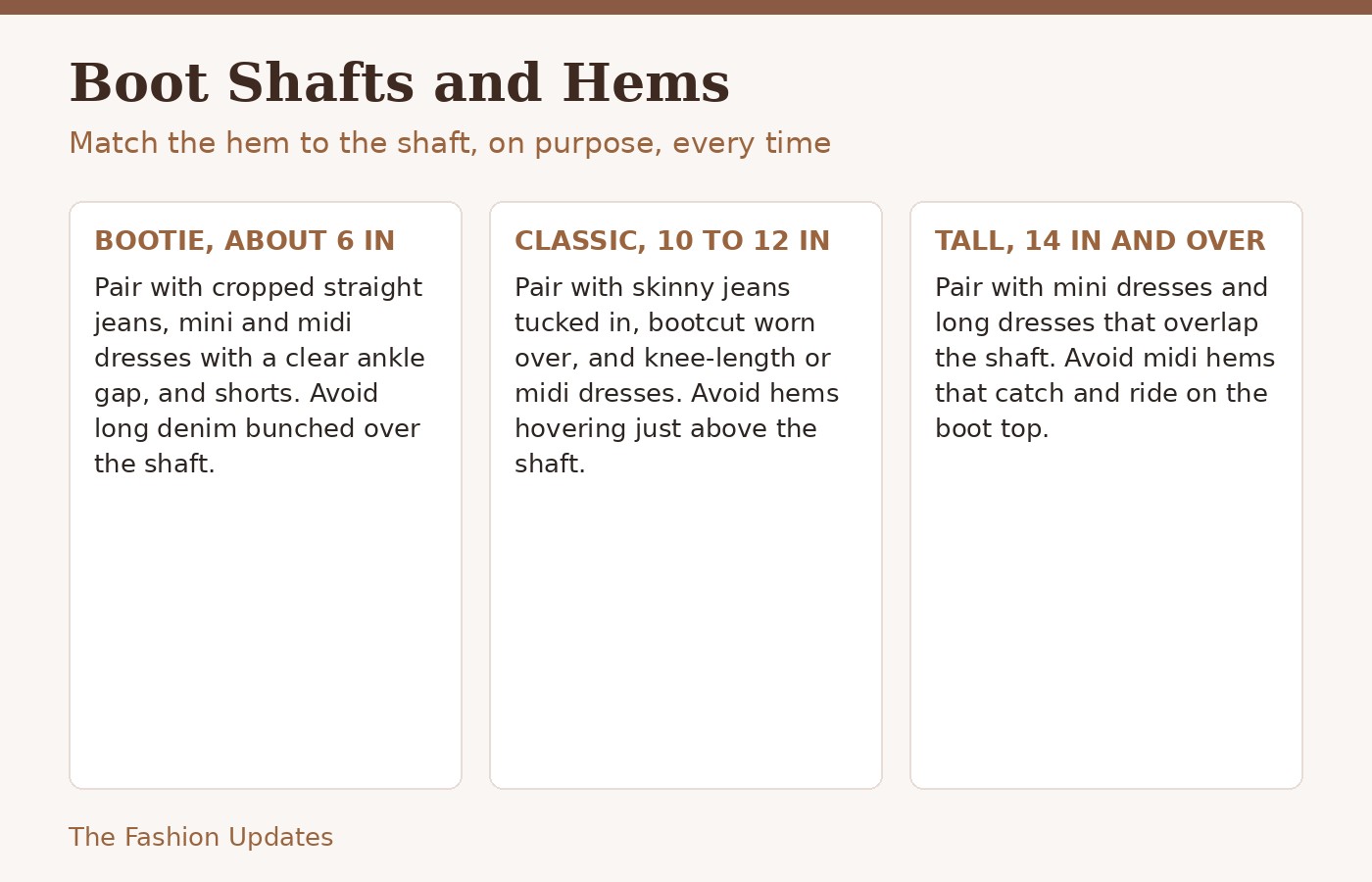
| Short bootie, about 6 inches | Cropped straight jeans, mini and midi dresses with a clear ankle gap, shorts | Long denim bunched over the shaft, hems hovering at the boot top |
| Classic mid-calf, about 10 to 12 inches | Skinny jeans tucked in, bootcut jeans worn over, knee-length and midi dresses | Slim trousers stuffed inside, hems stopping an inch above the shaft |
| Tall shaft, 14 inches and over | Mini dresses, long dresses that overlap the shaft, tucked skinny denim | Midi hems that catch on the boot top, wide trousers tucked in |
| Snip or pointed toe, sleek leather | Slip dresses, tailored trousers, evening separates | Heavy, rugged layers that fight the boot’s cleaner line |
| Square toe, distressed leather | Denim, casual dresses, relaxed work looks | Formal dresses that need a quieter, sleeker shoe |
Read the shaft before the closet
Tecovas explains in its boot shaft guide that the shaft is the part covering the ankle and calf, running from the arch to the collar, and that a standard shaft sits around twelve inches while women’s styles range from near-ankle booties to over-the-knee designs. That range is exactly why one universal rule fails. A six-inch bootie needs a hem that shows it or clears it, while a tall shaft needs either leg on show above it or fabric falling cleanly over it. Measure your pair once, note the number, and dress to that number.
Fit supports the same point. Ariat’s cowboy boot fit guide stresses a snug instep, the ball of the foot resting on the widest part of the boot, and only a small amount of heel lift. A boot that fits that way sits smooth under denim and does not push fabric out of shape at the calf. Justin Boots gives parallel fit guidance, describing a secure hold without pinching and a slight heel slip as normal. If a pair fights your calf or slides at the heel, no outfit formula will rescue it, and our separate guide to how to break in cowboy boots owns that problem in full.
Let toe and finish set the dressiness
Toe and finish set the dressiness: a snip or pointed toe and smooth, polished leather read dressy, while a square toe and distressed leather read relaxed. This is also where buying advice stops and styling begins. If you are still choosing a pair, our women’s cowboy boots guide covers the pairs worth owning. This post assumes the pair is already in your closet and answers the harder daily question, which is what to put on with it this morning, tomorrow at work, and on Saturday night.
Dresses: Leave a Gap or Let the Hem Overlap
Dresses are the easiest cowboy boot formula once you learn the single rule behind all of them. The hem and the boot should either leave a clear, confident gap of leg between them, or the dress should overlap the top of the boot completely. The awkward outfit is almost always the middle case, where the hem hovers an inch or two above the shaft, cutting the leg into short, unrelated pieces.
Short dresses and tall boots
A mini or above-the-knee dress with a classic or tall boot is the most forgiving formula in this guide. There is plenty of leg on show, the boot reads as an anchor, and almost any toe shape works. Keep the dress simple if the boot is decorative, and let a plain black or brown boot carry a printed or textured dress. A fitted waist helps, because volume everywhere plus a heavy boot can swamp your frame. Add tights in cooler weather and the same formula holds, as long as the tights are smooth and the boot still fits comfortably over them.
Midi dresses and the overlap rule
Fabric decides which direction suits you. A fluid midi in a soft print works beautifully over a tall, sleek boot, because the fabric moves over the leather without clinging. A structured midi with a defined waist pairs better with a bootie and a visible ankle, which keeps the silhouette light. NYLON’s stylists make a related point in their cowboy boot styling guide, describing shorter, muted boots as the easier casual staple and taller, sleeker pairs as the dressier choice. That instinct is sound, and it maps directly onto the midi decision.
Long dresses and slip dresses
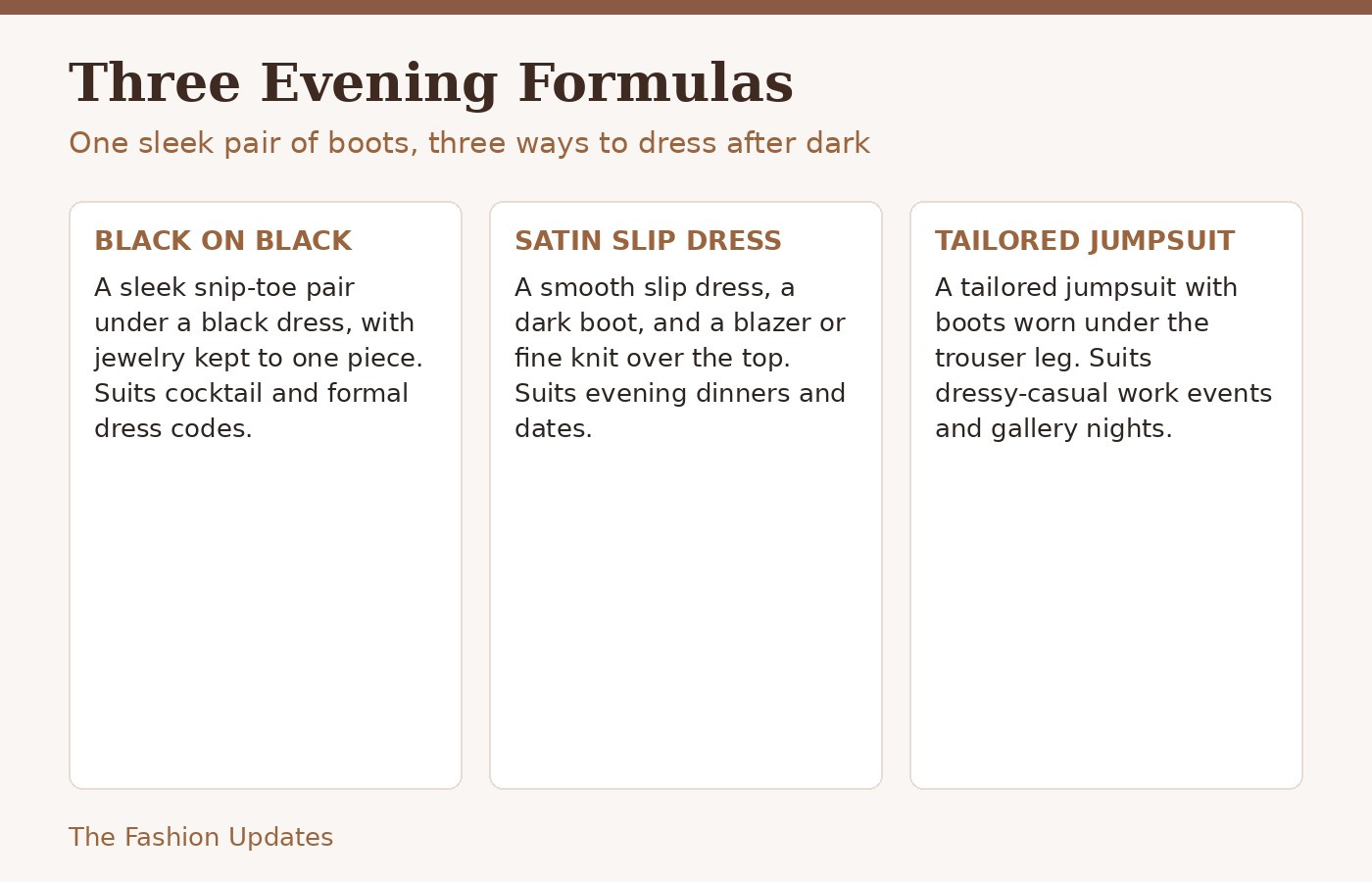
Slip dresses work with less fabric and more contrast. A smooth slip, a sleek dark boot, and one clean layer over the top, such as a blazer or a fine knit, make an evening-ready formula that never looks like a costume. Keep jewelry simple and deliberate. A single piece from our cross necklaces guide can finish the neckline without adding a second theme, and restraint elsewhere is what lets the contrast between silk and leather read as intentional.
Denim Formulas: Tuck, Cover, or Crop
Denim is the boot’s original partner, and it is also where most outfits quietly go wrong. The leg shape decides everything. There are only three honest relationships between jeans and a cowboy boot: the jean tucks into the boot, the jean covers the boot, or the jean crops above the boot. Pick one on purpose and the look works. Drift between them and you get bunching, stacking, and fabric fighting leather.
Tuck skinny denim into the shaft
Skinny jeans belong inside the boot. Levi’s describes its skinny fit as slim through the hip and thigh with a narrow leg opening, and that narrow opening is precisely why stuffing a classic shaft underneath it creates bulk and ridges. Tucked in, the line stays clean, the shaft and its stitching stay visible, and the boot becomes the point of the outfit. This formula suits classic and tall shafts best, and it works with a tucked blouse, a fitted knit, or a blazer that restores some structure on top.
The tuck only looks good when the denim is truly slim and smooth at the calf. If the jean wrinkles heavily inside the shaft, the fit is wrong for the boot, not the formula. Wear a tall, smooth sock underneath, keep the jean leg flat as you pull the boot on, and check the back view once. Readers who rotate boots with heeled pairs will recognize the same fit discipline from our guide to stopping heels from hurting, where what sits between skin and shoe decides comfort by midday.
Cover the shaft with bootcut and flare
Bootcut is the covering formula, designed for exactly this job. In the same Levi’s fit guide, bootcut is slim through the thigh with a slight flare at the ankle, and that flare is what lets the hem fall over the shaft and break gently over the foot. The jean should be long enough to cover the shaft fully and reach toward the heel without dragging on the ground. Too short, and the hem rides up and exposes a slice of shaft with every step. Too long, and the hem frays under your heel.
Crop straight denim above the boot
Cropped straight jeans are the third formula, and the newest-feeling of the three. The hem ends just above a short bootie or at the top of a classic shaft, leaving a deliberate strip of ankle or sock. The key word is deliberate. A crop that ends two inches above the boot reads styled, while a full-length straight jean that happens to stack and bunch over the shaft reads accidental. Straight fits, which Levi’s describes as the same width at knee and opening, hold their shape at the hem, which is why they crop more cleanly than softer, drapier denim.
White and light-wash cropped denim with tan boots is a reliable warm-weather version, especially with a simple top and clean grooming. Our hair care tips matter more than people expect in these minimal outfits, because when the clothes are simple, polished hair and a considered boot carry the whole impression.
Skirts, Shorts, and Showing the Boot on Purpose
Mini and midi skirts
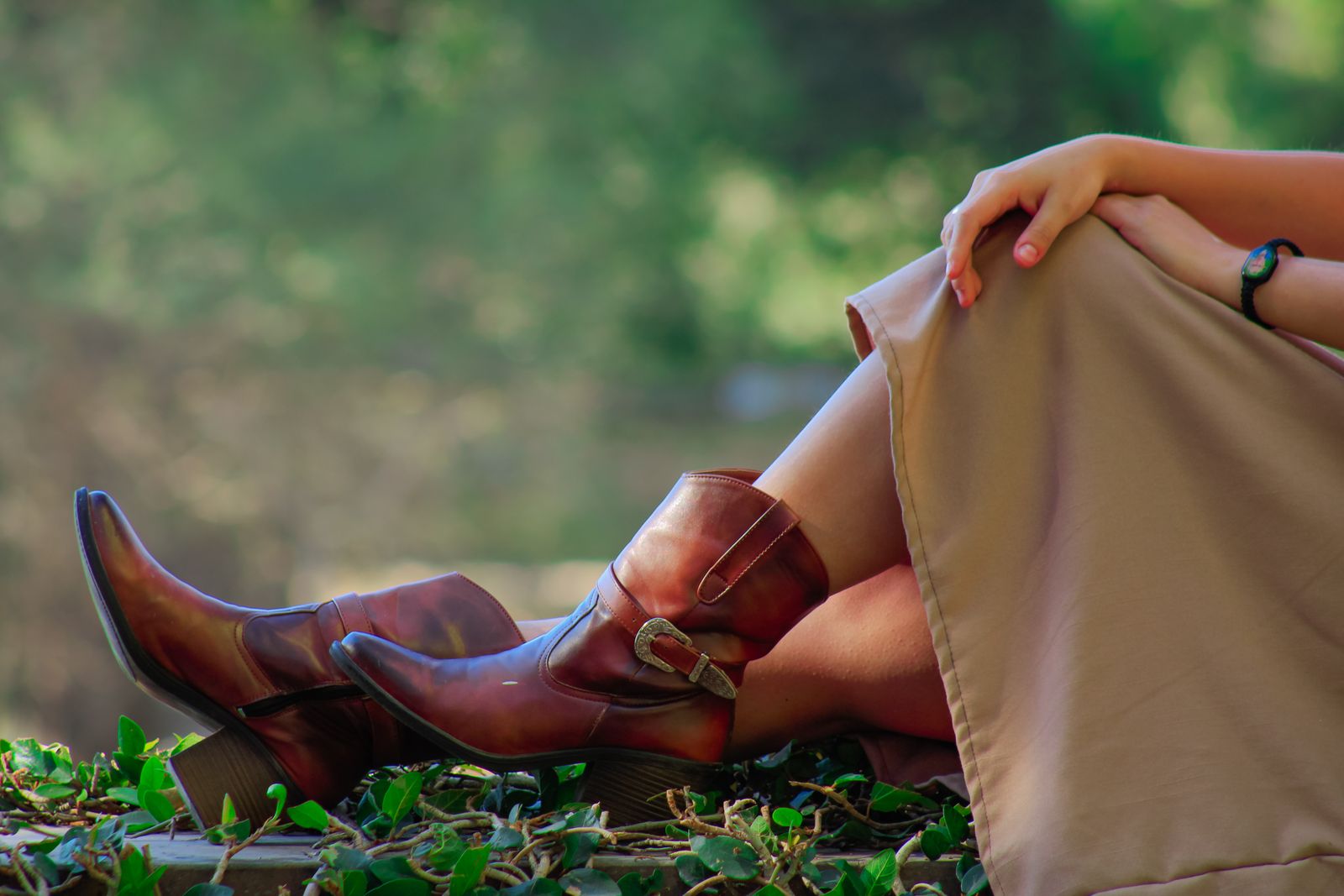
Mini skirts pair with classic or tall boots like mini dresses do, with a clear stretch of leg above the boot. Midi skirts follow the overlap rule: fall over a tall boot, or pair with a bootie and a visible ankle.
Accessories should stay in supporting roles here. One belt at the waist, one bag, and jewelry that does not introduce a second costume theme. If your makeup is doing something strong, let it be the accent. Our makeup foundations guide covers the smooth, lasting base that keeps a bold boot outfit looking polished rather than busy, because shine and patchiness compete with decorative stitching for attention in the worst way.
Shorts without the festival costume
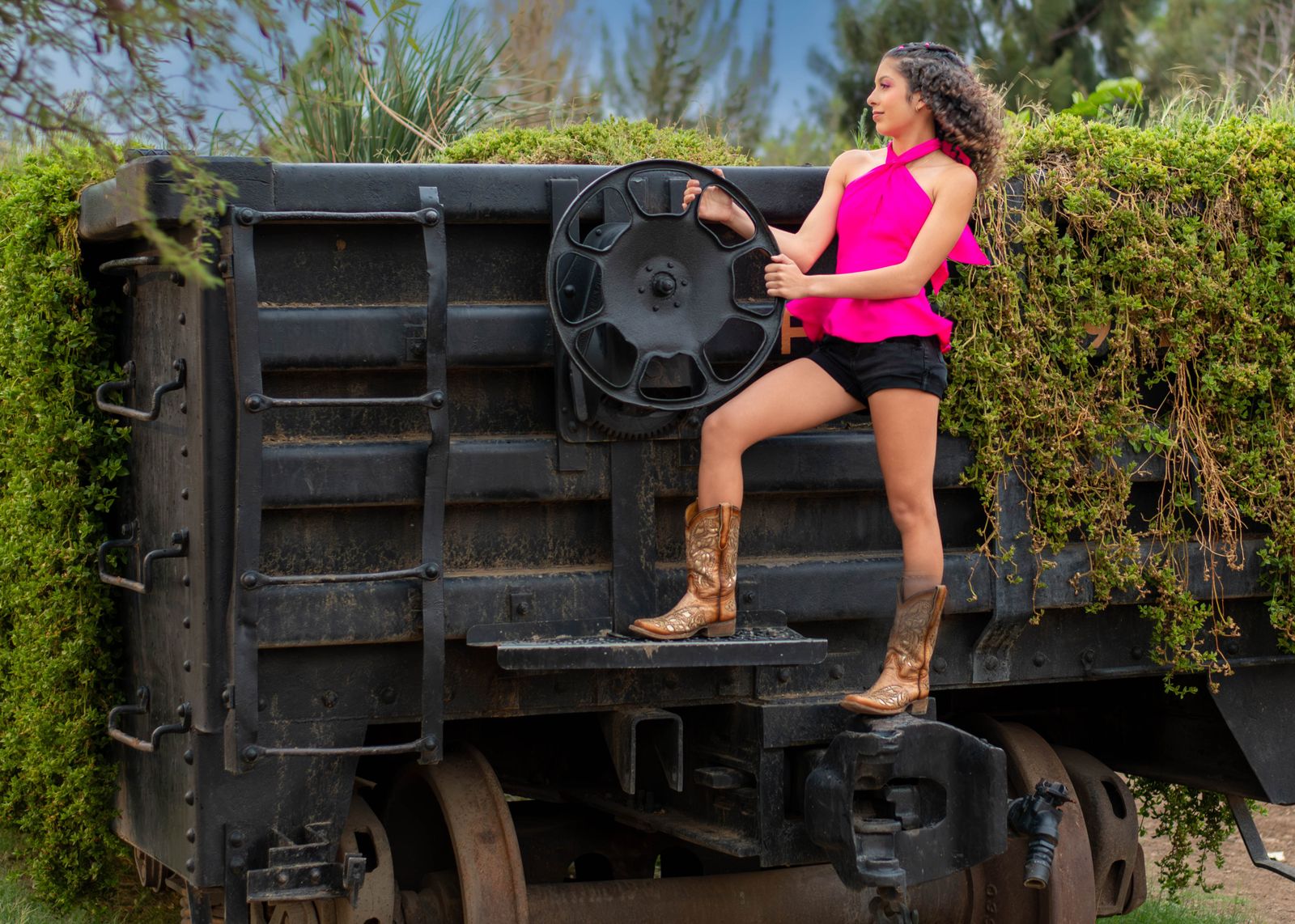
Denim or tailored shorts with cowboy boots stay grown-up through restraint: a clean hem, a tucked shirt or blazer, and no hat, fringe, and plaid at once.
History explains both the appeal and the costume risk. The National Cowboy Museum’s exhibition Cowboy Boots: From Roundups to Runways traces the boot from nineteenth-century riding origins through entertainment and into mainstream fashion, which is why the shape carries such strong associations. The Smithsonian holds working examples too, including rodeo performer’s boots worn by a range cowboy and performer. Knowing the boot began as equipment helps you style it as clothing, with one reference at a time, instead of assembling the whole historical picture at once.
Work Looks That Keep the Boot Professional
Tailored trousers over a sleek boot
The safest office formula is a tailored trouser worn over a sleek, low-profile boot, with only the toe visible. The trouser should be full length, with an opening wide enough to fall cleanly over the shaft without outlining it. Our men’s trousers guide covers the fit principles that make trousers fall correctly over footwear, and the same logic applies here, because a hem that breaks cleanly reads professional regardless of what shoe sits underneath it. Add a blouse or fine knit, a blazer, and minimal jewelry, and most readers will register a polished outfit before they register the boot.
Workplace norms are the real gate. SHRM’s guidance on summer dress codes makes the broader point that employers balance workplace culture, client contact, and the image the organization wants to convey when they draw attire lines. Read your own workplace the same way. A creative studio, a client-facing law office, and a site-based role will judge the same boot differently, and the formula should get more conservative as client contact rises.
Dark denim and dresses on casual days
Where denim is accepted, dark bootcut jeans worn over the boot, with a blazer and a clean top, are the easiest work formula. The wash should be uniform, the denim free of distressing, and the boot polished. On dress days, a knee-length or midi dress with a tall, sleek boot, following the overlap rule, reads as intentional and covered, which suits many offices better than a shorter hem with a visible boot shaft. Emily Post’s attire guide places dressy separates, dresses, and jackets within dressy casual and business dress, and that is the register to aim for, with the boot quietly inside a recognized category rather than outside all of them.
Evening Looks: Sleek Boots, Simple Dressing
Evening is where cowboy boots surprise people, because the formula is the opposite of the daytime one. At night you choose the sleekest boot you own, in black or a deep tone, with a pointed or snip toe and clean leather, and then you keep everything else simple, fitted, and uncluttered. The contrast between a refined outfit and a Western boot is the whole effect, and it collapses if the outfit adds competing decoration.
The little black dress formula
A black dress, black sleek boots, and one piece of jewelry is a complete evening outfit. The dress can be mini, knee-length, or a slip, as long as the hem rule holds, with a gap for shorter dresses and overlap for longer ones. Matching the boot color to the dress lengthens the leg and quiets the Western signal to a shape and a toe. Emily Post’s dress code guide lists the little black dress under semi-formal dress, alongside cocktail dresses and dressy separates, which is a useful reminder that the dress is already doing the formal work. The boot does not need to apologize, and it does not need embellishment to keep up.
Finish the look with the same restraint. A considered lip color, chosen with help from our lip plumpers guide if volume is part of your evening routine, and nails that do not fight the boot, using our guide to nail polish colors for your skin tone, will carry further than extra Western accessories ever will.
Satin, tailoring, and wedding-guest care
Weddings and formal invitations need one extra check, which is the host’s code, not your preference. Boots suit rustic, outdoor, and creative celebrations beautifully, especially with a dressy dress and a sleek pair. For black tie and similarly formal codes, follow the invitation, since the Emily Post attire guide reserves those occasions for formal gowns and dressy cocktail dress, and a guest’s job is to honor the register the hosts set. When the code is cocktail or festive and the venue is a barn, garden, or ranch, a polished boot under a proper cocktail dress is not a compromise. It is often the most practical and best-looking choice in the room, especially on grass or gravel where thin heels sink.
Color, Texture, and One Western Signal at a Time
Build color around the boot you own
The Metropolitan Museum’s Costume Institute holds early American boots in its collection, a reminder that decorated footwear has been treated as a serious design object for a long time. Treat your own decorated pair the same way a curator would, as the piece on display, with everything else in the role of the gallery wall. Our fashion magazine guide is a good next read if you enjoy that way of looking, because editorial styling follows the same discipline of one focal piece per look.
Mix textures, not themes
The Small Pieces That Make the Formula Work
Socks that stay hidden and stay up
Wear a tall boot sock that reaches above the shaft, even when the outfit shows no sock at all. Boot Barn’s guide to women’s boot socks explains that tall boot socks put a layer between skin and the leather shaft, seams, and lining, and that a cuff reaching above the boot opening keeps the shaft edge from rubbing the calf directly. That hidden layer prevents the slow rub that makes a good outfit miserable by afternoon, and it keeps tucked skinny denim smooth inside the shaft.
For this job we recommend tall cushioned boot socks with a fitted arch and a cuff that holds above the calf. Choose a smooth, thin knit for sleek dress boots and a lightly cushioned sole for casual pairs you walk in all day, and match the color to your leg or your tights so any brief show at the top of a bootie reads as intentional.

A belt that bridges boot and outfit
A leather belt in the same color family as your boots is the quietest way to make a boot outfit look planned. Wear it at the waist of a dress, through the loops of bootcut denim, or over a long shirt, and it creates a middle point that connects the boot below to the outfit above. The buckle can carry the one extra Western signal allowed by the rule in the previous section, as long as the rest of the jewelry stays simple. Fit principles from our best belts for men guide apply to width and proportion more broadly than the title suggests, because a belt that is too wide or too narrow for the loops and the waist will undermine an otherwise clean formula.
Choose a plain mid-width leather belt in black or cognac, with a simple buckle, and it earns its place across your whole wardrobe on non-boot days too. A belt that only works as part of a Western costume will sit in the closet.
Keep the Pair Outfit-Ready
Clean, condition, and polish in that order
Justin Boots sets out a clear boot care routine: brush off loose dirt, clean the leather, let it dry fully, then condition, polish, and consider weather protection, while warning that dry leather will eventually crack without conditioning. Tecovas gives a matching sequence in its guide to cleaning leather boots, recommending a light brush after wear and conditioner worked in thoroughly for a deeper clean. Lucchese summarizes the same discipline as a clean, condition, polish, protect process, with cedar boot trees to hold shape between wears. Three makers, one message: little and regular beats rare and heroic.
For keeping a styling pair ready, we recommend a quality leather conditioner made for smooth cowboy boot leather, used in thin coats after cleaning and tested first on a hidden spot, exactly as the makers advise. Suede and exotic pairs need their own products, so check your boot’s leather before you begin, and never borrow a smooth-leather routine for suede.

Store the shaft upright and rotate the pair
Store tall boots upright with trees, shapers, or soft support inside the shaft, so the leather does not slump and crease at the ankle. Keep them clean before you put them away, since dust ground into stitching is harder to remove later. Rotate your boots with other footwear across the week, which gives leather a day to dry and recover, the same rotation principle that keeps heeled pairs comfortable in our heel comfort guide. A pair that rests, dries, and gets conditioned on schedule will carry dresses, denim, work, and evening formulas for a long time, and that longevity, not any single outfit, is the real return on a good pair of cowboy boots.
Our view
We believe cowboy boots are not a theme, they are a building block, and they work best when you treat them that way. Start with the shaft, give the hem one clear job, tuck or cover or crop denim on purpose, and let the boot be the only loud voice in the outfit. Do that, and the same pair carries a floral dress on Saturday, dark denim on a workday, and a black dress at night, without ever looking like you dressed up as anything.
— The Fashion Updates
Frequently Asked Questions
Should jeans go inside or outside cowboy boots?
Both are correct, depending on the leg shape. Skinny jeans tuck inside the shaft, bootcut and flare jeans fall outside and cover it, and cropped straight jeans end just above it. The mistake is a middle case, such as a slim straight jean bunched over a shaft it was never cut to cover.
What dress length works best with cowboy boots?
Mini dresses and long dresses that overlap the boot are the easiest. Midi dresses work when the boot is either tall enough for the hem to overlap, or short enough to leave a clear ankle gap. Avoid a hem that stops an inch or two above the top of the shaft.
Can you wear cowboy boots to work?
Yes, in many workplaces, with your most conservative pair. Choose smooth dark leather, minimal stitching, and a sleek toe, wear tailored trousers or dark bootcut denim over the boot, and keep the rest of the outfit within your normal work dress code. Client-facing and formal workplaces need the quietest version, or a different shoe.
Can cowboy boots work for evening or a wedding?
For evening, yes, with a sleek black or dark boot, a simple dress, and minimal accessories. For weddings, follow the invitation and the venue. Boots suit outdoor, rustic, cocktail, and festive celebrations well, and they are practical on grass and gravel, but black tie and similarly formal codes call for formal dress shoes instead.
How do I stop cowboy boots looking like a costume?
Allow one Western signal besides the boot, at most. Skip the combination of hat, fringe, plaid, and Western shirt in a single outfit, build around modern, neutral pieces, and let color and texture connect the look. A belt in the boot’s color family is usually the only bridge you need.
How We Pick What We Recommend
Every guide on The Fashion Updates follows the same review process — what we compare, what we check, and what we leave out.
Sources
- Tecovas — What Is a Boot Shaft?
- Ariat — How Should Cowboy Boots Fit?
- Justin Boots — Cowboy Boot Fit Guide
- Levi’s — Product Size Guide
- NYLON — How to Wear Cowboy Boots With Any Aesthetic
- National Cowboy Museum — Cowboy Boots: From Roundups to Runways
- Smithsonian National Museum of American History — Boots Used by Don Bell
- SHRM — Flip-Flops and Spaghetti Straps: Can Summer Casual Cross the Line?
- Emily Post — Attire Guide: Dress Codes from Casual to White Tie
- The Metropolitan Museum of Art — Boots, American
- Boot Barn — Women’s Boot Socks
- Justin Boots — Boot Care
- Tecovas — How to Clean Leather Boots
- Lucchese — Boot Maintenance and Care