
As an Amazon Associate I earn from qualifying purchases.
You love how the pair looks, you paid for it, and by midday your feet are bargaining for mercy — burning under the ball, rubbing at the heel, toes squeezed tight. You do not need a lecture or a new closet. You need the heels you already own to stop hurting. This guide works through the fixes that actually change how a pair feels: cushioning placed where pressure lands, friction stopped before it blisters, tight spots stretched, wear time planned, and recovery that resets your feet for next time.
The Fashion Updates
Comfort Fixes for the Heels You Already Own
Cushioning, friction prep, and wear tactics that make the pairs in your closet wearable again — no new shoes required.
Key Takeaways
- Cushion the ball of the foot first, because forward pressure there is the most common reason a familiar pair turns painful by midday.
- Stop your foot sliding forward with fit fixes and inserts, since sliding crushes toes, overloads the forefoot, and creates most rubbing.
- Protect every known rub spot with moleskin or padding before you leave home, because friction is far easier to prevent than to treat.
- Stretch tight uppers and tight calves on a regular schedule, so the shoe gives a little and your Achilles is not fighting every step.
- Rotate pairs, limit continuous wear, and recover with rest and icing afterward, so one hard day does not become a week of sore feet.
Table of Contents
- Key Takeaways
- Why Heels Hurt: Pressure, Friction, and Fit
- Cushion the Ball of the Foot First
- Stop the Slide That Crushes Your Toes
- Fix Friction Before It Becomes a Blister
- Stretch Tight Spots Instead of Fighting Them
- Break In and Rotate Pairs You Already Own
- Plan the Day Around Your Feet
- Recover Well After a Heel Day
- Know When Pain Needs a Professional Look
- Our view
- Frequently Asked Questions
- Sources
- Recommended
Why Heels Hurt: Pressure, Friction, and Fit
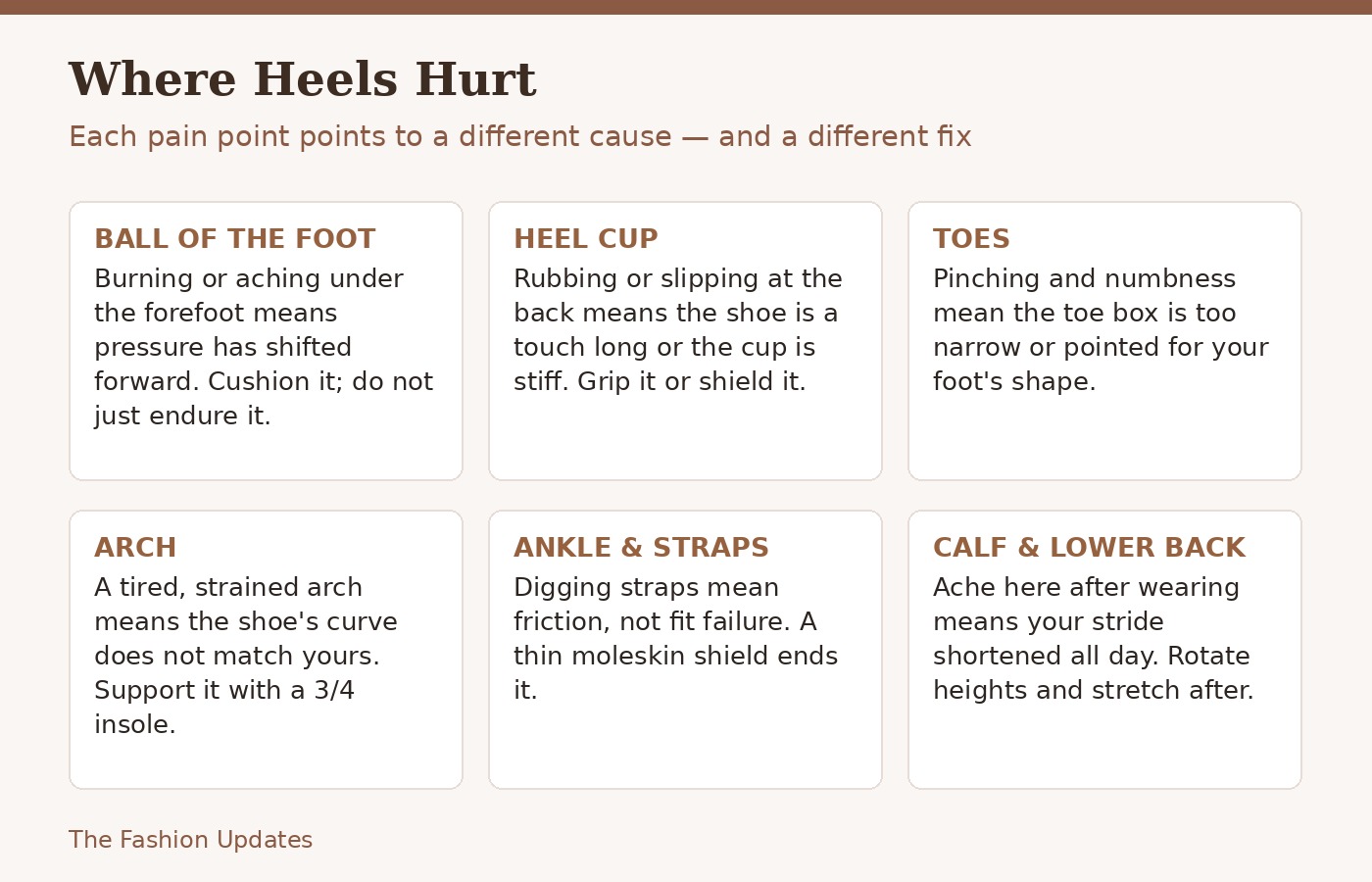
Almost every heel complaint traces back to three forces: pressure shifts forward, friction rubs the same spots step after step, and fit leaves too little room where you need it or too much where your foot can slide. Naming the force matters, because the fix for burning under the ball of the foot is not the fix for a raw spot on the back of the heel.
| Pain point | Likely cause | First fix to try |
|---|---|---|
| Burning under the ball of the foot | Forward pressure on the metatarsal heads | Ball-of-foot cushion or 3/4 insole |
| Sharp or tingling pain between the toes | Nerve compression in a tight toe box | Metatarsal pad, less continuous wear |
| Raw skin at the back of the heel | Heel slipping and rubbing | Heel grip, moleskin, strap adjustment |
| Sore bump at the base of the big toe | Toe crowding on the joint | Padding, roomier wear schedule |
| Tight, aching calves afterward | Calf and Achilles held shortened | Calf stretches before and after wear |
Pressure moves forward
In a forefoot pressure study on PubMed, researchers found pressure under the forefoot rose significantly as heel height increased, shifting toward the first metatarsal and the big toe. The American Podiatric Medical Association makes the same point for platforms and high heels, naming ball-of-foot pain as the problem and an accepted insert as part of the solution. Cleveland Clinic calls that pain metatarsalgia — pain and inflammation under the metatarsal heads that worsens when you stand or walk.
Friction and crowding do the rest
The NHS explains that corns and calluses form where skin faces repeated pressure or friction, and lists soft insoles or heel pads among the first self-care steps. Mayo Clinic notes that corns and calluses develop as skin protects itself against friction, and fade when the source is removed. On bunions, Mayo Clinic lists high heels as a risk factor because they force toes into the front of the shoe. For choosing a height in the first place, see our guide to what heel height is healthiest for your feet — this post stays on making pairs in your closet wearable.
Cushion the Ball of the Foot First
If you change one thing, cushion the forefoot. A thin, well-placed pad there does more than a thick full-length insert that crowds the toe box.
Choose the right cushion for the job
A 3/4-length insole is often the smartest format for heels because it cushions the ball and supports the heel and arch without taking up toe room. We recommend Dr. Scholl’s Love Your Heels & Wedges 3/4 insoles: they sit where heel wearers need help, work across pumps and wedges, and do not force your toes forward the way a full, thick insert can. Place them, walk around the house, and adjust until the cushion sits under the ball of the foot, not under your toes.

Cleveland Clinic lists shoe inserts among the first conservative treatments for metatarsalgia, alongside rest, ice, and stretching. The APMA gives parallel advice for high heels, pointing wearers toward an accepted insert. Harvard Health, in its guide to avoiding foot pain, recommends a supportive shoe and an orthotic insert for more cushioning when a shoe alone is not enough.
Place it, test it, then commit
Do not debut any insert at an all-day event. Test it on a short outing first, the way you would test an outfit from our swimsuit styling notes before a trip. Good cushioning delays the burn and softens hard floors; it does not fix a shoe a full size too small. If a pair still fails by hour three, the answer is slide, friction, and scheduling — not a second pad. Sturdier rotating pairs, like those in our women’s cowboy boots guide, spread pressure by design.
Stop the Slide That Crushes Your Toes
A heel turns your foot into a ramp. Gravity pulls you forward, toes jam into the front, and the back of your heel lifts and rubs. Stopping that slide gives toes their room back and stops the heel counter sawing at your skin.
Hold the heel so the toes can relax
Start at the back: a thin heel grip, a strap one notch tighter for walking, or laces snugged through the top eyelet all keep your heel seated. The AAOS explains why this matters for nerve pain — high heels aggravate Morton’s neuroma by putting the foot in a push-off position, and tight, narrow shoes compress the toe bones and pinch the nerve. Its first-line advice is wider shoes with toe room, plus inserts and metatarsal pads to redistribute pressure. If tingling between the toes keeps returning in the same pair, shorten that pair’s shifts, read the AAOS guidance in full, and revisit our healthiest heel height guide before its next long wear.
Give toes room without buying a new pair
Wear tight pairs at home with thicker socks for short sessions so the upper relaxes where your toes sit. Remove any sock liner stealing depth, and choose thinner hosiery on heel days. Mayo Clinic’s account of bunions notes corns often form where the first and second toes rub together — padding the bump and reducing slide are comfort measures, not a promise to reverse a joint problem. A dressed-up evening still works with lower pairs styled alongside men’s trousers.
Fix Friction Before It Becomes a Blister
Friction pain is the most preventable pain in this guide. A hot spot is a warning with lead time: catch it warm and slightly sore and you get a comfortable day; ignore it and you get a blister that dictates your shoes for a week.
Map your rub spots once, use the map forever
Every foot has its own map: the back of one heel, the top of one toe, the side of the big-toe joint. The NHS explains blisters are mostly caused by friction, advises covering one with a soft plaster or padded dressing, and recommends wearing new shoes for short periods until comfortable. For targeted protection, we recommend Dr. Scholl’s Moleskin Padding Strips — thin enough for a dress shoe, cut to the exact shape of your spot, and applied to clean, dry skin or inside the shoe over the seam that rubs you, before the pair goes on.

The Royal College of Podiatry’s blister guidance lines up with that routine: act immediately when you feel friction, cushion the area with padding or a breathable plaster, and keep feet dry with well-fitting footwear. A five-minute moleskin stop saves the whole evening.
Handle a blister correctly when one forms anyway
Leave the roof of skin in place. The NHS is direct: do not burst a blister yourself, do not peel skin off a burst one, wash hands before touching it, and cover it with a plaster or dressing. The Royal College of Podiatry adds the doughnut-padding trick for pressure areas — cut a hole in foam or felt so padding surrounds the blister instead of pressing on it, and treat an open blister with mild soap and water under a protective dressing. While it heals, that pair sits out; a polished flat finished with our nail polish application guide reads intentional, not defeated. For hard skin, follow NHS guidance: moisturize, file gently after softening, and never cut a corn off yourself.
Stretch Tight Spots Instead of Fighting Them
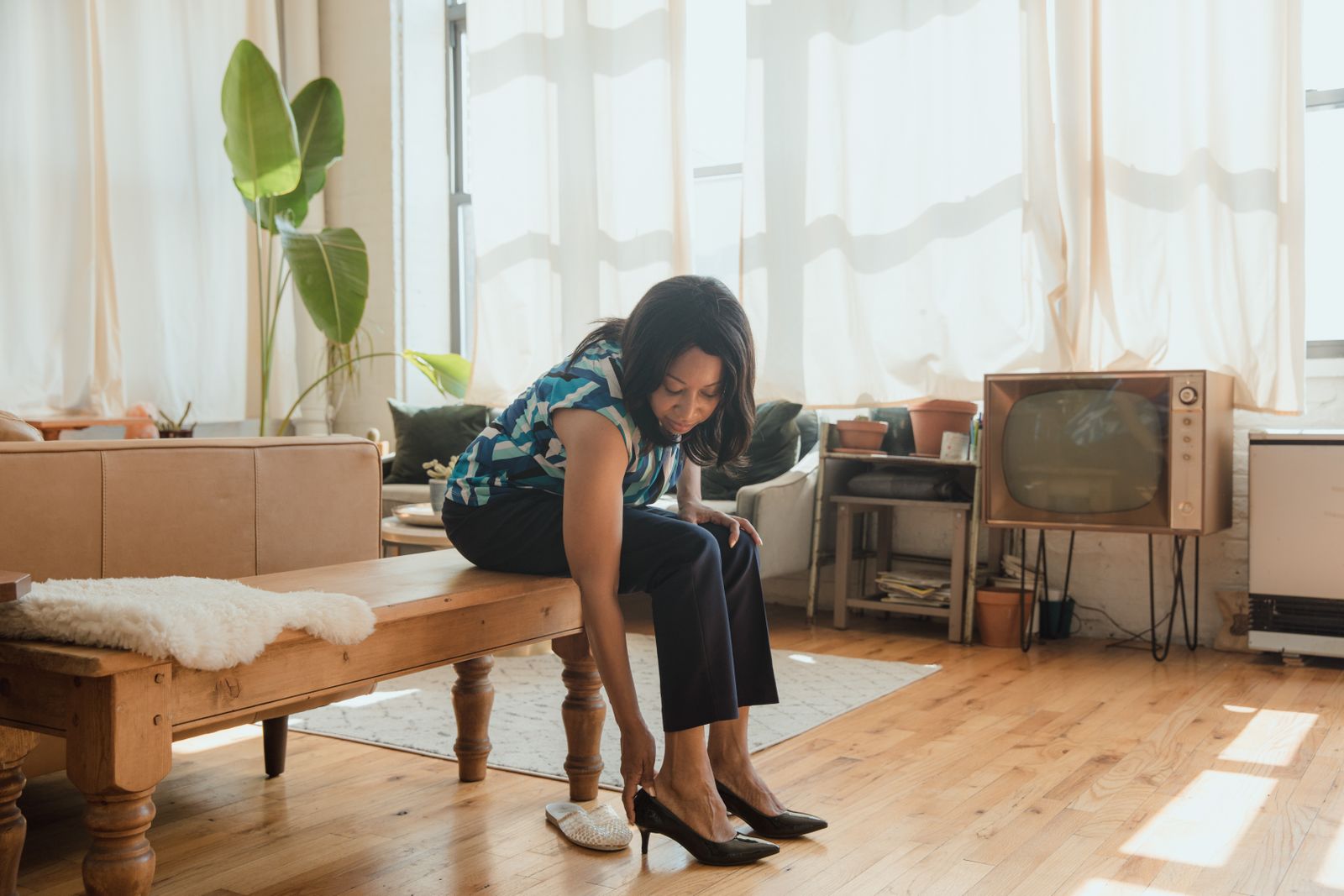
Some pairs hurt because one spot will not give: a digging strap, a pinching toe box, a vamp pressing the top of the foot. Uppers can relax a little with patient stretching, and your calves need the same treatment, because a heel holds them shortened for every hour you wear it.
Stretch the shoe in short, controlled sessions
Use thick socks and short sessions around the house across several days, or a stretcher or cobbler for one precise spot. Target the exact pressure point — overall stretching loosens the heel fit you just secured. Go gently with satin, patent, and embellished uppers, which forgive far less than plain leather, much like the delicate pieces in our best swimsuits notes. If a hard internal seam causes the spot, padding inside the shoe is the honest answer, not more stretching.
Stretch the calf the heel shortens
Hospital for Special Surgery reports on wearing high heels that heels can make calves tight and raise injury risk, and that effects worsen the more you wear them. A wall stretch — hands on the wall, one foot back, heel down, gentle lean — on both sides before and after a heel day is the minimum routine. Cleveland Clinic connects tightness to a bigger pattern in its plantar fasciitis overview, listing a tight Achilles tendon among the symptoms alongside heel and arch pain. Fit that works with the body beats fit you endure — the same principle behind our best belts for men guide.
Break In and Rotate Pairs You Already Own
A new pair worn straight to a long event is the most common unforced error in heel wearing. Break-in is how an upper learns your foot’s shape and how you learn a pair’s rub map while stakes are low. Rotation is the other half: the same pair on consecutive days hits the same tissue with no recovery window.
Break in new pairs on a schedule
Wear a new pair at home briefly, then for a short outing with an easy exit, then for a longer day. The NHS gives the same advice for blister prevention — short periods until comfortable —. Use your moleskin map from the start, and take styling cues for shorter-wear pairs from our fashion magazine guide. Break-in also reveals a pair’s honest role: some heels are two-hour shoes, which is useful information, not failure.
Rotate so tissue recovers
Alternate heel days with lower days, and alternate pairs so pressure points move. Harvard Health’s foot pain guidance emphasizes supportive footwear and room for your longest toe; rotation honors that without giving up heels. Keep a small foot kit — moleskin, spare pads, a bandage — in your event bag, next to the getting-ready staples from our makeup foundations guide.
Plan the Day Around Your Feet
Comfort is partly logistics. The same pair can be fine for a seated dinner and brutal for a standing reception, fine with a commute in flats and brutal after a long walk to transit.
Budget your heel hours honestly
Decide before you leave how many hours this pair gets, and build exits in advance: commuter shoes, a seated break midway, a lower pair in the car or desk.
If you are dressing someone else for the day, our Mother’s Day gifts guide applies the same comfort-first logic to gifting. The APMA frames the principle as limiting exposure — short periods, with an insert. Match the pair to the surface too: stilettos on grass or cobblestones are a stability problem first, and a block heel or heeled boot may already solve it — our women’s cowboy boots guide is the example readers use outdoors.
Walk like the shoe asks you to
Take shorter steps, land the heel first, and walk slightly slower than your flat-shoe stride, so you stay balanced instead of pitching onto the ball of the foot. The forefoot pressure research shows why: pressure concentrates at the front, and a rushed, long stride loads it harder. Standing still deserves a tactic too — shift weight between feet, lean during long conversations, and sit whenever the event allows. Nobody remembers who sat down; everybody remembers who limped.
Recover Well After a Heel Day
What you do in the first hour after the heels come off decides how your feet feel tomorrow.
The first hour home
Sit, elevate your feet, and unload the forefoot completely. For a hot, throbbing ball of the foot, Cleveland Clinic’s metatarsalgia treatment starts with rest, ice, compression, and elevation, alongside gentle stretches. Follow with the calf stretch, a warm soak if skin is intact, and moisturizer. Mayo Clinic’s self-care for corns and calluses follows the same rhythm — soak in warm, soapy water, thin thickened skin gently with a pumice stone or file, protect the spot with a pad, and moisturize regularly.
The day after decides the next wear
Judge a pair by the morning after. Back to normal by morning means your cushioning, friction prep, and hour budget worked — repeat that formula. Soreness into a second day means a longer gap or shorter shift next time — the slow, honest approach we also take in our fashion books reading list. Lingering heel or arch pain that becomes a pattern deserves the closer look in Cleveland Clinic’s plantar fasciitis overview, especially pain worst with your first morning steps.
Know When Pain Needs a Professional Look
Most heel discomfort is mechanical and responds to the fixes above. Some pain is a signal to stop self-treating and get examined,.
Red flags worth acting on
Burning, tingling, or numbness in the forefoot that keeps returning is one. The AAOS advises seeing an orthopaedic surgeon for continued forefoot pain, tingling, or discomfort, and notes many people get long-term relief from footwear changes and orthotics once the cause is identified. Heel pain worst with first morning steps, swelling that does not settle, a stiffening bunion joint, or any blister or corn that looks infected also belongs in front of a professional. The NHS advises seeing a GP if a corn or callus does not improve after a few weeks of self-care, and people with diabetes or circulation problems should not self-treat them at all. Hospital for Special Surgery’s reporting on heel tightness and injury risk adds that effects compound with wear — a worsening pattern is information, not something to push through.
Comfort is the goal, not endurance
There is no prize for finishing the day in a pair that left you limping. Cushioned intelligently, prepped against friction, stretched where it pinches, scheduled honestly, and recovered properly, the wardrobe you already own will carry you through far more of your life than any single heroic wear. Start with one fix on your most-worn pair this week — for most readers, the ball-of-foot cushion — and let the result teach you what your feet needed all along.
Our view
We believe a great pair of heels should be judged at the end of the night, not in the mirror at the start. Cushion the front, stop the slide, protect the rub spots, and respect your own hour limit, and most pairs you already own become genuinely wearable instead of occasionally endured. Comfort is not the opposite of style here — it is what lets you keep wearing the style you chose.
— The Fashion Updates
Frequently Asked Questions
Why do my heels only start hurting after a few hours?
Feet swell slightly through the day, cushioning compresses, and the forefoot accumulates load step after step. A pair with enough room at hour one can run out of it by hour three, which is why inserts, friction prep, and a planned break or shoe change work better than hoping a pair feels better later.
Do insoles really help in high heels, or do they just crowd the shoe?
A slim, targeted insole helps because it cushions the ball of the foot where pressure concentrates. A thick full-length insert can crowd the toe box and make things worse. Choose a 3/4 design made for heels, place it under the ball of the foot, and test it on a short outing first.
Should I put moleskin on my skin or inside the shoe?
Both work. On skin, moleskin moves with your foot and suits heel backs and toe tops. Inside the shoe, it suits a fixed seam or edge that rubs in the same place every wear. Either way, apply it before a hot spot forms — moleskin is prevention first and rescue second.
How long should I wear a new pair before a big event?
Build up gradually: short sessions at home, then a short outing where leaving early is easy, then a longer day. If the pair reveals a rub spot or a two-hour limit during that process, believe it and plan the event around that limit with commuter shoes or a backup pair.
When is heel pain a reason to see a doctor instead of trying another fix?
See a professional if pain persists despite cushioning and shorter wear, if you have repeated burning or tingling in the forefoot, if heel pain is worst with your first morning steps, if a joint is getting stiffer, or if any blister or sore looks infected. People with diabetes or poor circulation should get foot problems checked promptly.
How We Pick What We Recommend
Every guide on The Fashion Updates follows the same review process — what we compare, what we check, and what we leave out.
Sources
- American Podiatric Medical Association — Avoiding a Sandal Scandal
- PubMed — The Effects of Increasing Heel Height on Forefoot Peak Pressure
- Cleveland Clinic — Metatarsalgia: Symptoms & Treatment
- Cleveland Clinic — Plantar Fasciitis: Symptoms, Causes & Treatment Options
- Mayo Clinic — Bunions: Symptoms and Causes
- Mayo Clinic — Corns and Calluses: Diagnosis & Treatment
- NHS — Blisters
- NHS — Corns and Calluses
- Harvard Health — 8 Ways to Avoid Foot Pain
- AAOS OrthoInfo — Morton’s Neuroma
- Hospital for Special Surgery — Best Worst Choice: Wearing High Heels
- Royal College of Podiatry — Blisters
