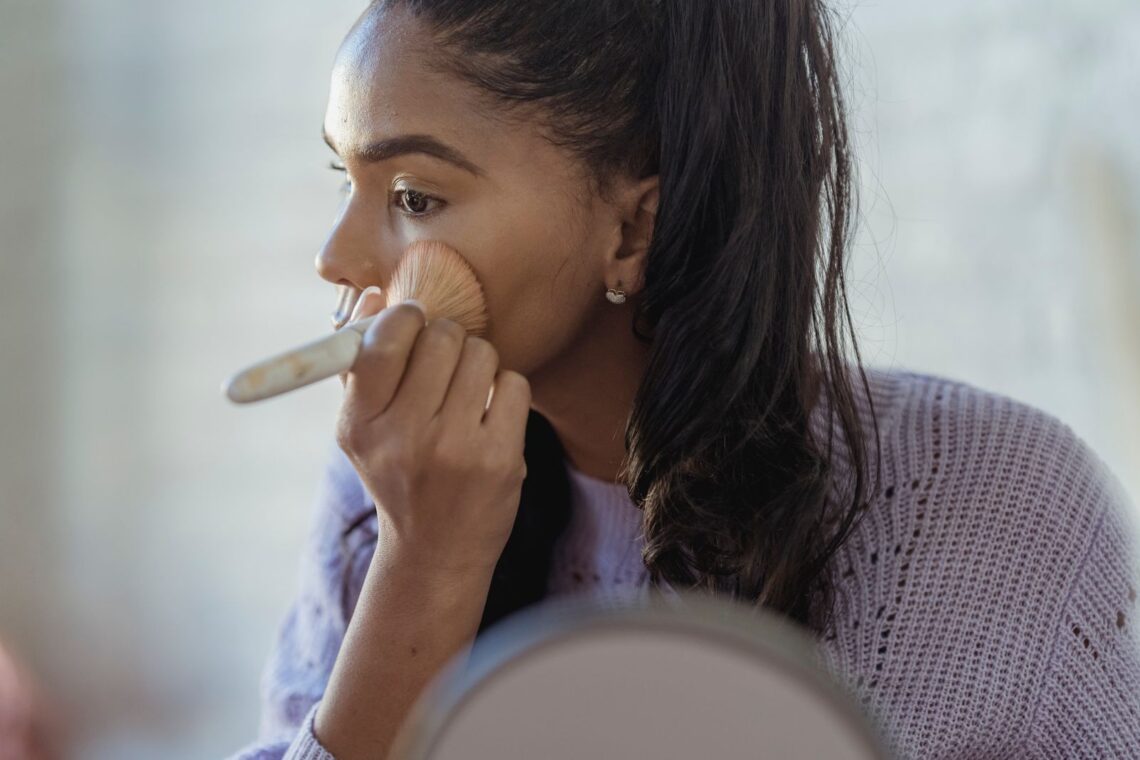
You have held two shades of the same product to your face and watched both look wrong — one turning orange, the other grey and tired. The problem is rarely the shade. It is the undertone: the quiet cast beneath your skin that never changes, whatever the weather. Learn it first, and colours, jewellery, and makeup get easier. This guide covers the vein, jewellery, white-paper, and sun tests, and how to read them when they disagree. It does not teach foundation matching — our foundation guide picks up where this leaves off.
The Fashion Updates
Get the Diagnosis Before the Product
Beauty guides that start with the step most people skip — understanding your own skin, hair, and colours first.
Key Takeaways
- Your undertone is the warm, cool, or neutral cast beneath your surface colour, and it stays the same while your surface colour lightens and deepens.
- No single at-home test settles the question, so run at least three in daylight and trust the direction most of them point.
- Green-looking veins, gold jewellery, and cream whites point warm, while blue or purple veins, silver jewellery, and bright whites point cool.
- A mix of results, or both metals suiting you equally, is a genuine neutral answer rather than a failed test.
- Olive undertones carry a green or grey-gold cast that is often mistaken for warm or neutral, so they need their own checks.
Table of Contents
- What Skin Undertone Actually Is
- Warm vs Cool vs Neutral at a Glance
- Set Up Every Test the Right Way
- The Vein Test
- The Jewelry Test
- The White-Paper Test
- The Sun-Reaction Test
- The Clothing and Colour Test
- Olive Undertones and Other Tricky Cases
- When the Tests Disagree
- What to Do With Your Answer
- Our view
- Frequently Asked Questions
- Sources
- Recommended
What Skin Undertone Actually Is
Skin tone and skin undertone sound like the same thing, and that confusion is where most trouble starts. Your skin tone is how light or deep your skin looks on the surface, and it changes: a holiday deepens it, winter lightens it, self-tanner changes it overnight. Your undertone is the hue underneath, and it does not move. Two women can share the same depth and have opposite undertones, which is why the same shade can look luminous on one and chalky or orange on the other.
The colour in skin comes largely from melanin, made by cells called melanocytes. The melanin guide from the University of Bristol explains that eumelanin is dark brown or black while pheomelanin is red, and that their mix helps determine skin, hair, and eye colour — part of why some skin reads golden or peachy while other skin reads pink or rosy at the same depth. Warm skin leans yellow, peachy, or golden; cool skin leans pink, red, or bluish; neutral sits in the middle. Depth and undertone are separate dials: depth runs from very fair to very deep, undertone from warm through neutral to cool. Undertone is not a day’s redness or sallowness, so look at bare skin in good light, at the wrist or jawline, for the steady cast.
Warm vs Cool vs Neutral at a Glance
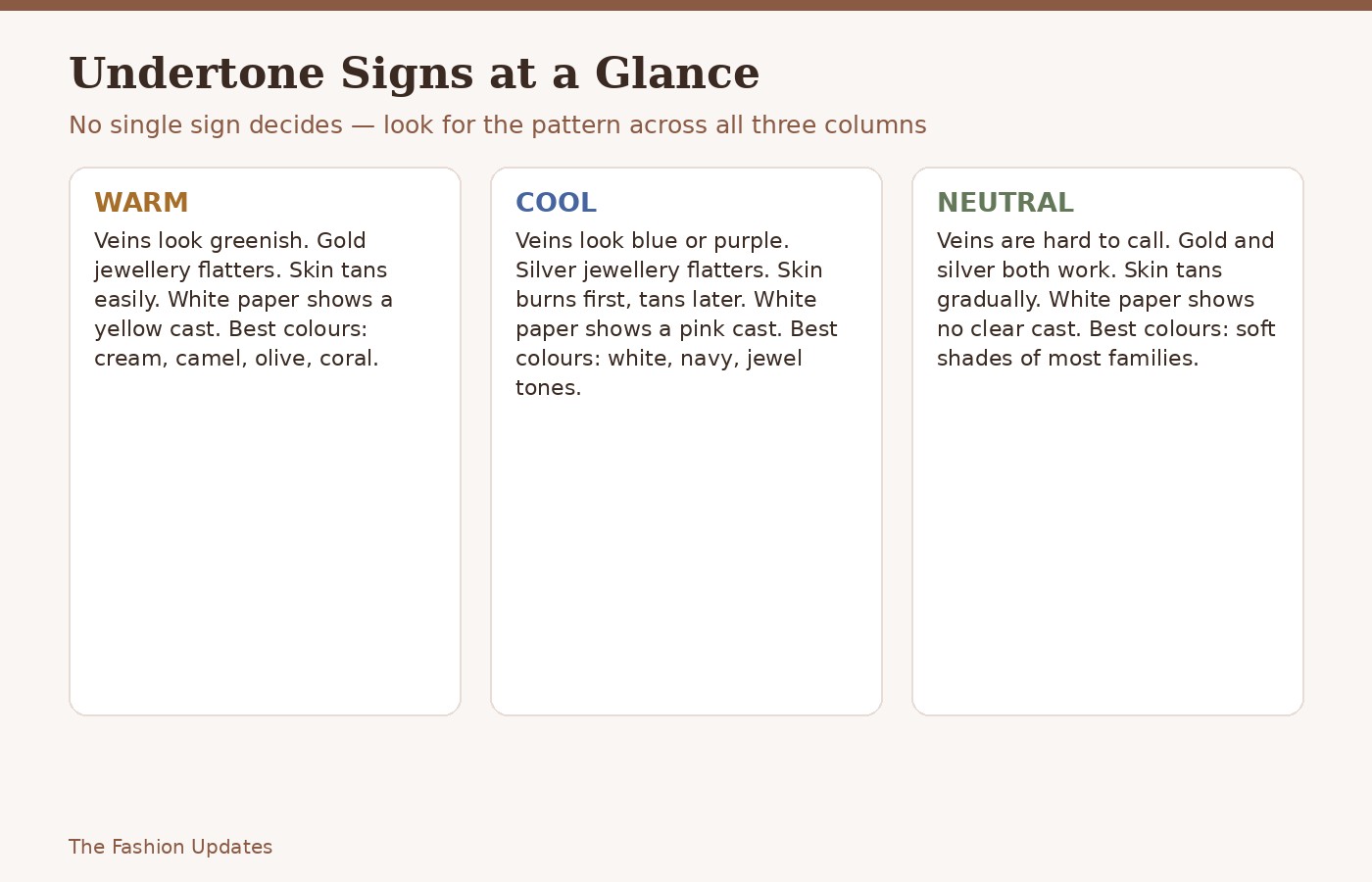
The table below gathers the classic signs for each undertone. Treat it as a map, not a verdict: a single row never decides anything.
| Sign | Warm | Cool | Neutral |
|---|---|---|---|
| Veins on the inner wrist | Look green or olive | Look blue or purple | A mix, hard to call either way |
| Gold jewellery | Makes skin look clear and even | Can look brassy, skin sallow | Gold suits you, and so does silver |
| Silver jewellery | Can look flat or grey | Makes skin look clear and bright | Silver suits you, and so does gold |
| Bright white clothing or paper | Can make skin look yellow | Looks crisp and clean | Both white and cream look fine |
| Cream or ivory | Looks natural and flattering | Can look dingy or sallow | Cream looks good, white looks good |
| Sun reaction | Tans to a golden brown | Burns or goes pink first | Burns a little, then tans |
| Colours that flatter | Camel, olive, warm reds | Berry, jewel tones, true red | Most colours, slight lean one way |
The warm and cool columns are mirror images, while neutral is the absence of a strong lean. If tests split, or both metals and both whites suit you, you are probably neutral — a complete answer in itself. Our cross necklaces guide shows this in practice, and the best swimsuits guide shows how the same logic applies to colours on bare skin.
Set Up Every Test the Right Way
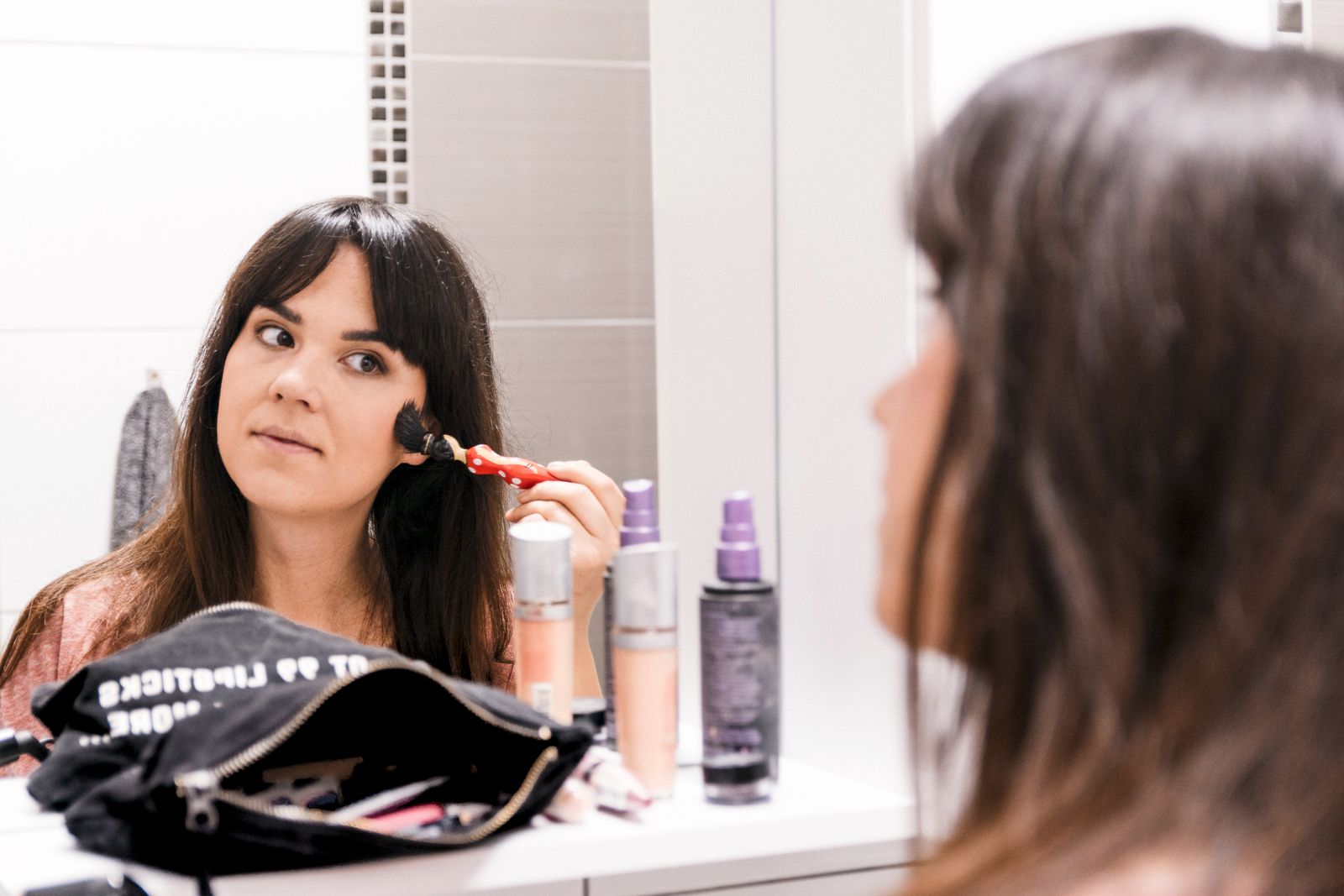
Every test fails the same way if you run it in the wrong light, so setup matters more than any single test. Daylight is the standard: stand near a window on a bright day, or step into open shade, with a clean, bare face — no foundation, tinted moisturiser, blush, bronzer, or developing self-tanner. Fake tan lays a warm cast over everything and pushes every test warm. Warm indoor bulbs do the same; a test under a yellow kitchen light tests your lightbulb, not your skin.
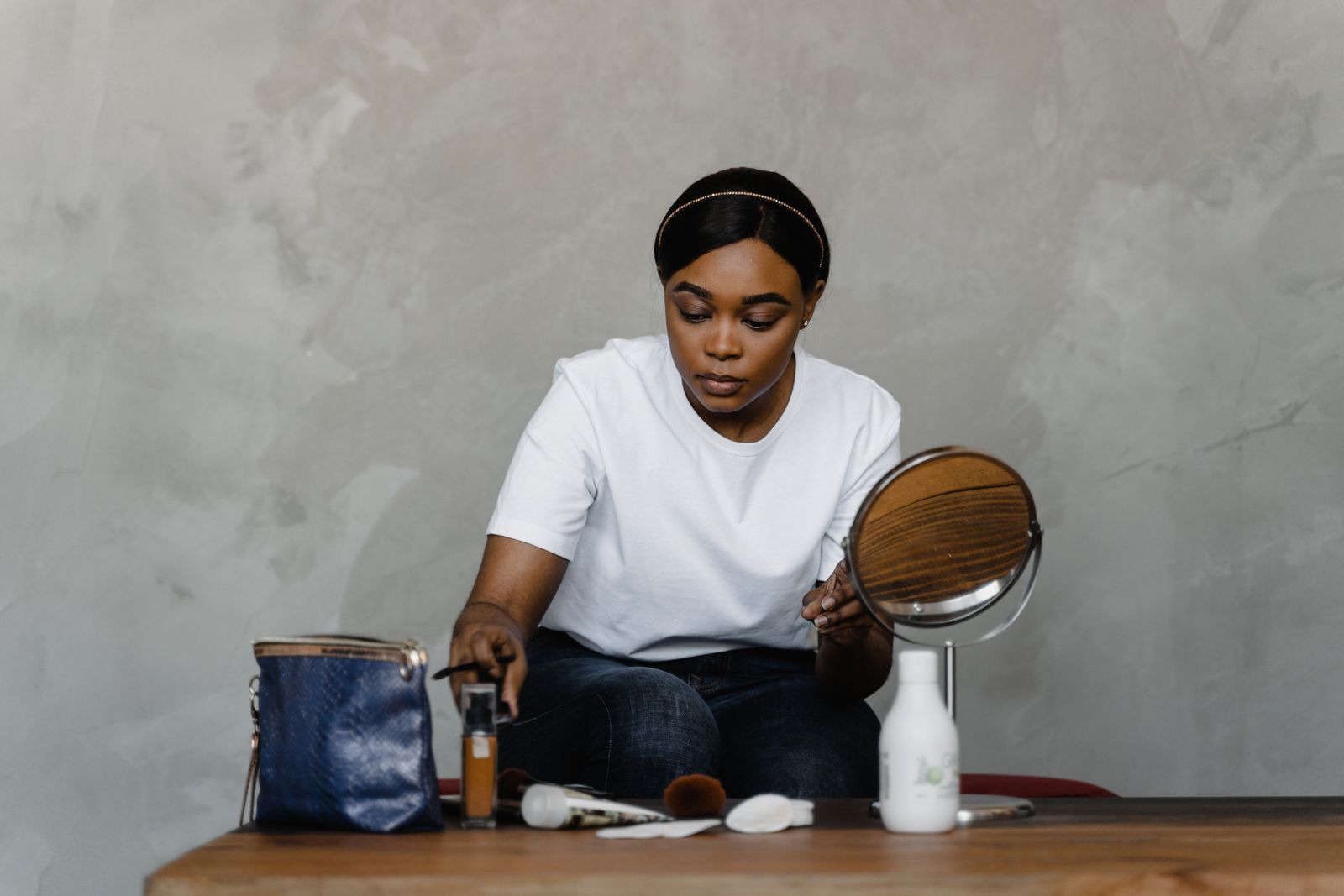
Run the tests in the morning, when skin is calm and unflushed. Gather white printer paper and a cream sheet, one broad polished gold piece and one silver piece, and a mirror — a thin chain shows too little; a wider cuff works better. Keep notes, one line per test, with the direction and strength of the lean. Three or four lines that agree beat one dramatic result. If light is poor or skin is flushed, try again later.
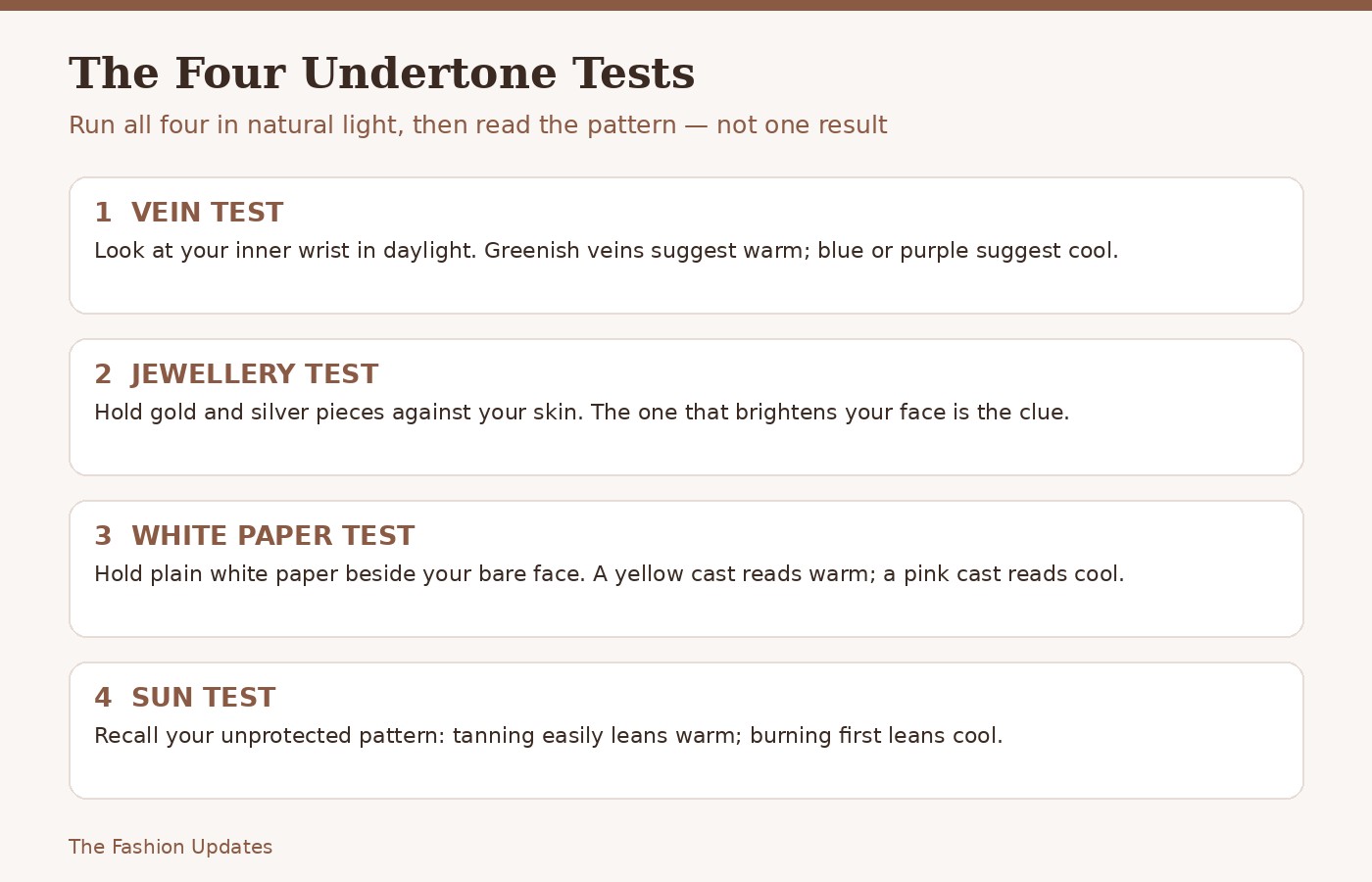
The Vein Test
Turn your wrist over and look at the veins on the inside of your forearm in daylight. Veins that look green or olive are traditionally read as warm. Veins that look blue or purple are read as cool. A mix you cannot call either way is read as neutral. It is quick and feels decisive, which is exactly why it misleads so many people — trust it least on its own.
The colour you see is not the colour of your blood. Blood is red, and a vein only looks blue or green through skin because of how light behaves on its way in and out. Research on the visual appearance of blood vessels explains that red light travels deeper and is absorbed by blood, while blue light is scattered in shallow layers, so light returning from above a vein carries less red and more blue than light from skin beside it. What you see depends on vessel depth and width and on melanin — not only on undertone. On deeper skin veins are often hard to read; on very fair skin one prominent vein can dominate. The test gives one vote, not a verdict. It also cannot identify olive: olive skin often shows greenish veins, which reads as warm, while the skin behaves quite differently with colour.
The Jewelry Test
The jewellery test is the most reliable check for most people, and the one to lean on when others disagree. Hold a gold piece against bare skin, under your chin or on the inside of your wrist, then a silver one, in the same light, and watch your skin rather than the metal. The question is not which piece you like more, but which makes your skin look clearer, more even, and more lit from within. Gold flattering you points warm. Silver flattering you points cool. Both flattering you equally points neutral.
It works better than the vein test because it looks at skin directly. A metal throws reflected colour onto the skin beside it, and the undertone either harmonises with it or fights it. Gold throws a warm reflection: on warm skin it blends and brightens; on cool skin it can look brassy and make skin sallow. Silver throws a cool reflection: on cool skin it sharpens; on warm skin it can look flat. Watch under your eyes and around your mouth, where unevenness shows first, using broad, polished, clean pieces held in the same spot. Your daily jewellery is evidence too — our guide to cross necklaces shows how often that choice already points at the answer — but let the test carry the weight.
The White-Paper Test
Hold plain white printer paper next to your bare face in daylight, look at your skin rather than the paper, then do the same with cream or ivory paper, or a cream top under your chin, and compare. If skin looks golden, yellow, or peachy beside bright white, and cream looks natural, that points warm. If skin looks pink or rosy beside white, bright white looks crisp, and cream looks dingy, that points cool. If both look fine, that points neutral.
The logic matches the jewellery test: a strong reference colour makes the skin’s cast visible by contrast. Bright white is a cool reference, flattering cool skin but making warm skin look yellow or tired. Cream is a warm reference, flattering warm skin but making cool skin look grey. That is why one white shirt makes one woman look fresh and another washed out. Remember it when you shop using our best swimsuits guide, where white and cream sit against bare skin. Avoid two failure modes: warm indoor light pushes everyone warm, so daylight is not optional, and makeup or developing self-tanner makes the paper read the product, not the skin.
The Sun-Reaction Test
Your sun history is an honest record, because it shows how your skin behaves rather than how it looks in one moment. Think over your life, not just last summer: skin that tans easily to a golden brown and rarely burns is generally read as warm; skin that burns or goes pink first and tans slowly is generally read as cool; skin that burns a little then tans is generally read as neutral. One summer is weak evidence — look for the lifetime pattern.
The dermatology frame is the Fitzpatrick scale. The Fitzpatrick scale table sets out six types, from skin that always burns and never tans to skin that never burns and always tans darkly. The further toward burning you sit, the more likely a cool reading; the further toward tanning, the more likely warm — but the scale was built for sun response and skin cancer risk, not makeup shades.
Use sun history as a clue, and protect your skin regardless. A tan is a sign of injury, not health, and the CDC sun safety guidance is clear that any change in skin colour after ultraviolet exposure, tan or burn, is a sign of injury, and that protection matters all year. The Skin Cancer Foundation sunscreen guide adds the practical detail: broad-spectrum sunscreen with SPF 30 or higher, applied daily and reapplied every two hours outdoors. Do not create fresh evidence with a tanning bed: the FDA tanning products guidance warns that tanning lamps emit ultraviolet radiation, their effects can be as dangerous as tanning outdoors, and skin that does not tan in the sun will probably not tan under a sunlamp.
The Clothing and Colour Test
You have run this test for years, every time something you tried on looked wonderful or wrong without your knowing why. In daylight, hold tops or scarves in contrasting colours up one at a time and watch your face, not the garment. Camel, olive, mustard, and warm reds flatter warm undertones. Berry, emerald, sapphire, and true reds flatter cool undertones. Icy pastels and crisp white flatter cool skin; warm cream and soft peach flatter warm skin. If most colours look good with a slight lean, that points neutral.
Clothing throws its colour onto the face to harmonise or fight, just as jewellery and paper do. Hold each colour up for a few seconds, and read your wardrobe honestly: camel, rust, and olive vote warm; berry, navy, and emerald vote cool; both families worn happily vote neutral. The same logic applies to hair colour — our hair care tips guide is a useful companion. One more check: compare skin beside a true red or berry lip colour, then a warm peachy one. The best lip plumpers guide shows how lip colour interacts with skin. Berry looking clear points cool; coral looking golden points warm; both looking good points neutral.
Olive Undertones and Other Tricky Cases
Some skin does not fit neatly into warm, cool, or neutral, and the most common reason is an olive undertone. Olive skin carries a green or grey-gold cast often mistaken for warm or neutral, and it behaves differently from both with colour. Veins often look greenish, which reads as warm. Gold often looks good, which reads as warm. Then the white-paper or clothing test disagrees, or a warm foundation turns orange while a cool one turns pink, and nothing adds up. That disagreement is itself the clue.
Olive is often called a subset of warm or neutral, but in practice it is distinct: colours with a strong yellow or orange base can look too warm, colours with a strong pink base too cool, and muted, dusty, slightly greyed shades often work best. Other tricky cases follow the same approach. Very deep skin can make the vein test unreadable, so jewellery and clothing carry more weight. Very fair skin can make veins over-readable, so jewellery and paper matter more. Surface redness can make warm skin look cool on the paper test, so test on a calm day at the jawline and wrist, not the cheeks. In every case, run more tests, not fewer, and trust the pattern.
When the Tests Disagree
Most people get a split result first time, and that is normal. A split does not mean you did the tests wrong. It means the tests measure slightly different things, and your undertone is either neutral or close to the boundary between two categories. Read a split by counting votes, weighting them by reliability, and looking for the direction that keeps turning up.
Weight the jewellery and white-paper tests most heavily — they look at skin directly. Weight clothing next, and the vein and sun-reaction tests least. If the stronger tests point one way, trust them. If they split, you are probably neutral or neutral-leaning, and the lean is the useful part: neutral-warm means warm shades suit you slightly better, neutral-cool the reverse. Before settling, check the setup: warm light, makeup, or self-tanner pushes every test warm, and a flushed face pushes the paper test cool. Rerun in daylight, bare-faced, on a calm day. Undertone is a spectrum, not three boxes: the direction matters more than the label, because it tells you which shades to try first.
What to Do With Your Answer
Write your answer down somewhere you will find it again: warm, cool, neutral, neutral-warm, neutral-cool, or olive, with a line about which tests pointed that way. Keep it in your phone or on a card in your makeup bag, then let it change how you shop, starting with the step this guide was built to precede. Our foundation guide takes your undertone as its starting point and walks through choosing, matching, and applying foundation. The same answer helps with smaller choices: the best lip plumpers guide shows how lip colour interacts with undertone, the Revlon nail polish guide shows the same logic for nail shades, and our how to apply nail polish guide keeps the focus on the finish.
Beyond makeup, undertone shortcuts wardrobe choices: use it for women’s cowboy boots, where leather tone harmonises or fights, and for products on bare skin in our best women’s deodorant guide and hair removal creams guide. The healthiest heel height guide reminds you comfort matters alongside colour. Surface colour changes with the seasons, so revisit shades — deeper in summer, lighter in winter, same family — without revisiting the undertone.
The sun deserves a last word. The American Academy of Dermatology guidance notes that choosing a tinted sunscreen shade depends on both skin tone and undertone, and protection is recommended for everyone. The FDA sunscreen guidance explains that SPF measures protection against sunburn, broad-spectrum products protect against UVA and UVB, and sunscreen works best alongside shade and clothing. The NHS sun safety guidance adds that there is no safe way to tan, and sunscreen should be reapplied frequently and generously. If you burn, the Mayo Clinic sunburn guidance notes there is no fast fix, cool compresses and moisturiser can ease discomfort, and blisters should be left alone. Makeup also changes as it ages: the Cleveland Clinic makeup guide notes makeup oxidises, so a foundation turning faded, darker, or orange may have expired. The Mayo Clinic expired makeup guidance makes the same point about a beige foundation taking on an orange cast. If a shade suddenly stops suiting you, check the product before doubting your undertone.
Our view
We think the undertone question is worth answering properly precisely because it is so small. One observation, made carefully in good light, quietly fixes a dozen frustrations: the foundation that turns orange, the white shirt that washes us out, the gold necklace we never wear. Do the tests in daylight, trust the pattern, and write the answer down. Then let our foundation guide take it from there.
— The Fashion Updates
Frequently Asked Questions
Can my undertone change over time?
Your undertone stays the same throughout your life, while surface colour lightens and deepens with seasons, sun, and age. If a shade suddenly looks wrong, the cause is usually surface colour, an oxidised product, or lighting. Re-check your shade and the product’s age, and rerun the tests in daylight.
What if I cannot tell what colour my veins are?
You are not alone. Veins are hard to read on deeper skin, where melanin absorbs the light, and over-readable on very fair skin, where one vein dominates. Skip the vein test or give it little weight, and lean on the jewellery and white-paper tests, which look at skin directly. If those agree, you have your answer.
Is olive an undertone or a skin tone?
Olive is an undertone: a green or grey-gold cast beneath the surface, at any depth. It is mistaken for warm or neutral because veins look greenish and gold often suits it, but warm shades can turn muddy or orange and cool shades pink. If tests keep splitting that way, treat olive as your answer and look for muted, dusty shades.
Do I need to know my undertone to buy foundation?
You do not need it to buy a foundation, but you need it to buy the right one without trial and error. Depth tells you how light or dark to go; undertone tells you which family to try within that depth. The right depth in the wrong family looks orange, grey, or pink. Our foundation guide starts from your undertone.
What is the difference between undertone and the Fitzpatrick scale?
Undertone is the warm, cool, or neutral cast beneath the surface — a styling and makeup concept. The Fitzpatrick scale describes how skin responds to ultraviolet light, from always burning to always tanning — a dermatology classification for sun sensitivity and skin cancer risk. They overlap, since sun reaction is one clue to undertone, but neither replaces the other.
How We Pick What We Recommend
Every guide on The Fashion Updates follows the same review process — what we compare, what we check, and what we leave out.
Sources
- American Academy of Dermatology — latest sun protection guidance
- Cleveland Clinic — when to toss makeup
- Skin Cancer Foundation — sunscreen guide
- PubMed Central — Fitzpatrick scale table
- U.S. Food and Drug Administration — sunscreen guidance
- Centers for Disease Control and Prevention — reducing risk for skin cancer
- Mayo Clinic Health System — risks of expired makeup
- PubMed Central — visual appearance of blood vessels
- NHS 111 Wales — sun safety guidance
- U.S. Food and Drug Administration — tanning products guidance
- University of Bristol — melanin guide
- Mayo Clinic News Network — sunburn treatment guidance

