
As an Amazon Associate I earn from qualifying purchases.
Most closets fail not because they hold too little, but because nothing in them was chosen to work with anything else. A printed shirt that matches no trouser, shoes that suit no occasion, a jacket bought for one event and worn never again. The solution is a small system of core pieces in shared colors, each one able to pair with several others, each one fitting properly. Build that system first, and getting dressed stops being a daily negotiation and becomes a short, reliable routine.
The Fashion Updates
Ten Pieces, Thirty Outfits
The core shirts, knits, trousers, shoes, and layers that combine into weeks of outfits, chosen by fit and fabric principles that hold up.
Key Takeaways
- Build a system, not a collection, so every core piece pairs with at least three others before you buy it.
- Start with shirts, knitwear, trousers, jeans and shoes in navy, white, grey, olive and brown, then add color inside that frame.
- Judge fit at the shoulder, collar, waist and shoe first, because those points decide whether a piece looks intentional or borrowed.
- Choose fabric by job, cotton for everyday shirts, wool for knitwear and tailoring, linen for heat, and denim for hard wear.
- Keep the system alive with simple care, rotation and repair, so essentials last instead of quietly wearing out together.
Table of Contents
- Key Takeaways
- The System Before the Shopping List
- Shirts That Carry the Week
- Knitwear and T-Shirts, the Quiet Middle Layer
- Trousers, Jeans, and the Bottom Half
- The Blazer, the Suit, and Outer Layers
- Shoes That Cover Real Life
- Underwear, Socks, and the Pieces Nobody Sees
- Accessories That Finish, Not Distract
- Fit and Fabric Principles That Apply to Everything
- Color, Combination, and a Week of Outfits
- Care, Storage, and Keeping the System Working
- Our view
- Frequently Asked Questions
- Sources
- Recommended
The System Before the Shopping List
An essentials wardrobe is not a pile of basics. It is a set of pieces chosen against each other, so a shirt bought this month still works with trousers bought last season and shoes you already own. That test, will this combine, comes before style, brand or price.
| Essential piece | What to look for | What it pairs with |
|---|---|---|
| White oxford shirt | Cotton, collar that sits cleanly, no pulling at buttons | Navy blazer, jeans, chinos, suit trousers |
| Navy blazer | Shoulder seam on your shoulder, sleeves showing a little cuff | Grey trousers, chinos, dark jeans, white shirt |
| Merino crew sweater | Fine knit, crew neck, fits over a shirt without bulk | Oxford shirt, chinos, jeans, blazer on top |
| Dark indigo jeans | Straight or slim taper, sturdy denim, clean hem | T-shirts, sweaters, blazer, boots and sneakers |
| Grey trousers | Mid grey wool or wool blend, flat front | Blazer, knitwear, white and blue shirts |
| Chinos in khaki or olive | Cotton twill, tapered leg, sits at the waist | Polo, sweater, denim jacket, loafers |
| White leather sneakers | Plain, low profile, cleanable leather upper | Jeans, chinos, casual tailoring |
| Brown leather shoes or boots | Plain toe, repairable sole, conditioned leather | Suit, trousers, dark jeans |
| Plain T-shirts in white, navy, grey | Cotton with a collar band that keeps its shape | Jeans, chinos, open overshirt, blazer |
| Versatile coat | Single breasted, knee length, neutral color | Everything from knitwear to a suit |
Why combination beats quantity
Cotton Incorporated makes the same point from the fabric side in its guide to wardrobe staples and fiber content, noting that most people wear a small share of their closet most of the time. A system answers that problem directly. If a new piece cannot make at least three outfits with what you own, it is not an essential yet, however good it looks alone. Our capsule wardrobe guide works through that pairing discipline step by step.
Start from your real week
List the settings you actually dress for and count how often each happens. Most men need far more smart casual range than formal range, so buy for the frequent settings first. The looks in our celebrities to follow guide help only when you copy the combinations, not the logos.

Shirts That Carry the Week
Shirts do more daily work than any other tailored piece. A white oxford, a light blue oxford, a white dress shirt with a smoother weave, and one or two casual shirts in chambray or a small check will cover most settings a man meets.
The oxford and the dress shirt
An oxford has a soft collar and textured cotton weave that sits well under knitwear. A dress shirt uses finer, smoother cotton and belongs with a suit or blazer. Cotton suits both because, as Cotton Incorporated explains in its fiber content guide, its fibers are soft, breathable and durable. Choose a button down collar for casual wear, a spread collar only if you regularly wear a tie.
Fit at the collar, shoulder and cuff
A shirt fits when the collar closes without choking, the shoulder seam sits on your shoulder, the buttons close without pulling, and the cuff ends at the wrist bone. Size for neck and shoulder and have the body taken in, since those points are hardest to alter.
Casual shirts and short sleeves
A chambray or linen shirt earns its place when it replaces, rather than duplicates, an oxford. Keep patterns small and colors inside your palette. For color against your skin, our skin undertone guide helps you choose between white, off white and warmer blues.
Knitwear and T-Shirts, the Quiet Middle Layer
Knitwear and plain T-shirts fill the large middle ground between a shirt and a jacket. They are also where cheap fabric shows fastest, in collars that sag, sweaters that pill and knits that twist after washing.
Crew, V-neck and the merino question
A fine crew neck sweater in navy and one in grey or burgundy will layer over shirts, sit under a blazer and work alone with trousers. Woolmark describes in its wool fibre guide how wool regulates temperature, manages moisture, resists odor and recovers from stretching, which is why a merino knit can be worn repeatedly between washes and still hold its shape. A V-neck shows a shirt collar and tie more cleanly, while a crew gives a simpler line with an open collar. Choose one neckline as your default and buy depth there first.

Amazon Essentials Men's Cable Knit Long-Sleeve Crewneck Sweater, 100% Cotton, Big & Tall Options Available, Black, Large
Offer 15.7 $
List Price
T-shirts that hold their shape
A plain T-shirt counts only when its collar stays flat and its fabric is heavy enough not to show every line beneath it. White, navy and grey cover almost every combination. For heat and travel, Cotton Incorporated outlines in its piece on technical cotton how treatments add moisture management while keeping cotton comfort. Keep logo T-shirts outside the essentials count.
Polo shirts and layering order
A knitted polo bridges T-shirt and shirt. Layer in a clear order, shirt closest to the skin, sweater in the middle, blazer or coat outside, each thin enough that the next still closes comfortably. Our hair care tips cover the grooming basics above the collar.
Trousers, Jeans, and the Bottom Half
The bottom half needs three workhorses, tailored trousers, chinos and jeans, in colors that accept every top you own. For the full fit and fabric detail on tailored trousers, see our men’s trousers guide, which owns that subject in depth.
Jeans as the durable foundation
Denim earned its place through work. The Smithsonian recounts in its history of the origin of blue jeans how rivets were added at points of strain so work trousers would stop tearing at pockets and fly. That durability is still the point. Choose dark indigo with no distressing as your essential pair, in a straight or gently tapered leg that sits over both sneakers and boots. A second pair in black or a lighter wash is an expansion, not a starting point.
Chinos and casual trousers
Chinos in khaki, stone or olive handle days when jeans feel too casual and tailored trousers too formal. Cotton twill gives structure without shine. They should sit at the waist, taper cleanly and end with little break. Check hem width against boots using our what to wear with cowboy boots guide.
The Blazer, the Suit, and Outer Layers
One well fitting navy blazer will do more for a small wardrobe than any other single purchase, because it raises jeans, chinos and trousers without demanding a full suit. A suit and a coat then cover the formal and cold ends of life.
Why the blazer comes before the suit
The V&A traced in its Fashioning Masculinities exhibition how country tailoring and military dress fed into the modern suit, which is why its pieces still work apart. Buy a blazer for the shoulders first, lapels flat, button closing without pulling, sleeves showing a little cuff. Navy in textured wool avoids the look of an orphaned suit jacket.
The one suit to own
If you own one suit, make it navy or grey, single breasted, in plain wool. Wool’s elasticity and wrinkle recovery, described by Woolmark in its wool fibre guide, help it shed creases after sitting and travel. Wear its pieces separately too. The Met’s essay on eighteenth-century European dress shows menswear has long been built from separates signalling occasion through cloth and cut.
Coats and casual jackets
A single breasted overcoat in navy, charcoal or camel should cover a jacket hem. For casual days, one clean bomber, field or denim jacket in a neutral color is enough until the core is complete.
Shoes That Cover Real Life
Three pairs cover most lives, clean white sneakers, brown leather shoes or boots, and a smarter dark shoe for formal settings. Shoes decide whether an outfit reads casual, smart or careless, so they deserve budget before accessories.
Sneakers, leather shoes and boots
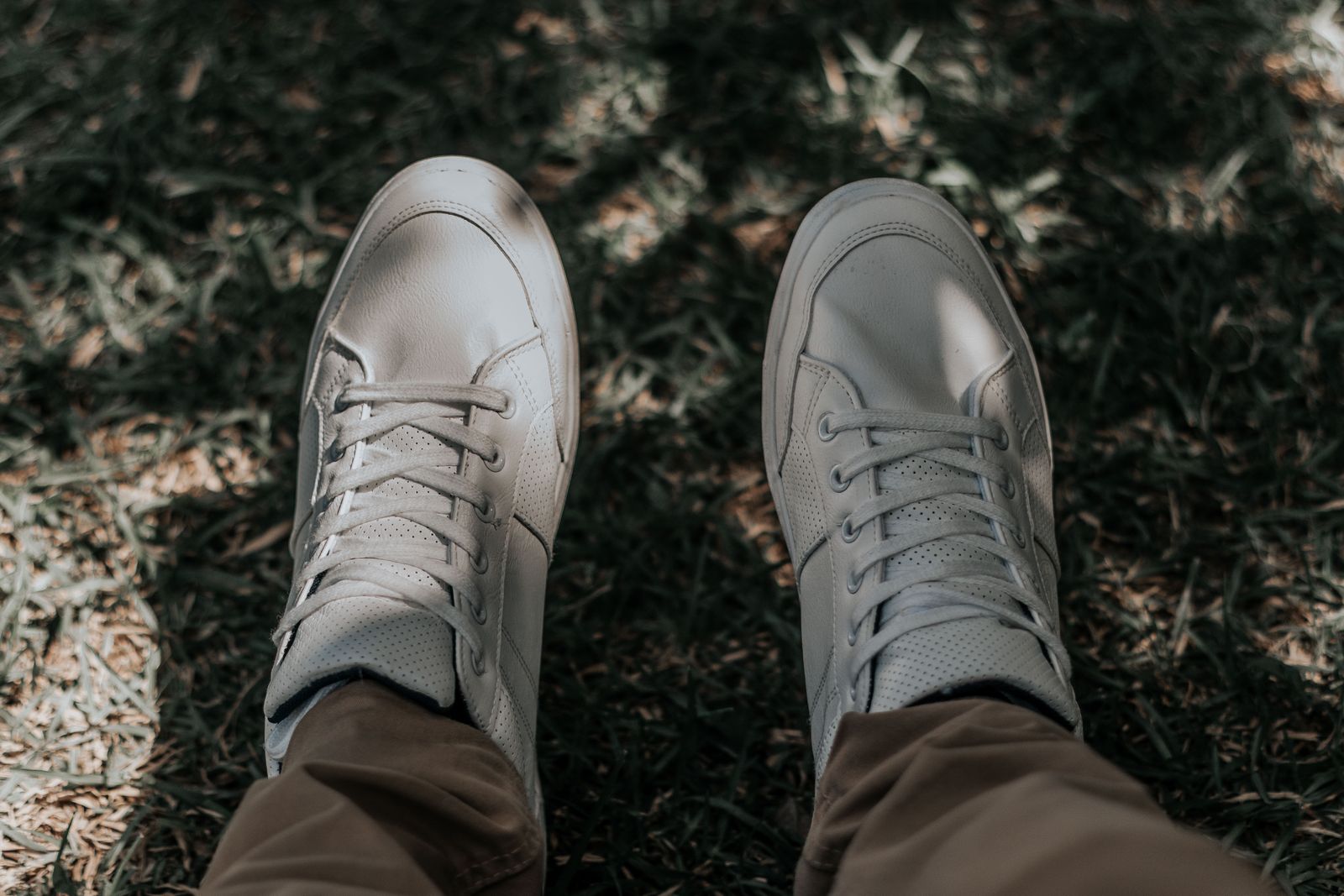
Keep sneakers plain and low, with an upper you can wipe clean.

Brown leather shoes in a plain toe or simple brogue work with trousers, chinos and dark jeans. Leather UK advises in its guide to buying leather to check the label, grain, smell and feel to confirm real leather, since a genuine upper will age, flex and be repairable in ways coated substitutes will not. Boots add weather protection and a stronger line with jeans, and our break in cowboy boots guide covers the patience a stiff new pair requires.
Fit, socks and rotation
Buy for the larger foot, try shoes later in the day, and expect comfort from the start. The American Podiatric Medical Association makes the same points in its guidance on choosing shoes for sports, including professional measurement and choosing a shoe for the activity. Rotate pairs so leather and cushioning can recover.
Underwear, Socks, and the Pieces Nobody Sees
Essentials fail quietly at the base layer. Worn elastic, thin socks and undershirts in the wrong color will undermine otherwise good clothes, and they are the cheapest part of the system to put right.
Underwear and undershirts
Replace underwear when elastic relaxes or fabric thins. Choose cotton rich fabrics for breathability, using Cotton Incorporated’s wardrobe staples guide as your label check. An undershirt should stay tucked and remain invisible at an open collar.
Socks as part of the outfit
Socks should cover the calf when you sit, match the trouser more than the shoe, and come in navy, charcoal, black and brown before any pattern. Wool socks use the advantages Woolmark sets out for wool clothing care. Keep athletic and dress socks separate.
Accessories That Finish, Not Distract
Accessories should complete combinations you already have. A belt, a watch, a simple wallet and, if you wear them, a tie and pocket square in plain colors are enough for the core system. For belt fit and material in full, our best belts for men guide covers that piece on its own.
Belt, watch and leather goods
Match leather accessories by color family and keep metal simple. Leather UK explains in its leather care resources that leather should be cleaned and protected regularly with products for its type, away from heat and sunlight. A watch should sit comfortably under a cuff.
Ties, fragrance and the final check
A navy knit tie and one in burgundy will cover most formal needs. Fragrance is a finishing choice, and our best perfumes guide explains families and strength. Before leaving, check collar, hem and that nothing competes for attention.
Fit and Fabric Principles That Apply to Everything
You do not need a separate fit rule for every garment. A short set of principles, applied at the shoulder, waist, length and label, will judge almost any piece in a shop in under a minute.
The four fit checks
First, shoulders, where seams should sit on shirts, blazers and coats alike. Second, closure, without pulling or gaping. Third, length, sleeves at the wrist and trousers at the shoe. Fourth, movement, sit, reach and walk. Tailoring can adjust waist, sleeve and hem, but cannot reliably rebuild a shoulder, so walk away from failures there.
Reading the label before the price tag
The Federal Trade Commission requires in its guidance on threading your way that labels list fiber content, country of origin and the responsible business. Read that line as a prediction: cotton breathes, wool insulates and recovers, linen breathes and creases, synthetics add stretch in small amounts. The FTC’s guidance on complying with the Wool Act adds that wool labels must show a safe cleaning method, so a vague label on an expensive knit is a warning.
Fabric by season and job
Linen earns its summer place because flax absorbs and releases moisture quickly, qualities described in the account of flax and linen from field to fabric. Use it when heat matters more than a sharp crease. For background, our best fashion books, best fashion documentaries and best fashion magazines guide lists include menswear titles worth your time.
Color, Combination, and a Week of Outfits
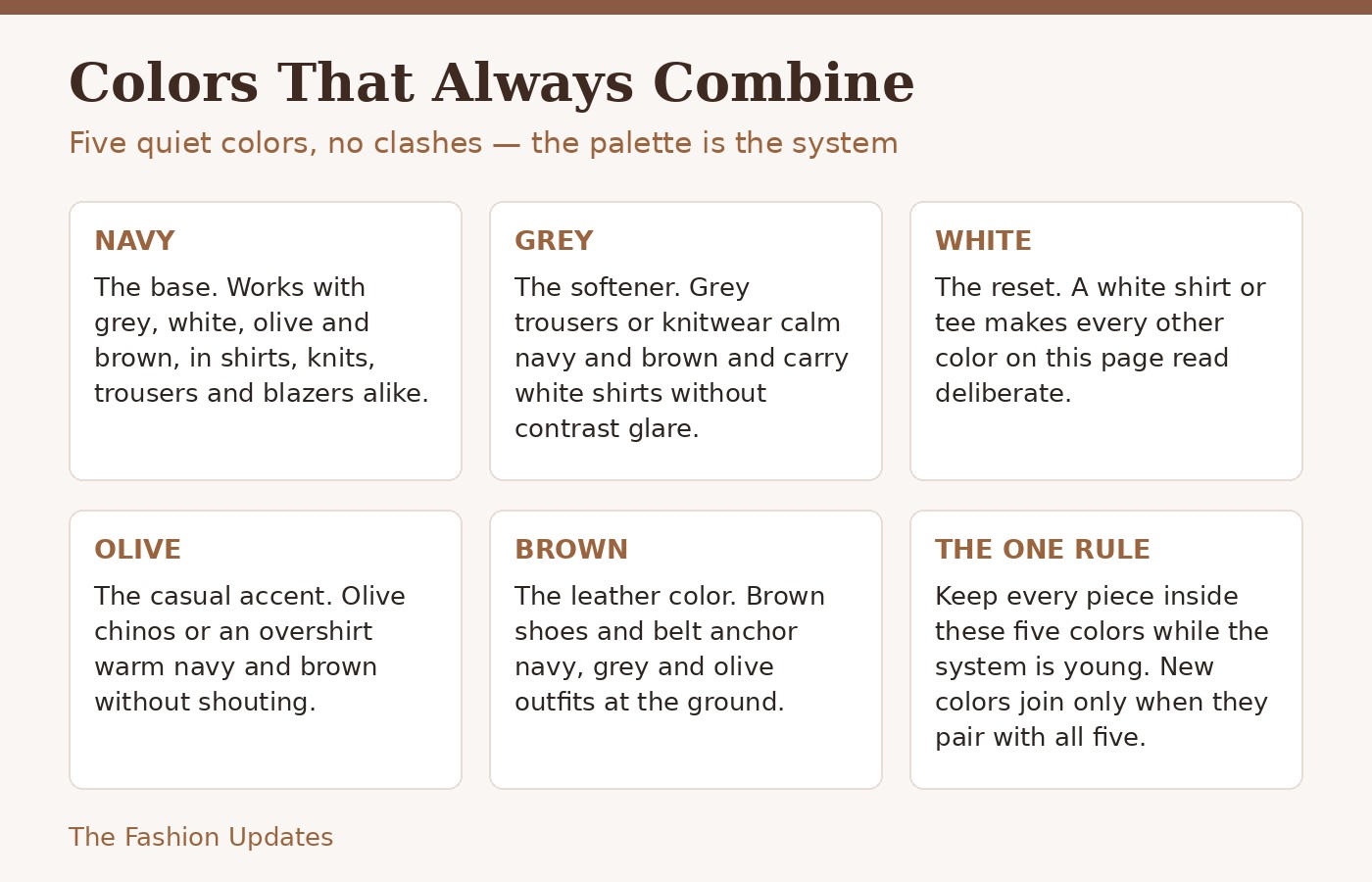
A restricted palette is not a lack of imagination. It is the mechanism that makes a small wardrobe feel large, because navy, grey, white, olive, khaki and brown all accept each other without negotiation.
Build the palette in order
Start with navy and grey as dark neutrals, white and light blue as light shirts, and brown leather. Add olive and khaki in trousers, then one accent color in knitwear. Revisit our skin undertone guide before committing to a new shade at the skin.
A week from the same rail
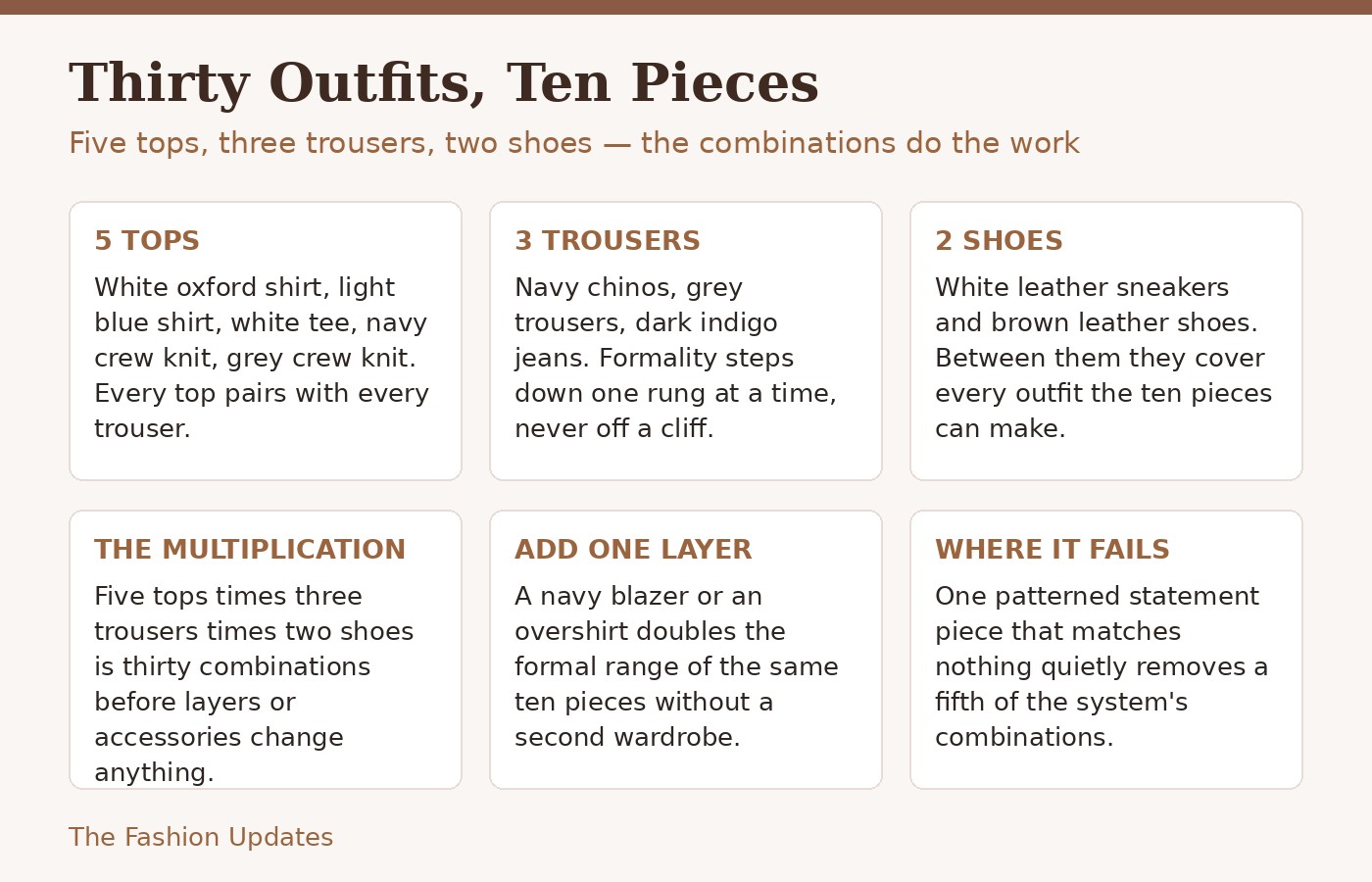
Monday: grey trousers, white oxford, navy blazer. Tuesday: the same shirt and trousers with a merino crew. Wednesday: dark jeans, blue oxford, blazer. Thursday: chinos, polo, sweater. Friday: jeans, white T-shirt and a casual jacket. Our capsule wardrobe guide extends the same math across a season.
Care, Storage, and Keeping the System Working
Essentials are bought once and maintained often. Care is not an afterthought, it is the reason a small wardrobe can stay small, because pieces that are washed correctly, rested and repaired do not need constant replacement.
Wash by label, sort by need
The American Cleaning Institute sets out in its laundry basics guide a simple sequence: sort by color, fabric and care instructions, treat stains, and match settings to the garment. Knitwear needs the gentler handling Woolmark describes in its wool washing and care guide. Wash jeans inside out and only when needed, preserving denim the Smithsonian’s blue jeans history shows was built for durability.
Store, rotate and repair
Hang shirts and tailoring on shaped hangers, fold knitwear so shoulders do not stretch on a hanger, and give shoes a day of rest between wears. Shaped wooden hangers belong in this part of the system, supporting a jacket’s shoulder in a way a thin wire hanger cannot.

Mend a loose button or a small hem when you notice it, clean leather before it dries out using Leather UK’s leather care guidance, and follow the FTC’s care labeling guidance principle that every garment should carry a safe cleaning method you can actually follow. A piece you cannot maintain at home or afford to clean properly is not an essential, whatever its price.
Our view
We believe most men do not need more clothes, they need fewer, better chosen pieces that were bought to work together. Start with the shirts, knitwear, trousers, jeans and shoes in this guide, insist on fit at the shoulder and waist, read the fiber label before the price tag, and let combinations, not novelty, decide what enters your closet next. A wardrobe that gets you dressed calmly on an ordinary morning has done its job.
— The Fashion Updates
Frequently Asked Questions
How many pieces make a men’s essentials wardrobe?
There is no fixed number, but most men can cover a normal week with roughly twenty to thirty core pieces including shoes and outerwear, provided every piece pairs with several others. Count combinations, not hangers. If a piece makes no outfit with what you own, it does not count as an essential yet.
Should I buy the suit or the blazer first?
Buy the blazer first unless your work requires a suit daily. A navy blazer works with trousers, chinos and jeans across far more settings, while a suit is a narrower tool. When you do buy a suit, choose plain navy or grey wool so its jacket and trousers can also be worn separately.
What colors should I start with?
Start with navy, grey, white, light blue, khaki, olive and brown leather. Those colors combine without effort and cover formal and casual settings. Add one or two accent colors in knitwear and accessories only after the neutral core is complete and fitting well.
How can I tell if a fabric is worth the price?
Read the fiber label and match it to the job. Cotton for everyday shirts, wool for knitwear and tailoring, linen for heat and denim for hard wear are reliable starting points. Be cautious when an expensive garment has a vague label, a mostly synthetic blend with no clear purpose, or care instructions you will not follow.
Do I need both sneakers and dress shoes?
Yes, for most lives. Plain white sneakers cover casual and smart casual days, while a brown or black leather shoe covers formal settings and lifts trousers and a blazer. Trying to make one pair do both jobs usually leaves you underdressed in one setting and uncomfortable in the other.
How often should essentials be replaced?
Replace on condition, not on a calendar. Retire a piece when fit, fabric or structure has failed, collars fray, knitwear thins, elastic relaxes, or a shoe sole can no longer be repaired. With rotation and correct care, shirts, knitwear, tailoring and leather shoes should serve for a long stretch before that point arrives.
How We Pick What We Recommend
Every guide on The Fashion Updates follows the same review process — what we compare, what we check, and what we leave out.
Sources
- Cotton Incorporated, Cotton Today — What to Look for in Your Wardrobe Staples: Fiber Content
- Cotton Incorporated, Lifestyle Monitor — The Benefits of Getting Technical with Cotton
- Woolmark — What Is the Wool Fibre?
- Woolmark — Wool Washing and Wool Care
- Federal Trade Commission — Threading Your Way Through the Labeling Requirements Under the Textile and Wool Acts
- Federal Trade Commission — Cachet of Cashmere: Complying with the Wool Products Labeling Act
- V&A — About the Fashioning Masculinities Exhibition
- The Metropolitan Museum of Art — Eighteenth-Century European Dress
- Smithsonian Magazine — The Origin of Blue Jeans
- American Cleaning Institute — Laundry Basics
- Leather UK — Guide to Buying Leather
- Leather UK — Leather Care
- American Podiatric Medical Association — Choosing Shoes for Sports
- John England — The Story of Flax and Linen
