
As an Amazon Associate I earn from qualifying purchases.
A loafer has no laces, no strap and no buckle to rescue a bad fit, so the fit is the whole shoe. That is why two pairs in the same marked size can feel completely different: one holds your heel and instep from the first step, the other slips, pinches across the toes, or loosens within a month. This guide works through the best loafers for women by style first, penny, horsebit, platform, backless and driving, explaining how each one fits, where its sizing quirks hide, and when to wear it.
The Fashion Updates
Fit First, Style Second
Find the best loafers for women by fit first: penny, horsebit, platform and mule styles, sizing quirks, heel slip fixes and when to wear each style.
Key Takeaways
- A loafer stays on by shape alone: the heel cup, the instep and the toe box do the work that laces do in other shoes, so judge all three before you judge the look.
- Leather loafers stretch across the width and mould to your foot, but they do not get longer, so buy for length first and accept a snug, painless width.
- A few millimetres of heel lift in a stiff new pair is normal and usually settles; a heel that slides freely, or toes that touch the end, means the size or the shape is wrong.
- Each style has its own fit character: penny loafers run structured, horsebit styles softer, platforms heavier and stiffer, mules hold only at the front, and driving loafers flex like slippers.
- Fit both feet, in the afternoon, in the socks you will actually wear, and buy for the larger foot.
Table of Contents
- Key Takeaways
- The Five Loafer Styles at a Glance
- How a Loafer Should Fit: Length, Width, Instep and Heel
- Penny Loafers: The Structured Classic
- Horsebit Loafers: Polish With a Softer Side
- Platform and Chunky Loafers: Height, Weight and Grip
- Backless Loafer Mules: The Fit With No Heel to Hold
- Driving Loafers: Soft, Flexible and Short-Distance
- Leather Stretch, Break-In and Heel Slip
- Narrow Feet, Wide Feet and Between Sizes
- When to Wear Each Style
- Our view
- Frequently Asked Questions
- Sources
- Recommended
The Five Loafer Styles at a Glance
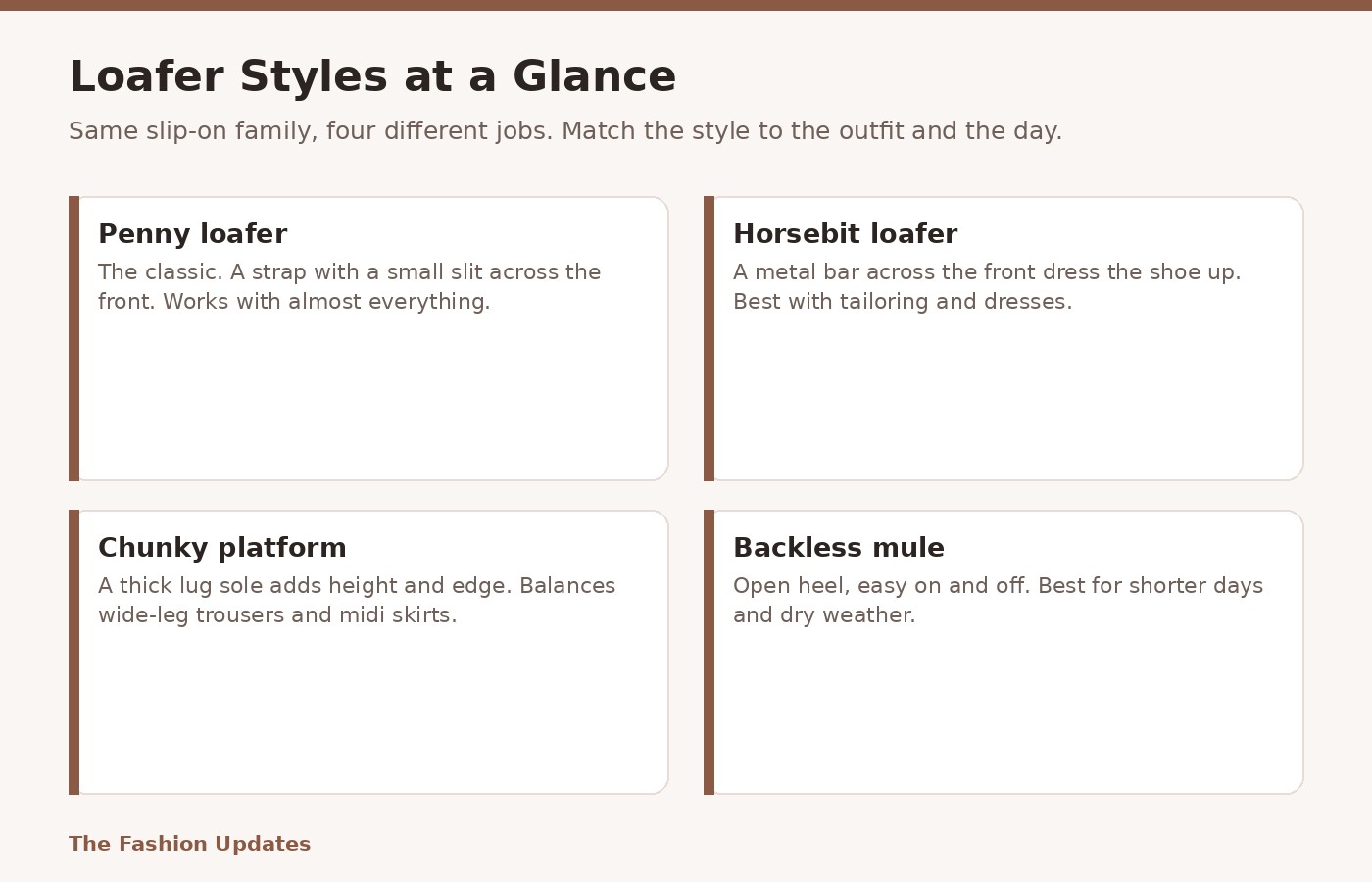
Start with the table, because it is the whole guide in miniature. The five styles share a slip-on shape and almost nothing else: each one holds the foot differently, breaks in differently, and suits different days. Editor roundups draw the same map, with the Who What Wear loafer edit ranging from chunky soles to classic penny styles, and the Luxe Digital loafer guide sorting its picks into penny, horsebit, chunky, driving and backless categories.
| Loafer style | Fit character | Best for | When to wear |
|---|---|---|---|
| Penny loafer | Structured, firm heel, snug instep, moulds slowly | First pair, narrow to medium feet | Work, tailored trousers, blazers, smart denim |
| Horsebit loafer | Sleeker and often softer, low cut, close heel | Polished looks without formality | Office, dresses, dark jeans, evenings out |
| Platform / chunky loafer | Stiff sole, heavier, less flex, secure if sized right | Height without a heel, wide-leg and mini shapes | Casual work, weekends, skirts and socks |
| Backless loafer mule | No heel hold at all, front of foot does the gripping | Easy on and off, warm days, short distances | Errands, travel days, relaxed tailoring |
| Driving loafer | Soft, flexible, thin pebbled sole, glove-like upper | Sensitive feet, casual comfort | Driving, weekends, summer trousers and shorts |
Read the table by your foot, not by the photograph
If your heel is narrow, the structured penny and the close-cut horsebit are your safest starts, because their heel cups actually grip. If your feet are wide across the ball, look first at styles cut on a rounder, roomier last, and treat pointed, low-cut shapes with suspicion. If you walk long distances, the driving loafer and the mule are the wrong tools, however comfortable they feel in the shop.
How a Loafer Should Fit: Length, Width, Instep and Heel
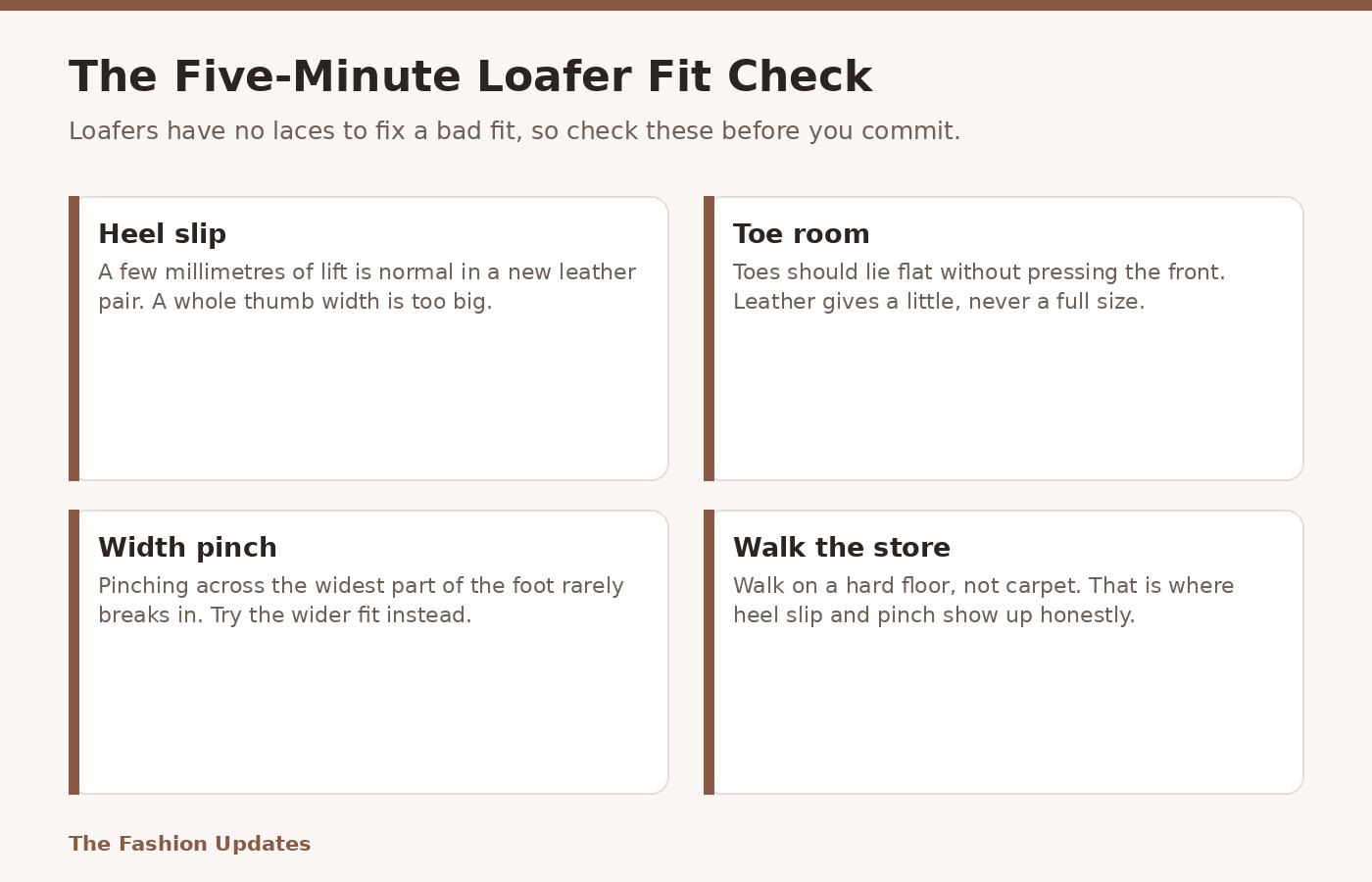
A loafer fit has four checkpoints, and it has to pass all four at once. The American Podiatric Medical Association advises in its how to choose the right shoe guidance that a shoe should fit comfortably on the first try, that sizes vary from brand to brand, and that you should always buy for your larger foot. Those three rules matter more with loafers than with any lace-up, because there is no fastening to correct a mistake later.
Length and width: room to wiggle, not room to slide
Stand in the shoes, because a foot lengthens under your weight. NHS Lanarkshire’s podiatry team sets out the checks in its footwear advice: keep a thumb’s width between the end of the shoe and your longest toe, choose a front rounded and deep enough for your toes to move, and keep the fit snug around the heel. Harvard Health gives the same afternoon rule in its best shoes for foot pain guide, adding that if the ball of your foot feels compressed you should ask for a wider size rather than a longer one. That is the most common loafer error: a longer shoe in the same narrow width gives your foot a longer corridor to slide in, which is how a pinch at the toes becomes a slip at the heel.
The instep is the loafer’s lace
The part of the shoe that crosses the top of your foot, the vamp and the saddle or strap above it, is what holds a loafer on. It should feel firmly held, never pressed hard enough to leave a deep mark or a tingling top of the foot. Clarks makes the matching try-on points in its shoe fit guide: try both shoes because one foot is usually larger, shop in the afternoon when feet are at their biggest, and walk in the shoes rather than judging them standing still. A podiatrist’s version of the same test appears in the Michigan Foot Doctors shoe buying guide, which treats a heel lift of under a quarter of an inch as normal in a new shoe and anything more as a sign the shoe is too long, too wide, or too weak in the heel counter. If heels themselves are your problem shoe, our guide on how to stop heels from hurting covers that fix list separately; here the subject stays on the flat, closed styles.
The heel: a little lift is fine, sliding is not
In a stiff new leather loafer, a few millimetres of heel movement is expected, because the sole has not yet learned to flex with your step. What is not fine is a heel that pops clear of the shoe or forces you to curl your toes to keep it on. The NHS footwear advice above warns that a slip-on kept on by curling the toes can lead to hard skin and corns on the tops and tips of the toes.
Penny Loafers: The Structured Classic
The penny loafer is the reference fit for the whole family: a firm heel counter, a strap across the vamp with its small cut-out slot, and usually the stiffest sole of any loafer style. G.H. Bass tells the origin story in its Weejuns through the decades history: a loafer designed from traditional Norwegian moccasins worn by farmers, given a saddle strap as its signature, and nicknamed when students tucked coins into that strap’s cut-out. The borrowed-from-menswear shape is also why the penny loafer anchors so many outfits in our men’s wardrobe essentials guide as well as women’s ones.
How a penny loafer fits and breaks in
Expect the firmest first week of any style here. A structured penny loafer should feel snug across the instep and the ball of the foot, with the toes clear of the end, and it will give across the width as the leather warms and flexes. Who What Wear’s editor testing in its best loafers roundup describes a classic Bass penny style moulding to the foot after a few wears. What it will not do is forgive a wrong length or a pinching toe, so treat toe pressure in the shop as a final answer, not a break-in stage. Style history aside, and our fashion history basics guide covers the wider story, the penny loafer is the easiest loafer to fit well.

DREAM PAIRS Womens Penny Loafers Platform Chunky Shoes,Burgundy-Pat,8 | Lug Sole Slip On Loafers Dressy and Work Business Casual Shoes
Offer 34.39 $
List Price
When the penny loafer is the right choice
Choose it as a first loafer, for office days, and for any outfit built on tailoring. It is the style most likely to be offered in half sizes and width fittings, and its firm heel makes it the safest start for narrow heels. In a capsule wardrobe it is the flat that replaces both a ballet shoe and a lace-up on most days.
Horsebit Loafers: Polish With a Softer Side
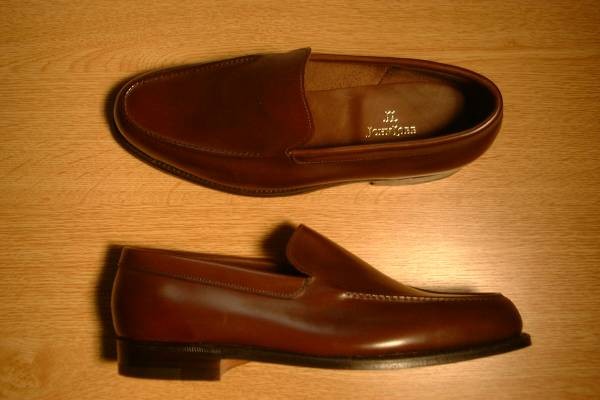
The horsebit loafer swaps the penny strap for a metal bar and rings across the vamp, a detail Gucci’s own history of the house records arriving with its first footwear, when the brand opened in New York and introduced the Horsebit loafer defined by that equestrian fitting. The hardware is decoration, but the cut underneath it is usually sleeker and lower than a penny loafer’s, and that changes the fit.
A lower cut means a different hold
Many horsebit styles are cut as soft, unstructured loafers in supple leather, sometimes with a heel that folds down. PureWow’s testers note in their comfortable loafers roundup that the classic horsebit design has a roomy toe box with space to wear socks, in leather that softens further with wear. The trade-off is hold: a low, soft shoe relies almost entirely on the instep and a close heel, so on a narrow foot it can gap at the sides and slip sooner than a structured penny loafer. If your foot is slim, try the half size down as well, and walk a hard floor, not carpet, before deciding. The hardware logic is the same one that makes a belt finish an outfit, a point our best belts for men guide makes for the other half of the wardrobe.
When the horsebit is the right choice
Choose it when you want one shoe to move between dark jeans, a midi dress and a work trouser. The metal detail does the dressing up, so the rest of the outfit can stay simple. It is also the kindest classic style for feet that dislike rigid shoes, provided the heel holds.
Platform and Chunky Loafers: Height, Weight and Grip
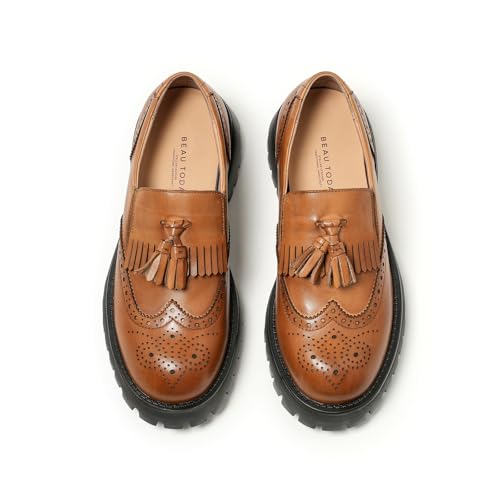
A platform or chunky loafer puts a thick, often lugged sole under a classic upper. The upper fits like the penny or horsebit it is based on; everything different lives below the foot. The sole is stiffer, the shoe is heavier, and the flex your foot expects is partly taken away, so the fit test changes: the shoe must be exactly your length, because a stiff sole in a too-long shoe slaps and slides instead of rolling.
Height without a pitched foot, with one caution
Harvard Health notes in its shoe shopping guidance that when both the toes and the heel are raised, as in a platform, the toes are not pushed forward the way a heeled shoe pushes them, but it also warns that platform wearers can be more apt to twist an ankle. That is the honest summary of the style: the foot stays flatter, which many people find easier than a heel, and our guide to what’s the healthiest heel height for your feet explains the height question in full, but the raised, rigid base asks more of your balance on uneven ground. Judge a platform loafer on a hard floor with a few turns and a step down, not just a straight line on carpet.
Sizing a stiff sole
Because the sole barely flexes at first, heel lift feels worse in a chunky loafer than in a soft one, and it improves less with wear. Be stricter here than with any other style: no free sliding, no toe contact, and a firm hold across the instep. Parade’s stylist advice in its how to style loafers guide pairs the chunkier platform shape with slouchy socks, a mini skirt and an oversized sweater, or a midi dress, which is also the practical answer to its weight: this is a shoe that balances visual weight, in wide-leg trousers and fuller skirts as much as short ones.
Backless Loafer Mules: The Fit With No Heel to Hold
A backless loafer mule keeps the penny or horsebit front and removes the back of the shoe entirely. Nothing holds your heel, because there is no heel to hold. The fit is decided at the front half of the foot alone: the vamp must be deep enough and close enough that the shoe stays with your foot as it lifts, without your toes gripping to keep it aboard.
What podiatry guidance says about backless shoes
The APMA is direct in its choose the right shoe guidance: backless shoes alter the way you walk, and while you do not have to give them up, you should not wear them all the time. Read that as a wearing instruction rather than a ban. Fit a loafer mule snug across the instep, a touch closer than a closed loafer, because the leather will ease and there is no heel counter to compensate. If the shoe slaps loudly or your toes work to hold it, it is too loose or too shallow for your foot.

When the mule earns its place
The style’s appeal is obvious: the polish of a loafer with the speed of a slipper, and roundups such as the Luxe Digital loafer guide give the backless shape its own category beside the closed styles. Wear it for errands, travel days when shoes come off and on, and relaxed tailoring. Keep it away from long walking days, crowded commutes where a heel can be stepped on, and any day you will be carrying heavy bags, when a shoe that can leave your foot is a genuine nuisance.
Driving Loafers: Soft, Flexible and Short-Distance
The driving loafer is a moccasin built for pedals: a soft, hand-stitched upper and a sole studded with small rubber pebbles instead of a solid slab of rubber. Tod’s describes its Gommino in the house’s history of Tod’s as an ultra-light, flat and soft loafer, entirely hand-stitched, characterised by 133 small rubber pebbles on the sole. Those pebbles wrap up the back of the heel, which is the giveaway that the shoe was designed to grip a pedal and flex with the foot, not to pound pavements.
A glove fit, and its limits
A driving loafer should fit like a glove from the start, close everywhere with no pressure points, because the soft suede or leather gives quickly and the thin sole offers little structure to correct a loose fit. Luxe Digital’s guide makes the same point from the styling side in its best loafers roundup, describing the driving style’s gripped, pebbled soles curving to cup the heel. The limits follow from the design: the pebbles wear down on concrete, and the sole gives minimal cushioning over distance. Treat it as a driving, weekend and warm-weather shoe. For a different kind of soft staple, our women’s cowboy boots guide covers the boot equivalent of a forever shoe.
Leather Stretch, Break-In and Heel Slip
Most loafer disappointment comes from one misunderstanding: what breaking in can and cannot change. Leather gives across the width as it warms, flexes and moulds, and a structured pair can take a few weeks of regular wear to feel like yours. It does not get longer, and it does not turn a loose heel into a held one.
What stretch actually does
The clearest statement of the rule is in the MrWayne dress shoe fit guide: leather stretches in width, not in length, so a shoe slightly snug across the width can become right, while a shoe that is too long will be too long forever. The same guide treats a few millimetres of heel lift as normal in a new shoe, reducing as the sole flexes, and heel blisters as a sign the shoe is too big rather than a break-in stage. Clarks agrees in its fit guide that most shoes stretch slightly as they break in and advises choosing a size that fits without overthinking the potential stretch. The gradual wear schedule that works on boots works here too, short wears building up over days, and our guide on how to break in cowboy boots sets out that method in full; the loafer difference is that you stop sooner, because a loafer has less material to give.
Fixing heel slip in a pair you own
If the length is right and the slip is small, work on volume, not on the heel itself. Stridewise’s testing in its loafers too big guide found that a loafer’s fit has far more to do with the instep than the heel: a tongue pad stuck inside the vamp fills the space above the foot and pushes the heel back into its cup, and a thin insole fills volume from below. Try those before heel grips, which treat the symptom at the back while the spare room sits at the front. If the slip is large or the shoe is a full size out, no pad fixes it; exchange the size or the style.
Narrow Feet, Wide Feet and Between Sizes
Loafers punish unusual feet more than lace-ups do, because there is no fastening to redistribute the fit. The answer is almost always width and last shape, not length. The Michigan Foot Doctors guide stresses that width matters as much as length, and suggests a pinch test: at the widest part of the foot you should be able to pinch a small amount of upper material; leather stretched flat against the foot means the shoe is too narrow.
Narrow feet and low insteps
Your enemies are side gapping and heel slip. Start with structured penny styles and sleeker horsebit cuts, which are built on narrower lasts, and try the half size down with a tongue pad rather than sizing down a full size and cramping your toes. PureWow’s tested picks in its comfortable loafers roundup include loafers offered in narrow, medium and wide fittings, which is the detail to hunt for when standard mediums have always slipped on you. Avoid backless mules in soft, unstructured leather; they have the least hold of any style here.
Wide feet and high insteps
Your enemies are a pinched ball of the foot and a vamp that presses the top of the foot. Look for round or square toes, soft or suede uppers that give across the width, and styles sold in a genuine wide fitting. Skip a size up in a narrow shoe: the extra length trades a pinch for a slide. A high instep needs depth in the vamp, so a low-cut horsebit may press where a higher-cut penny style does not; judge by the mark left on the top of your foot after a few minutes of walking.
When to Wear Each Style
The styling rule is proportion: the sleeker the loafer, the sharper the outfit it finishes; the chunkier the loafer, the more visual weight it can balance. Parade’s stylist sets out the tailored version in its loafer styling guide, pairing a classic leather loafer with pleated trousers and a crisp button-down, and choosing structured loafers with cropped jeans that show a little ankle.
Work, weekends and evenings
For work, the penny and horsebit on slim soles are the default: trousers cropped to show the shoe, a skirt with tights, or dark denim on relaxed days. For weekends, the chunky loafer takes over with wide-leg jeans, mini skirts and visible socks, while the driving loafer belongs with shorts, summer trousers and linen. Evenings suit the horsebit best, in polished or patent leather with a dress or a tailored co-ord; a small piece of hardware at the shoe pairs naturally with the jewellery in our cross necklaces for women guide. Finish the look the way you would finish any outfit, with eyewear matched to your face using our sunglasses for your face shape guide, and if you are planning outfits rather than single looks, our guide on what to wear with cowboy boots shows the same formula method applied to boots. For wider reading on how editors build these rotations, our best fashion magazine guide points to the titles worth following.
Our view
A loafer is a fit before it is a fashion choice. Choose the style by the day you will spend in it, structured penny for work, horsebit for polish, platform for presence, mule for easy short days, driving loafer for soft weekends, then fit it without mercy: right length, held instep, a heel that barely moves, and no promise made on behalf of future stretch. A pair fitted that way stops being a shoe you manage and becomes the pair you reach for without thinking, which is what the best loafers for women have always been.
— The Fashion Updates
Frequently Asked Questions
Should loafers be tight at first?
Snug, not tight. A leather loafer should feel firmly held across the instep and the ball of the foot, with toes clear of the end and no pinching or numbness. Width eases as leather moulds; length, toe pressure and pain do not improve.
Do loafers stretch out over time?
Across the width, yes, as the leather warms and flexes, and soft styles give more than structured or patent ones. They do not stretch in length. A pair that starts a little roomy will end looser, which is why a loafer should never be bought with spare room in the hope it will settle.
Why do my loafers slip at the heel?
Usually because the shoe is slightly too long or too wide, or because there is spare volume above your instep, so your foot sits forward and the heel has room to lift. A small lift in a stiff new pair often settles as the sole flexes. Persistent slip is fixed by filling instep volume with a tongue pad or thin insole, or by changing size or width.
Should I size down in loafers?
Only if the smaller size still leaves your toes clear of the end and does not pinch across the ball of the foot. Many people take the same size as their other closed shoes; some structured styles feel generous and some sleek styles feel neat. Fit the larger foot, in the afternoon, and let the four checkpoints decide rather than the number on the box.
Can I wear loafers without socks?
Yes, and many people do, with a hidden no-show sock as the practical middle ground that protects the lining and reduces friction at the heel. Bare feet in leather loafers on a long, warm day can rub, so keep long walking days for socks or closed, structured pairs.
Are backless loafer mules bad for your feet?
Not as an occasional shoe. Podiatry guidance notes that backless shoes change the way you walk and should not be worn all the time, because the toes grip to keep the shoe on. Wear loafer mules for easy, short-distance days and choose a closed loafer when you will be walking far.
How We Pick What We Recommend
Every guide on The Fashion Updates follows the same review process — what we compare, what we check, and what we leave out.
Sources
- American Podiatric Medical Association — How to Choose the Right Shoe
- NHS Lanarkshire — Footwear Advice
- Harvard Health — How to Find the Best Shoes for Foot Pain
- Clarks — How Should Shoes Fit?
- Michigan Foot Doctors — Shoe Buying Guide: How to Choose the Right Shoe
- Stridewise — Loafers Too Big? You’ve Got Three Options
- MrWayne — How Dress Shoes Should Fit: The 7-Point Check
- G.H. Bass — The Weejuns Through the Decades
- Gucci — History of Gucci
- Tod’s — History of Tod’s
- Who What Wear — The Best Loafers for Women, Reviewed by Editors
- PureWow — The Most Comfortable Women’s Loafers
- Parade — How to Style Loafers, According to a Celebrity Stylist
- Luxe Digital — The Best Loafers for Women