As an Amazon Associate I earn from qualifying purchases.
A shade can look perfect in the bottle, soft and promising under the shop light, and then turn wrong the moment it dries on your hands, washing your fingers out, turning them grey, or making a pretty pink look muddy and tired. The polish is rarely the problem. The match is. This guide fixes the match first, by sorting color by skin tone band and then by undertone, so you choose families that flatter your hands before you ever fall for a single bottle.
The Fashion Updates
Find the Shade That Flatters Your Hands
Color matched by skin tone and undertone first, so the bottle you buy is the one that looks right on you.
Key Takeaways
- Match your polish depth to your skin tone band first, choosing shades light, medium, or deep enough to give your hands clear, flattering contrast.
- Read your undertone before choosing a family, because warm, cool, neutral, and olive skin each pull the same pink or red in a different direction.
- Choose nudes by undertone rather than by the word nude, testing pink, beige, caramel, and brown bases until one looks like skin, only better.
- Use sheer shades when you want a forgiving wash of color, and choose opaque creams when you want a shade to hold its true tone.
- Retest your favorite shades when your skin deepens or pales, because a perfect match in one season can sit slightly off in another.
Table of Contents
- Key Takeaways
- How Skin Tone and Undertone Work Together
- Fair Skin: Soft Color With Enough Contrast
- Light Skin: Pinks, Peaches, and Gentle Brights
- Medium Skin: Saturated Color Is Your Sweet Spot
- Tan Skin: Warmth, Depth, and Glow
- Deep Skin: Rich Color and Bright Contrast Both Work
- Sheers and Nudes: Finding a Nude That Is Actually Yours
- Undertone Shifts: Warm, Cool, Neutral, and Olive
- Finish and Opacity Change How a Shade Reads
- Seasonal Shifts Without Starting Over
- Reds, Berries, and Darks: A Shortcut by Tone
- Nail Health Comes Before Any Shade
- Our view
- Frequently Asked Questions
- Sources
- Recommended
How Skin Tone and Undertone Work Together
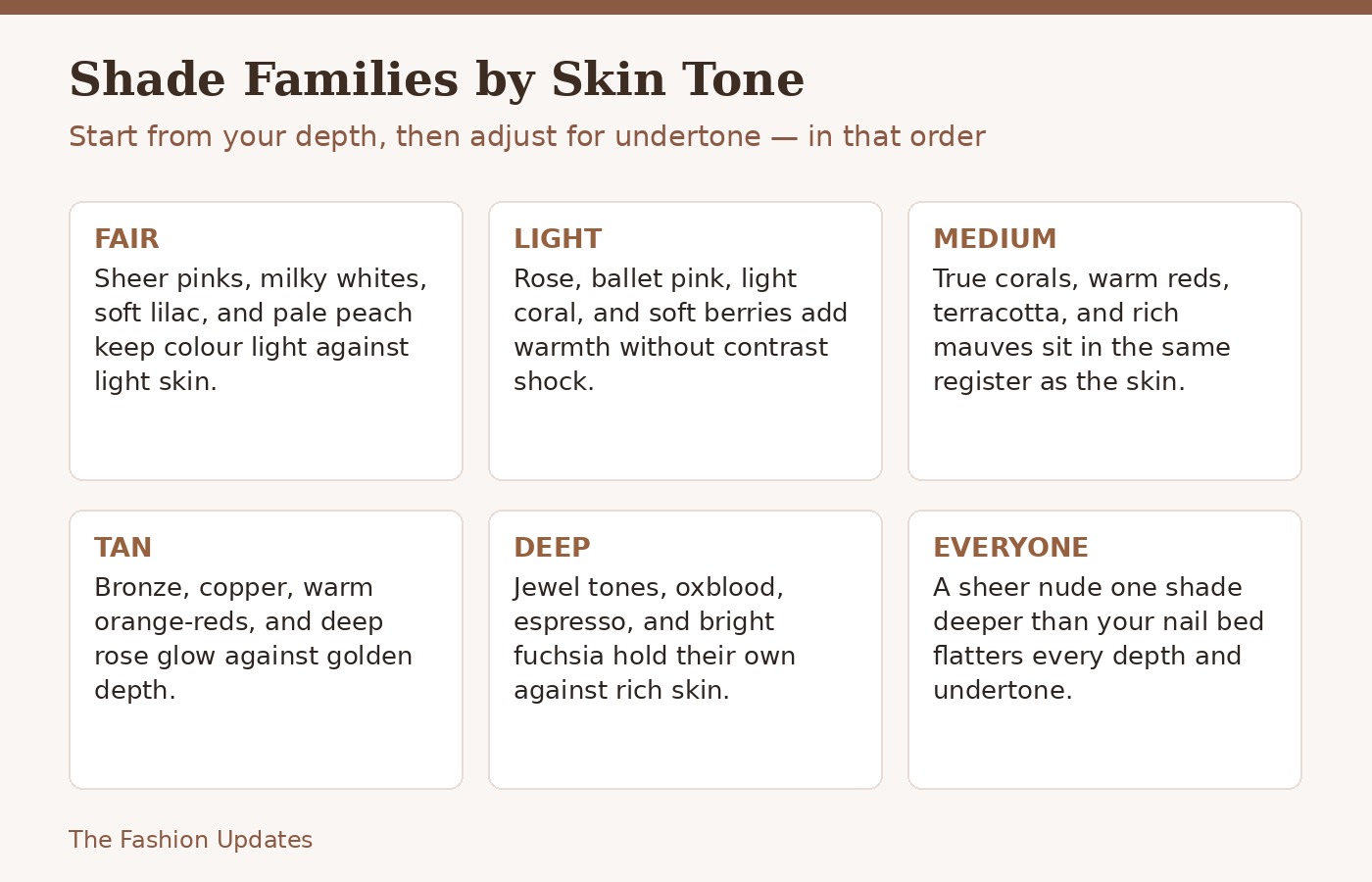
Skin tone is the surface depth you see first, from fair through light, medium, and tan to deep. Undertone is the color underneath that surface, and it stays broadly the same even when surface depth changes with the seasons. Two people can share a tone band and need different polish, because one leans warm and golden while the other leans cool and rosy. That is why our skin undertone guide is the right companion to this one.
Color theory explains the mechanism. In the design and color reading used in Grinnell College courses, warm colors such as red, yellow, and orange advance, while cool colors such as blue and green recede. On nails, a warm shade against warm skin reads harmonious, while against cool skin it can look orange and separate. A cool, blue-based shade against cool skin reads clean, while against warm skin it can turn grey at the edges.
The quick comparison table
| Skin tone band | Flattering families first | Shades to be careful with |
|---|---|---|
| Fair | Sheer pinks, blue-based reds, soft berries, pastel blues | Very pale beige nudes, chalky whites, muddy yellows |
| Light | Rosy pinks, peaches, corals, soft reds, milky pastels | Ashy taupes that match skin too closely |
| Medium | Saturated corals, warm reds, caramel nudes, jewel tones | Pale pastels that wash out, dull grey-beige nudes |
| Tan | Warm berries, terracotta, golden nudes, teal, rich plums | Cool pale pinks that look chalky, flat greys |
| Deep | Rich berries, wine reds, chocolate nudes, vivid brights | Ashy pale nudes, frosty pastels |
Skin is more than a flat swatch. Research described by Harvard Medical School explains how melanocytes supply melanin to surrounding skin cells, part of why depth and undertone vary independently. Work in order: depth first, undertone second, shade last. The same discipline helps when choosing among the best makeup foundations, where undertone errors cause the same grey or orange cast.
Fair Skin: Soft Color With Enough Contrast
Fair skin has the least surface pigment, so polish shows at full strength and contrast arrives quickly. Soft shades flatter, but soft does not mean invisible. A polish too pale and beige can erase the nail, while a sheer pink with rosiness gives definition and makes fair hands look awake.
Essie advises lighter skin tones, in its skin tone guide, to choose a nude with a hint of pink, because soft blush offsets blue undertones, and to reach for blue-based reds for rich contrast. If your fair skin leans warm, peachy pinks and soft corals flatter more than icy pastels, a shift our skin undertone guide explains in full.
Pinks and sheers for fair skin
A sheer nude pink is the safest starting point for fair skin, and OPI Nail Lacquer in Bubble Bath is the classic example. OPI describes it on its Bubble Bath product page as a calming pale pink, and on fair hands it reads as your nails but healthier. Build from there into deeper rosy pinks, soft berries, and pastel blues. Very dark shades create maximum contrast, so choose them deliberately. Chalky whites and yellow-leaning nudes are the common problem, making fair hands look sallow. When a shade looks wrong, check its base before blaming its depth.

Light Skin: Pinks, Peaches, and Gentle Brights
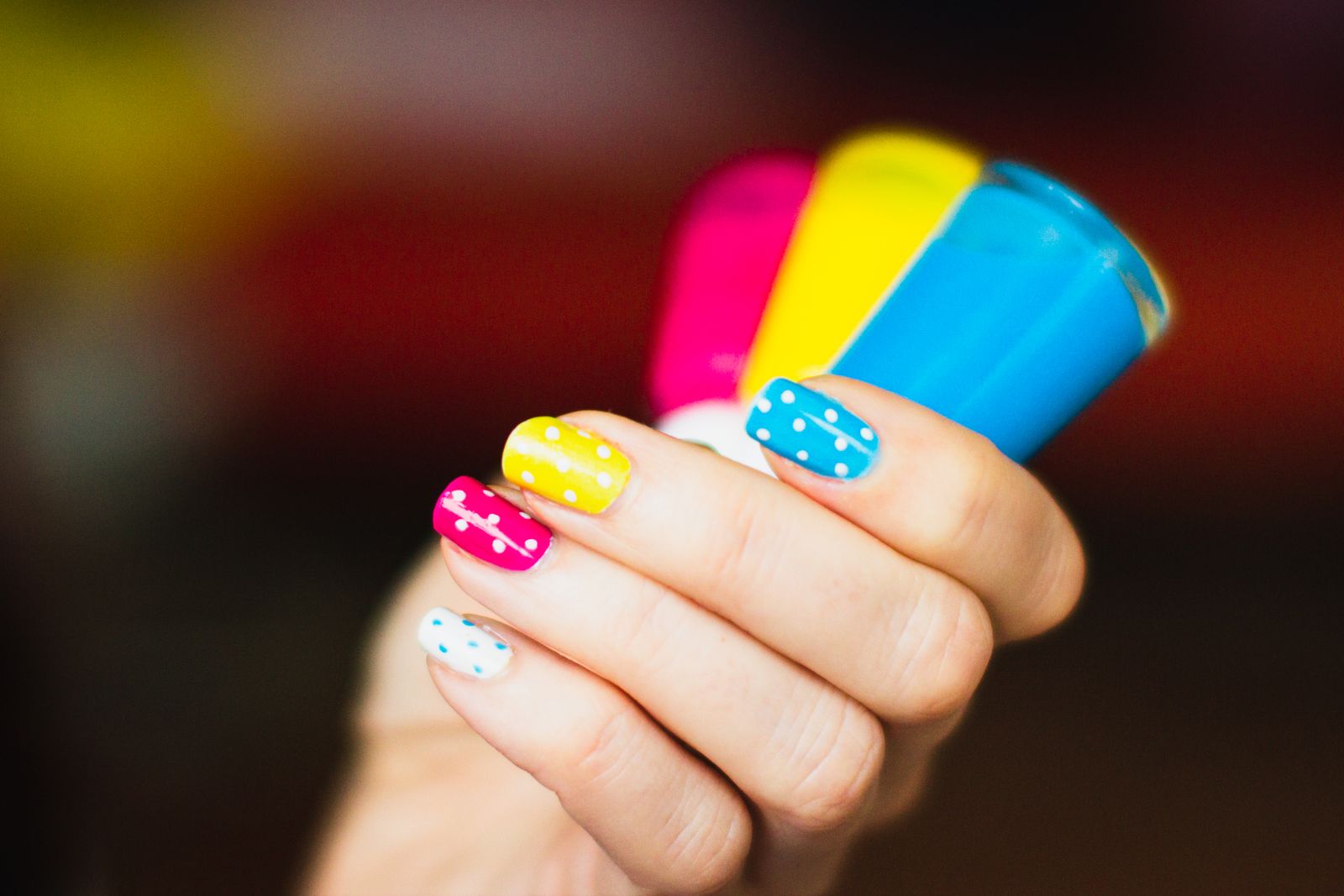
Light skin sits one step deeper than fair, and that step opens the range. Pinks can go warmer, peaches become flattering, and gentle brights such as soft coral and clear red work without starkness. The risk here is the opposite one: shades matching skin too closely in depth and tone can make nails disappear.
OPI places soft pinks and peachy shades at the center of its light skin recommendations in its perfect nude guide, with warmer pinks for neutral undertones and rosier shades for cool ones. Keep three families ready: a rosy pink, a peach or soft coral, and a clear soft red.
Brights that stay gentle
Soft brights work when their base matches your undertone: blue-based bright pink for cool skin, coral with an orange base for warm skin. Keep the finish creamy for daytime and save neon for short nails. A single-brand drawer is a trap, which is why our Revlon nail polish guide is a brand deep-dive while this guide stays on color across brands. Balance a bright manicure with a calmer lip from our best lip plumpers roundup.
Medium Skin: Saturated Color Is Your Sweet Spot
Medium skin is the most versatile band, and the easiest to undersell. Pale shades that look delicate on fair skin can look flat and chalky here, because medium skin needs saturation to meet its own depth. Medium hands look best in color that commits: saturated corals, warm reds, rich berries, caramel nudes, and jewel tones. OPI’s colour theory guide points medium skin toward earthy shades, warm browns, and deep wine reds. Coral is the headline family, while teal, warm plum, gold, and copper give statement options.

Nudes and neutrals for medium skin
Your nude is rarely pink. Look for beige, latte, and light caramel bases that mirror medium skin’s warmth, and test on one full nail, because a nude too light reads as a pale stripe. OPI suggests pinky beiges, sandy nudes, and warm caramels for medium and olive skin in its nude and brown guide.
A dependable example is essie Wild Nude, a light tan that works on medium skin because its base is tan rather than pink, giving a nude effect without the washed-out look a pale pink nude creates at this depth. Reach for a deeper caramel when your skin deepens in summer. For technique once color is chosen, our how to apply nail polish guide owns the application steps.

essie Nail Polish, Glossy Shine Finish, Wild Nude, Light Tan, 0.46 Ounce
New starting from 10.99 $
Tan Skin: Warmth, Depth, and Glow
Tan skin carries visible warmth and depth, and polish should rise to meet it. Shades too cool or pale sit on top like a film, while warm berries, terracotta, rich plums, golden nudes, and deep teals settle in and make hands look glowing. Terracotta and warm brick reds are the dependable core, golden and caramel nudes the neutral option, and these shades photograph well with the pieces in our best swimsuits guide.
Cool shades, handled carefully
Cool color is not off limits on tan skin, but it needs depth: a deep plum over a pale lilac, a rich teal over a pastel mint, a blue-based berry over an icy pink. If a cool shade keeps failing, the undertone section below explains why, and solid hair care tips teach the same lesson for hair color: tone, not just level, decides the result.
Deep Skin: Rich Color and Bright Contrast Both Work
Deep skin offers the widest range of any band. Rich shades such as wine red, deep berry, chocolate, and espresso look tonal and elegant, while bright and pale shades create clean, deliberate contrast. The consistent failure is the ashy middle: pale, grey-leaning nudes and frosty pastels that sit grey on the skin. Wine and bordeaux reds are the signature family, chocolate and espresso the true neutrals, and deep plum and forest green the luxurious statement shades. Readers who love this depth of color often carry it into clothing too, from the boots in our women’s cowboy boots guide onward.
Bright and pale shades as contrast
Bright coral, vivid pink, cobalt, and even a clean pale pink can look superb on deep skin, because the contrast is high and crisp. Choose shades that are clear rather than dusty: a clear pale pink reads as a deliberate accent, a dusty grey-based one reads as ash. Sheer candy pinks are the gentle version, giving a rosy wash. Keep the finish glossy and let contrast do the work, as a bright manicure lifts the simpler outfits in our best fashion magazine reading list.
Sheers and Nudes: Finding a Nude That Is Actually Yours
Nude is a relationship between a polish and a hand, not a color in a bottle. A shade is nude for you when it sits close to your skin depth, shares your undertone, and still leaves the nail defined rather than erased. That is why one reader’s perfect nude is another’s worst shade, and why brands now sell nude ranges instead of a single beige.
Sheers are the forgiving entry point, because a sheer lets your own nail and skin show through and blends across more tones. Essie Ballet Slippers, the sheer pale pink featured for lighter skin in the essie guide linked earlier, works this way: a clean pink wash that builds to a soft, milky finish for formal settings where opaque color feels heavy. On medium skin, the Wild Nude tan base above is the better bridge, which is why nude shopping should start from your own band, not a bestseller list.

essie Salon-Quality Nail Polish, 8-Free Vegan, Sheer Pale Pink, Ballet Slippers, 0.46 fl oz
New starting from 9.97 $
Testing a nude before you commit
Test a nude on a full nail, in daylight, and look at the whole hand. The right nude makes fingers look longer and skin look even. The wrong one makes fingertips look dirty, yellow, or grey, depending on whether the error is warmth, depth, or ashiness. Name the error before shopping again: go pinker, go deeper, or go clearer. Most readers need only two nudes, a sheer and an opaque matched to their undertone, plus a deeper caramel if their depth shifts across the year. That wardrobe pairs with everything, from everyday care in our best women’s deodorant guide to an evening routine.
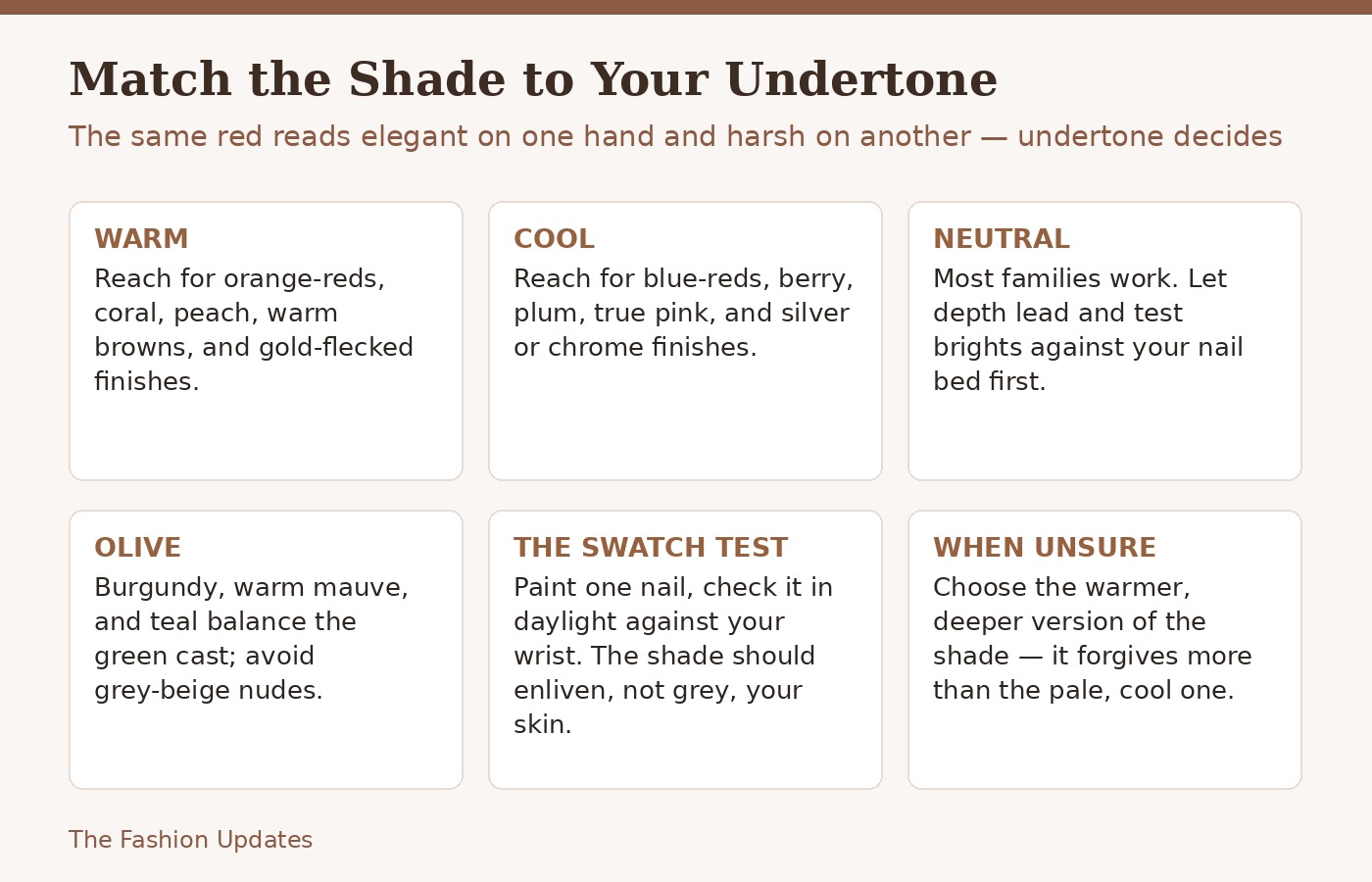
Undertone Shifts: Warm, Cool, Neutral, and Olive
Undertone is the fine adjustment that turns a good family into the right shade. If you have not identified yours yet, start with our skin undertone guide, which walks through the diagnostic checks in detail. This section builds on that result rather than repeating the tests.
Warm undertones, golden or peachy, flatter yellow, orange, or golden bases: peach, coral, warm red, caramel, golden brown. Cool undertones, pink or rosy, flatter blue-based shades: blue-red, berry, mauve, cool pink, plum. Neutral undertones sit between the two and allow the widest experimentation, though balanced shades work best: rosy beiges, soft berries, and true reds neither strongly orange nor strongly blue.
Olive, the easy-to-miss case
Olive undertones carry a greenish cast that changes everything quietly. Olive skin looks best in warm, rich shades such as terracotta, warm berry, and golden nude, and worst in blue-grey and icy shades that amplify the green and make hands look tired. Trust undertone for direction and tone for depth. A deep shade in the wrong family still looks wrong, while a shade at a slightly imperfect depth in the right family usually looks intentional.
Finish and Opacity Change How a Shade Reads
The same color in a different finish is a different shade on the hand. Sheers soften contrast and forgive undertone errors. Creams show the truest color and best test whether a family flatters you. Shimmer and metallics add light, lifting shades that look flat as creams, especially browns and berries on medium, tan, and deep skin.
Gel deserves a health note. Cleveland Clinic explains, in Is Gel Nail Polish Bad for Your Nails?, that curing gel involves repeated ultraviolet A exposure and that gel and its removal can leave nails dry, brittle, or temporarily damaged. Standard lacquer in the right shade is often the smarter everyday choice, with gel reserved for occasions needing the wear.
Matte, glossy, and the contrast effect
Gloss increases contrast and makes color look richer, helping pale shades on deeper skin and deep shades on fair skin. Matte reduces contrast and can make a bright feel modern, but it can make a borderline nude look chalkier, so test matte nudes carefully. Between two close shades, the glossier, clearer version is usually more flattering.
Seasonal Shifts Without Starting Over
Your depth moves across the year even when your undertone does not, so adjust in small steps. When skin deepens, pale nudes can look stark, and the fix is one step deeper in the same family, from pale pink-beige to latte, or latte to caramel. When skin pales, deep shades gain contrast and can move from evening-only to everyday at a slightly shorter length. Keep undertone families constant, own core shades in two depths, and retire a shade only when it fails at both. Seasonal routines work the same way elsewhere, as our hair removal creams coverage shows, and readers styling hands and feet together will find our healthiest heel height guide useful too.
Reds, Berries, and Darks: A Shortcut by Tone
Red is the fastest shortcut here, because every tone has a red and the only question is its base. Fair and cool light skin flatter blue-based reds, clean and classic. Medium and warm tan skin flatter orange-based poppy reds, vibrant rather than severe. Deep skin flatters wine and bordeaux reds. Berries follow one step deeper: raspberry for cool undertones, warm plum for warm and olive, deep blackberry for deep skin.
Darks without the harshness
Near-black shades such as deep plum, espresso, and navy give black’s drama with more forgiveness, because their colored base interacts with your undertone instead of sitting flat. Choose the base as you would a red: blue-based for cool skin, warm brown-based for warm skin. Keep darks glossy and nails shorter, and moisturize well, since dark polish draws the eye to the whole hand. The Mayo Clinic fingernail guide recommends rubbing moisturizer into fingernails and cuticles when you use hand lotion.
Nail Health Comes Before Any Shade
No shade flatters a damaged nail. The American Academy of Dermatology advises, in its manicure and pedicure tips, moisturizing nails after removing polish, protecting cuticles rather than cutting them, and using extra base coat under bright red or orange polish to prevent discoloration — exactly the shades recommended above.
The Academy’s how to trim your nails guidance adds: trim after softening, file in one direction, leave cuticles alone, and moisturize afterward. Shape changes how a shade reads, with darks favoring shorter nails and sheers forgiving any shape. For painting itself, follow our how to apply nail polish guide. The FDA nail products page covers safe use, label directions, and reactions. If a nail changes color, shape, or texture and does not grow out, treat it as a health question first.
Our view
We believe most polish disappointment is a matching problem, not a shopping problem, and matching can be learned in one sitting. Find your depth, name your undertone, and let those two facts narrow every family before a bottle tempts you. The right shade makes your hands look like themselves on a good day.
— The Fashion Updates
Frequently Asked Questions
How do I find my undertone if I am not sure?
Start with the diagnostic checks in our skin undertone guide. If results conflict, weight how skin reacts to polish: hands that look healthier in coral than in blue-pink are usually warm, and the reverse usually means cool.
Can I wear a shade outside my recommended families?
Yes. These families are a starting point, not rules. Wear an off-guide shade deliberately, adjust its finish or depth to bring it closer to your skin, and use the guide as the shortcut for everyday shades.
Why does the same polish look different on me than on a friend?
Because the polish is only half of what you see. Your depth and undertone form the background the color sits against, so the same pink reads rosy on cool light skin, peachy on warm medium skin, and as bright contrast on deep skin.
What is the most flattering shade if I want just one bottle?
Choose a sheer in your undertone family: rosy pink for cool skin, peachy pink for warm skin, rosy beige for neutral and olive skin. Sheers forgive small mismatches and suit every setting.
Do these rules apply to toenail polish too?
Yes, the same logic applies, and feet often run slightly deeper or more sun-exposed than hands, so you may sit one depth step deeper there. Many readers use a slightly richer version of their fingernail shade on toes.
How We Pick What We Recommend
Every guide on The Fashion Updates follows the same review process — what we compare, what we check, and what we leave out.
Sources
- American Academy of Dermatology — Dermatologists’ Top Tips for Beautiful Nails
- American Academy of Dermatology — How to Trim Your Nails
- FDA — Nail Care Products
- Mayo Clinic — Fingernails: Do’s and Don’ts for Healthy Nails
- Cleveland Clinic — Is Gel Nail Polish Bad for Your Nails?
- OPI — Bubble Bath Nail Lacquer
- OPI — The Perfect Nude for Every Skin Tone
- OPI — A Deep Dive Into Nude and Brown Nail Polish
- OPI UK — Colour Theory for Your Nails
- essie UK — Find the Right Nail Polish Colour for Your Skin Tone
- Grinnell College — Design and Color
- Harvard Medical School — Skin: The Smart Canvas