A fashion book should solve a problem. It should answer a question you keep asking in front of the mirror, explain why a silhouette keeps coming back, or show you, in pictures you can study slowly, what good tailoring actually looks like. The trouble is that most books about style do none of that. They are pretty, expensive and strangely empty, and they leave you no better dressed than before you opened them. This guide sorts the shelf by type, so you can buy the book that matches the question you are actually asking, and skip the rest with a clear conscience.
The Fashion Updates
Start With the Book That Answers Your Question
Fashion guides and reading lists sorted by the problem you are trying to solve — not by hype, price, or cover.
Key Takeaways
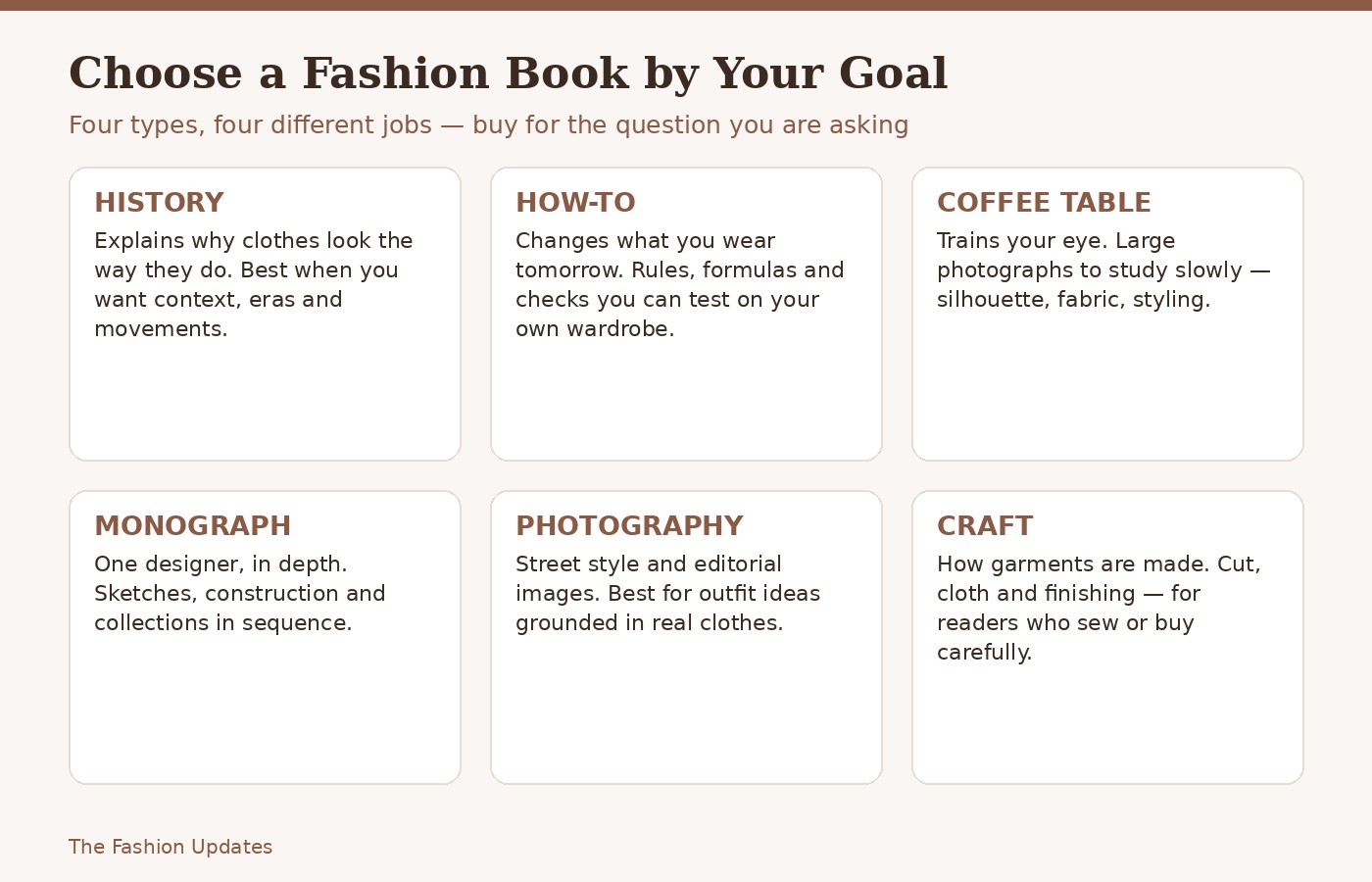
- Start with the problem, not the cover: history books explain why clothes look the way they do, how-to books change what you wear tomorrow, and coffee-table books train your eye.
- One strong book per type beats a shelf of lookalikes, because each type teaches a different skill.
- Designer monographs are most useful when they show the work in sequence, with sketches, construction details and photographs, rather than a parade of finished looks.
- How-to style books should give you rules you can test on clothes you already own, not a shopping list.
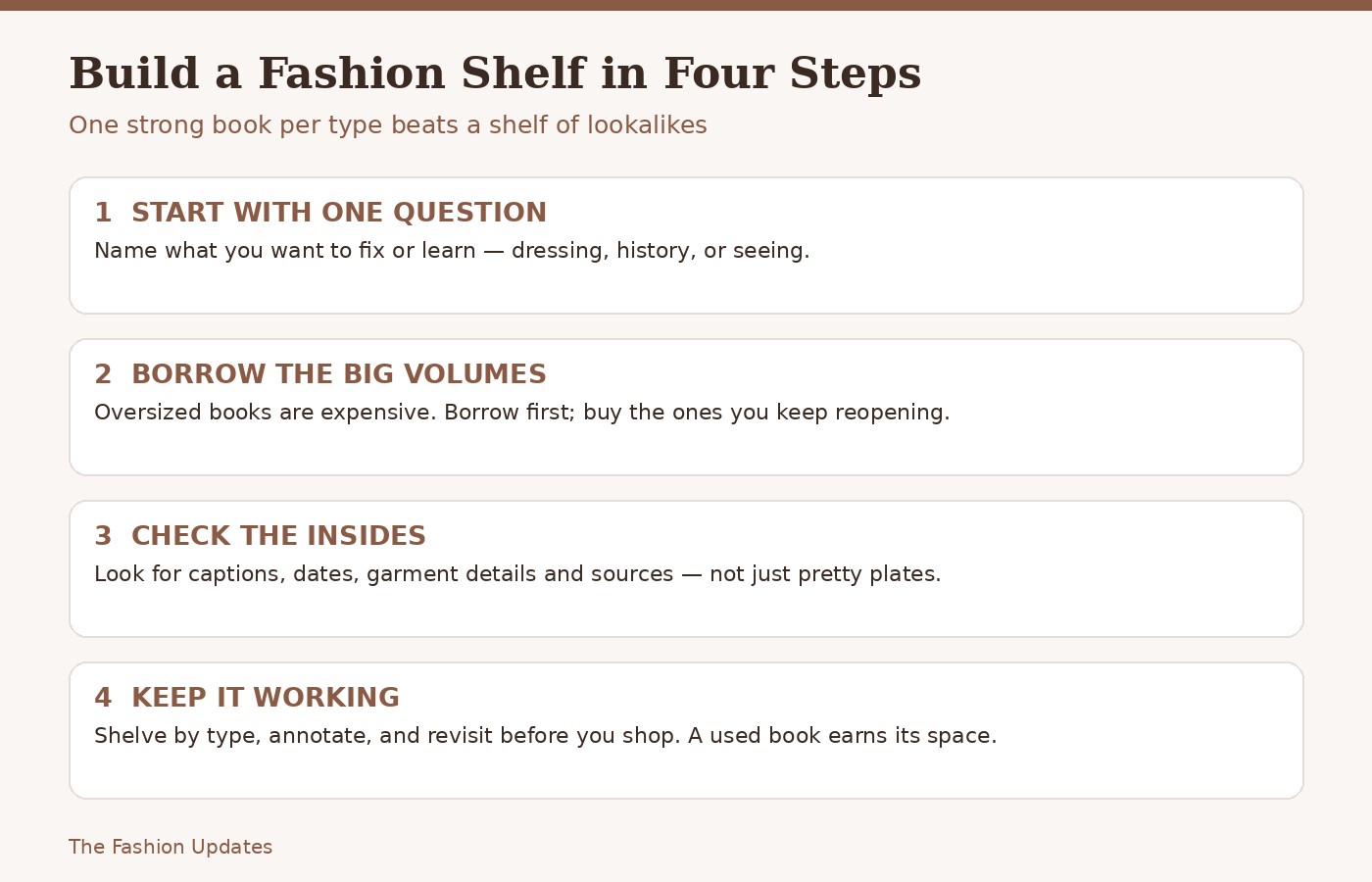
- Borrow the expensive, oversized volumes first, and buy the books you keep opening, annotating and returning to.
Table of Contents
- How to Choose a Fashion Book That Earns Its Shelf Space
- Coffee-Table Books: Learning by Looking
- Fashion History Books: Context That Changes How You Dress
- Designer Monographs: One Vision, Studied Closely
- How-To Style Books: Advice You Can Use on a Weekday Morning
- Photography and Editor Books: Seeing How Images Are Made
- Books on Craft, Clothes and Construction
- Building a Small Library That Works Together
- How to Read a Fashion Book So It Changes Your Wardrobe
- What to Skip and What to Borrow First
- Our view
- Frequently Asked Questions
- Sources
- Recommended
How to Choose a Fashion Book That Earns Its Shelf Space
Before you buy anything, name the gap. Are you trying to understand why a shape flatters you, or to learn the story behind a designer you admire? Do you need practical help getting dressed in ten minutes, or a beautiful object to live with and look at slowly? A book that is excellent at one job can be useless at another, and most disappointment is a mismatch, not a bad book. Our best fashion magazines guide covers periodicals, which are built for the new season; books are built for the long view, and should be judged on a different standard.
Start with the author and the institution behind the book. A museum catalogue carries curatorial research and an argument about why a designer matters. The Phaidon fashion collection shows a publisher’s version of that standard, presenting its fashion list as spanning designers, photographers, stylists, retailers and editors — the people who created and inspired the work.
Then look at what the book actually contains. Flip to the middle and ask three questions. Does it show garments close enough to see a seam, a dart, a fabric? Does it explain the choices, in words that connect the clothes to the life around them? Does it give you something to do with what you have learned, whether that is a way of looking, fitting or choosing? If the answer to all three is no, put it back.
| Book type | What it teaches | Best for | Watch out for |
|---|---|---|---|
| Coffee-table survey | How to look; what great style looks like at scale | Training your eye, gifting, slow browsing | Big pictures, thin text, little practical help |
| Fashion history | Why silhouettes, fabrics and rules changed | Understanding trends instead of chasing them | Dense writing with few images |
| Designer monograph | One designer’s vision, in sequence | Deep admiration, study of a single house | Praise with no criticism or context |
| How-to style guide | Fitting, proportion, colour and grooming | Changing what you wear on ordinary days | Generic advice that fits no real body |
| Photography and editor book | How fashion images are conceived and made | Lovers of images, editors and photographers | Beautiful pictures with no explanation |
| Craft and construction | How clothes are actually made | Sewers, students, anyone who buys quality | Technical language with no plain guide |
Coffee-Table Books: Learning by Looking
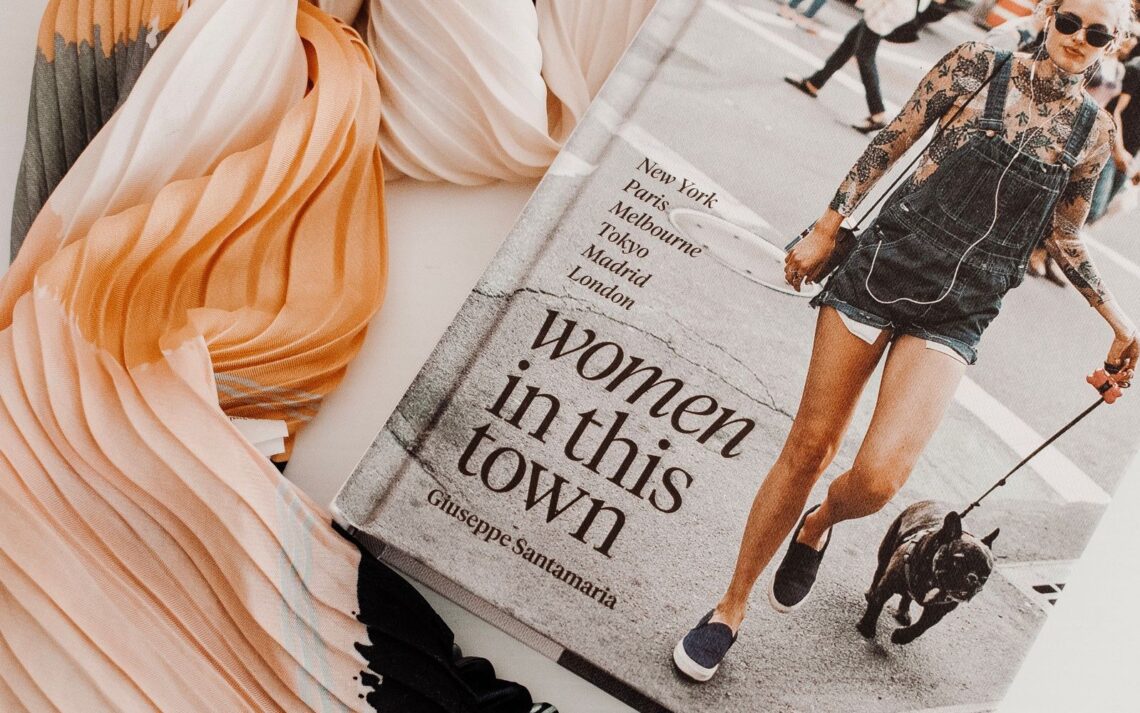
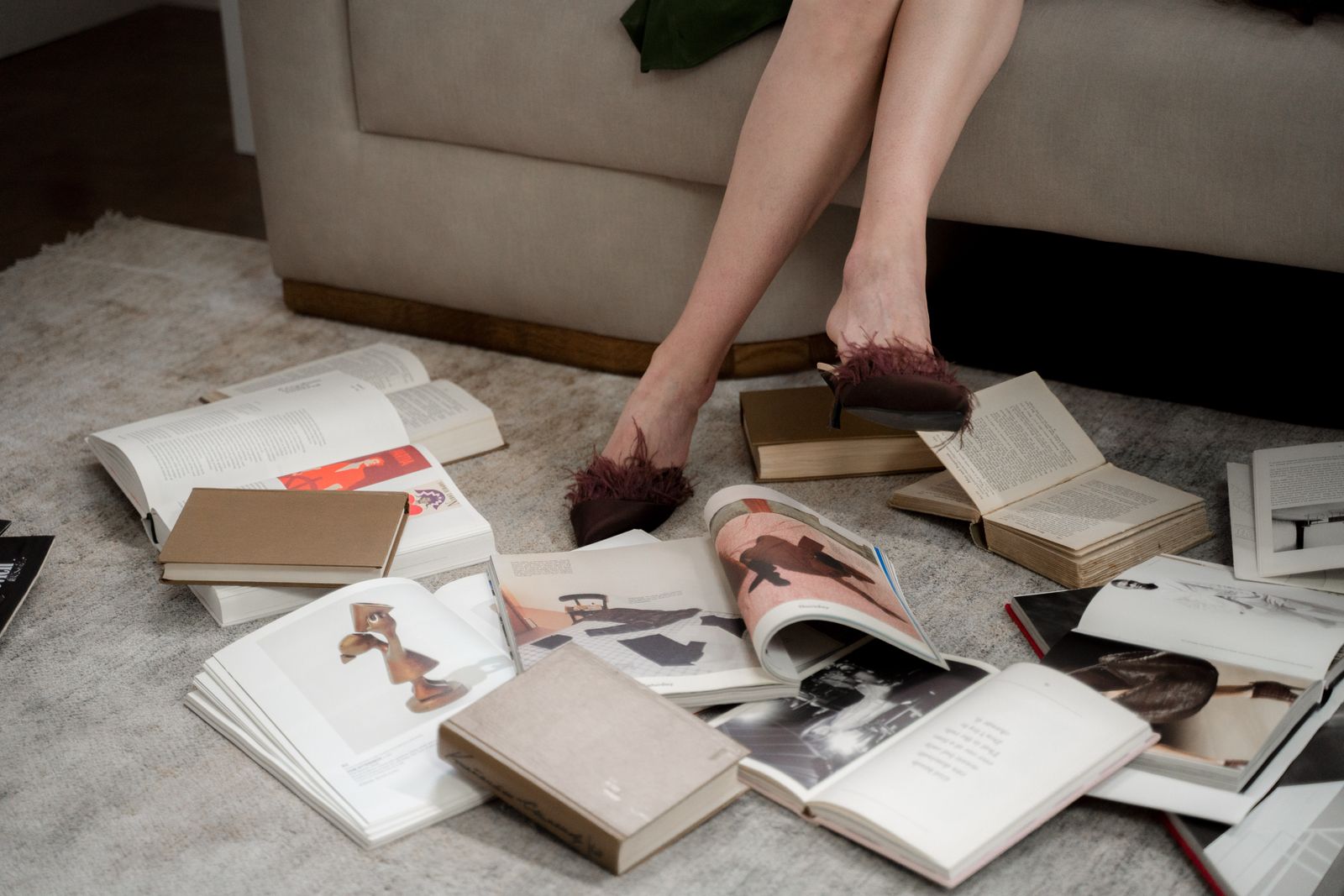
A coffee-table book is often dismissed as decoration, and sometimes that is fair. But the best of them do serious work: they teach you to look. Spend an unhurried hour with a well-made survey and you start to notice things a fast scroll never shows you — how a shoulder is cut, how a colour repeats across a collection, how a photographer’s framing makes a simple coat feel dramatic. That visual education is the foundation of personal style, because taste is, before anything else, a trained eye.
The strongest survey treats fashion as visual history, with large, well-reproduced images and text that explains what you are seeing rather than merely captioning it. The DK fashion visual guide is built that way, describing itself as a definitive guide that charts the evolution of clothing from ancient times through the great houses to the present day, with specially photographed garments and profiles of trailblazing designers. A book like that is not read in one sitting. It is browsed, returned to, and mined whenever a new trend makes you wonder where you have seen a shape before.
The test for any coffee-table book is whether it survives the third look, when you compare two images and ask why one works and the other does not. If it still rewards you then, keep it. If not, it was a poster in hard covers.
Fashion History Books: Context That Changes How You Dress
Fashion history is the most underrated category here, because it answers the question underneath every trend: why does this shape keep coming back? A good history book shows you that silhouettes move in cycles, that fabrics follow trade and technology, and that rules about what is proper, daring or elegant are always tied to the world outside the wardrobe. Once you see that pattern, you stop chasing every new arrival and start recognising the ones that suit you.
The most reliable starting point is a research habit, and the institutions that preserve fashion history are the best guides to it. The Fashion History Timeline from the Fashion Institute of Technology is a hub for fashion research, built around garment analysis, artwork analysis and thematic essays that place clothes in their period. Use it as a student would: pick a period or a garment type, read the essay, then look at the images with that context in mind. A shape you thought was new will often have a long ancestry, and that knowledge makes you a calmer shopper.
The Metropolitan Museum of Art offers the same grounding. Its Heilbrunn Timeline of Art History presents the collection through chronological, geographical and thematic exploration, authored by its own curators, conservators and educators. A dress is never only a dress, and a resource that shows the social world around a garment teaches more than one that shows the garment alone.
Designer Monographs: One Vision, Studied Closely
A monograph is a book about one designer, one house, or one body of work, studied in depth. At its best it is the closest a reader can come to an apprenticeship: you see the early work, the breakthrough, the mature style and the late experiments, in order, with sketches and construction details that explain how the vision was achieved. At its worst it is a glossy tribute with no argument and no sense of how the work changed. Choose the first kind.
The model for that kind is the museum catalogue that accompanies a major retrospective. The Alexander McQueen monograph from the Metropolitan Museum of Art, distributed by Yale University Press, examines the full breadth of the designer’s career, from his early label through his time in Paris to his own London house, and shows how he combined Savile Row tailoring, haute couture technique and technological innovation to achieve a distinctive aesthetic. It includes a curator’s preface, an introduction, an interview with the creative director who worked alongside the designer, and new photography of the ensembles. That structure is what to look for: the designer’s own words, the curator’s argument, and photographs that show the clothes as objects, not only as runway moments.
The Balenciaga shaping fashion volume from the Victoria and Albert Museum offers a complementary lesson in restraint, examining the couturier’s designs and business practice in the context of his time, with archival images and new photography. Read alongside McQueen, it teaches that mastery can look like drama or like quietness, and both are choices.
How-To Style Books: Advice You Can Use on a Weekday Morning
How-to books are where most readers should start, because they are the only category that directly changes what you wear tomorrow. The best are specific, honest and testable. They tell you how a jacket should fit across the shoulders, how to balance a wide leg with a fitted top, and how to choose a colour that suits your skin rather than the model in the photograph, with illustrations that show the difference between right and almost right. The worst are vague, flattering and useless, full of encouragement and empty of instruction.
The classic here is a small book with an outsized reputation. Dior’s Little Dictionary of Fashion is an A-to-Z guide in which the designer reveals the secrets of style, covering everything from what to wear to a wedding and how to tie a scarf to how to walk with grace, with lasting style described through simplicity, good taste and impeccable presentation. The advice is plain, sometimes stern, and strikingly practical, and it holds up because it is about principles rather than trends. Read it with a pen in hand and try one entry a day on clothes you already own. That is the test of any how-to book: does it work on your wardrobe, as it is, this week?
The same principle applies to menswear, where the best how-to writing argues that fit, proportion and fabric matter more than fashion. Whether you are choosing men’s trousers or a belt that finishes an outfit, the garment must fit the body in front of you, and no label rescues a poor fit.

Photography and Editor Books: Seeing How Images Are Made
Fashion is learned through images, and the books that show you how those images are made are among the most rewarding on the shelf. A photography or editor book does not teach you what to wear. It teaches you how a look is conceived, styled, lit and framed, and that understanding changes how you read every image you see, from a magazine cover to a shop window. Once you understand the editor’s role, you also understand why some outfits photograph beautifully and fall flat in real life, and why others do the opposite.
The essential volume here puts the editor at the centre of the story. Vogue: The Editor’s Eye celebrates the pivotal role the fashion editor has played in shaping style, offering an unprecedented look at the creative force behind influential fashion photography, with eight legendary editors at its centre, including Grace Coddington, Polly Mellen and Babs Simpson. Its argument is that the editor, working with photographers, stylists and designers, turns clothes into images that define an era. Read it slowly, image by image, and notice how much of what you admire is styling, not shopping: a colour paired unexpectedly, a proportion exaggerated for the camera, a mood set by a location. That is a useful scepticism to carry into your own wardrobe.
Vogue on Christian Dior makes the same point from the other side, recounting the designer’s search for the perfect line as portrayed by photographers and artists of the day. Seeing one house through different editors teaches you to separate its enduring ideas from the styling of a single shoot.
Books on Craft, Clothes and Construction
Some readers want to know how a garment is made, and for them the craft books are the most satisfying of all. These books explain a dart, a canvas, a hand-finished hem and a well-set sleeve, with diagrams and photographs that reward close attention. You do not need to sew to benefit. A reader who understands construction buys better clothes, because she can tell a well-made garment from a well-photographed one, and spot the shortcuts that will not survive a season of wear.
Museum and library collections are the best starting point for craft reading, because they treat garments as objects with a making history. The Cooper Hewitt books list from the Smithsonian Design Museum shows the range of that publishing, from monographs on individual designers to studies of textiles, jewellery and design practice, many published alongside exhibitions. Look for books in that spirit: ones that show a pattern, a sample or a working drawing beside the finished garment. A book that shows you both is teaching you to see construction, and that skill pays for itself every time you try something on.
Craft reading also changes how you care for what you own, and how you finish an outfit: a cross necklace chosen well or cowboy boots worn with confidence reads differently when the rest is well made. Craft books are not glamorous, but they quietly save you money by teaching you to recognise quality before you pay for it.
Building a Small Library That Works Together
A fashion library works best as a small, deliberate set, not as an accumulation. Five or six well-chosen books, read and re-read, will teach you more than a wall of volumes you never open. Aim for one survey, one history, one monograph, one how-to guide, one photography book and one craft book. Together they cover the eye, the context, the deep study, the daily practice, the image and the making. If you already own a strong book in one category, skip it and spend the money where you are weakest.
Build the set in the order of your need. If mornings are the problem, start with the how-to guide and the survey, and let the history wait. If you are fascinated by a designer, start with the monograph and the history that places that designer in context. If you love images, start with the photography book and the survey. There is no correct order, only the order that gets you reading, and a book that sits unread teaches nothing, however beautiful it is.
How to Read a Fashion Book So It Changes Your Wardrobe
Reading a fashion book the way you read a novel wastes most of its value. The better method is slower, more active, and tied to your own clothes. Start by reading with your wardrobe in mind. As you turn the pages, ask what each idea would look like on you, with your proportions, your colouring and your life. A silhouette that looks wonderful on a model may not suit you, and a colour that photographs beautifully may wash you out. The book is a source of ideas, not a set of orders, and your job is to translate, not to obey.
Take notes where you get dressed: the shoulder that works, the length that flatters, the colour to try, the fabric to avoid. Over a few weeks those notes become a personal style guide worth more than any single volume, because it is tested on your own body. The same habit applies to a makeup foundation guide or a swimsuit guide: note the ideas that apply to you, and ignore the rest.
Try one idea at a time. A new proportion, a new colour pairing, a new way of layering: wear it for a full day, notice how it feels, how it moves, and whether you reach for it again. If you do, keep it. If you do not, let it go and try the next idea. Style is built by experiment, and books are the cheapest, safest way to experiment, because the experiment costs nothing until you decide it works.
What to Skip and What to Borrow First
Not every fashion book deserves a place on your shelf, and knowing what to skip is as useful as knowing what to buy. Skip the book that is mostly photographs of clothes you cannot afford, with no explanation of why they matter. Skip the book that promises a complete transformation in a weekend, because style is built slowly. Skip the book that flatters you without teaching you anything, and skip the book that shames you for the body you have, because neither will help you dress better on an ordinary day.
Borrow first, and buy later. The library lets you live with a volume for a few weeks before you commit. Borrow the oversized surveys and the monographs on designers you are only curious about. Buy the books you keep renewing and annotating — those are the only ones you need to own.
The London Library fashion guide is a reminder that libraries hold deep collections in fashion, costume and textiles, spanning history, designers, textiles and media, and that a library card is the cheapest way to build a fashion education. Use it. A reader who borrows widely and buys narrowly ends up with a small, hard-working library and a wardrobe to match: considered, personal, and free of clutter.
Our view
We keep coming back to the same simple test: does this book change how you look at your own wardrobe? The surveys train the eye, the histories give the context, the monographs show what mastery looks like, and the how-to guides change the morning. Own one strong book in each type, borrow the rest, and let the shelf stay small enough to use. A fashion book is not a trophy. It is a tool, and the best tools are the ones you reach for without thinking.
— The Fashion Updates
Frequently Asked Questions
What is the best fashion book for a complete beginner?
Start with a visual survey and a practical how-to guide, read together. The survey trains your eye and gives you the language of silhouette and proportion, while the how-to guide turns that language into decisions in front of the mirror. Dior’s dictionary is a good first purchase: its advice is about principles, and you can test it on clothes you already own.
Are coffee-table fashion books worth the money?
They are worth it when they teach you to look, not when they only decorate a room. Open the book at random and ask whether you learned something you can say in your own words. If the images are well reproduced and the text gives context rather than captions, it will repay browsing. If it does not survive a third look, borrow it instead.
How do fashion books differ from fashion magazines?
Books are built for the long view; magazines are built for the new season. A magazine shows you what is new now; a book shows you where a shape came from, how a designer developed it, and why it keeps returning. Together they let you judge what is new instead of simply following it.
Which fashion history book should I read first?
Begin with a broad visual history, and use a research resource alongside it. The Fashion History Timeline lets you explore by period, garment and theme, with essays that place clothes in their social world, while a survey gives you the images to match. Read together, they build the context that makes every later book easier.
Should I buy designer monographs or borrow them?
Borrow first, and buy the ones you keep returning to. A monograph is most valuable when you admire the designer enough to study the work in sequence, with sketches, construction details and photographs. The Alexander McQueen monograph and the Balenciaga shaping fashion volume are strong examples of the form.
How can I use a fashion book to improve my everyday outfits?
Read with your wardrobe in mind, take one note per spread, and try one idea at a time on clothes you already own. Wear a new proportion or colour pairing for a full day before you judge it. The ideas that survive that test are the ones to keep.
How We Pick What We Recommend
Every guide on The Fashion Updates follows the same review process — what we compare, what we check, and what we leave out.
Sources
- Yale University Press — Alexander McQueen monograph
- Victoria and Albert Museum — Balenciaga shaping fashion volume
- ABRAMS — Dior’s Little Dictionary of Fashion
- Penguin Books — Vogue on Christian Dior
- The Metropolitan Museum of Art — Heilbrunn Timeline of Art History
- Fashion Institute of Technology — Fashion History Timeline
- The London Library — London Library fashion guide
- Phaidon — Phaidon fashion collection
- Cooper Hewitt, Smithsonian Design Museum — Cooper Hewitt books list
- ABRAMS — Vogue: The Editor’s Eye
- Charter Books — DK fashion visual guide